
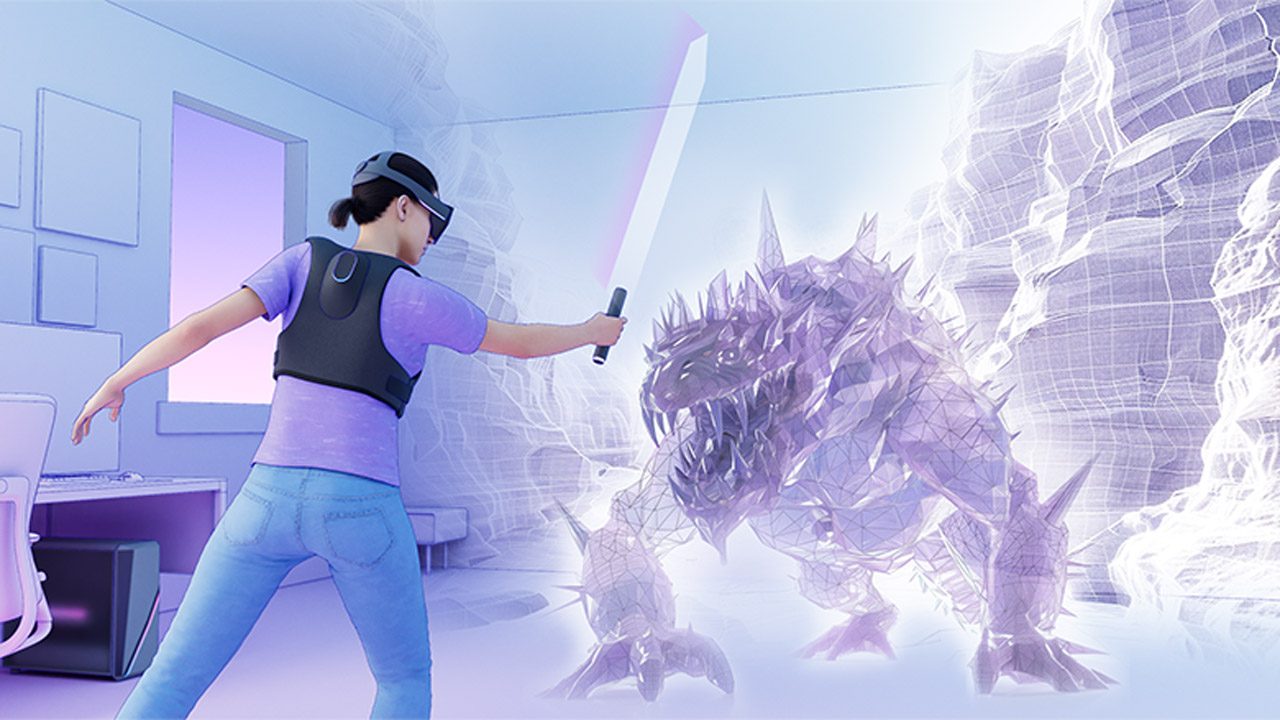
Meta “Pauses” Third-party Headset Program, Effectively Cancelling Horizon OS Headsets from Asus & Lenovo

8

Meta has “paused” its initiative to bring third-party Horizon OS headsets to the market. The company says it has shifted focus to “building the world-class first-party hardware and software needed to advance the VR market.”

The News

A little over a year and a half ago, Meta made an “industry-altering announcement,” as I called the move in my reporting: the company was rebranding the Quest operating system to ‘Horizon OS’ and announced it was working with select partners to launch third-party VR headsets powered by the operating system.
Image courtesy Meta

Meta specifically named Asus and Lenovo as the first partners it was working with to build new Horizon OS headsets. Asus was said to be building an “all-new performance gaming headset,” while Lenovo was purportedly working on “mixed reality devices for productivity, learning, and entertainment.”

But as we’ve now learned, neither headset is likely to see the light of day. Meta say it has frozen the third-party Horizon OS headset program.

“We have paused the program to focus on building the world-class first-party hardware and software needed to advance the VR market,” a Meta spokesperson told Road to VR. “We’re committed to this for the long term and will revisit opportunities for 3rd-party device partnerships as the category evolves.”

My Take

The news comes amid a shifting of priorities for Reality Labs (Meta’s AI and XR division). Seemingly aware that it needs to up its game on the ease-of-use and polish of its wearables, Meta recently announced that a long-time Apple design lead joined the company in an effort to “elevate design within Meta, and pull together a talented group with a combination of craft, creative vision, systems thinking, and deep experience building iconic products that bridge hardware and software.”

Further, the company is now reportedly “focused on making the [Reality Labs] business sustainable and taking extra time to deliver our experiences with higher quality.” Which has reportedly led to the decision to delay a forthcoming Vision Pro competitor into 2027, and possibly raising prices on future gaming headsets.

SEE ALSO
'No Man's Sky' Brings Massive Multi-crew Starships in Latest Update

But Meta isn’t making these changes out of nowhere. The introduction of Vision Pro and now Android XR are creating new competition which Meta is responding to. Android XR, in particular, could have been a major foil in the Horizon OS third-party headset program.

Meta previously stated it wanted to be the ‘Android of XR’, an ‘open’ alternative to Apple’s approach with VisionOS. Opening up Horizon OS to new hardware partners was part of that play. But this was well before Android XR was actually announced. Now it’s becoming clear that the platform best positioned to be the ‘Android of XR’ is… well… Android XR itself. Without the backstop of app stores with millions of widely used apps (as VisionOS and Android XR have), Meta has found itself at a major disadvantage.

That’s not to say Horizon OS doesn’t have its own upsides. It clearly has the biggest and best library of immersive experiences on any standalone headset. But that may not have the same strategic value as the entire Google Play or App Store catalogs.

From the outset there’s also been another wrinkle in the third-party Horizon OS strategy: pricing. It’s well known that Meta sells its headsets at cost or perhaps even lower (hoping to make back the money on the software side), allowing it to outcompete practically any other headset maker on price. If you’re Asus or Lenovo, and your profit only stands to come from the hardware, how can you compete against the platform holder itself which is selling its own super low cost headsets?

If I were Asus or Lenovo, Android XR looks like a more welcome home for a third-party headset. Not only does it have the backing of the Google Play store and all the apps that come with it, but unlike Meta, Google is not (yet) competing with its own hardware partners.

This article may contain affiliate links. If you click an affiliate link and buy a product we may receive a small commission which helps support the publication. See here for more information.

Ben is the world's most senior professional analyst solely dedicated to the XR industry, having founded Road to VR in 2011—a year before the Oculus Kickstarter sparked a resurgence that led to the modern XR landscape. He has authored more than 3,000 articles chronicling the evolution of the XR industry over more than a decade. With that unique perspective, Ben has been consistently recognized as one of the most influential voices in XR, giving keynotes and joining panel and podcast discussions at key industry events. He is a self-described "journalist and analyst, not evangelist."
  • ErickTheDiver

    It was never going to happen.

    • namekuseijin

      just like GTA SA – I bet Rockstar never heard about it until Zuck announced that.

      they keep lying like this to investors while delivering an absolutely awful broken mess with issues they don't even know about because Meta themselves don't use them… users who do probably left in disgust, which is why the broken toy is only used by brats today

      • NL_VR

        You mean Quest is only used by brats or that its brats that only online on Metas Horizon world platform?

  • Paolo Minisini

    Meta is run by a herd of drunk hippos that move randomly in their pond.
    https://uploads.disquscdn.com/images/cfa093a403cf8704065ab6fba6bef7083e9688360ba208c2b0380b57d46f7606.png

  • Christian Schildwaechter

    TL;DR: they knew long beforehand that it probably couldn't work, but still had to try, hoping that a solution could somehow be found.

    During his 2021 Facebook Connect keynote, 2.5 years before Meta announced opening Horizon OS to other companies, John Carmack pretty much explained that they had considered 3rd party headsets for years, but why wouldn't make sense either for the low nor the high end:

    We used to early on in Oculus talk a lot about the possibility of kind of 2nd or 3rd party headsets that could interoperate with our ecosystem. That turned out to be really challenging to do, because like Mark said, we sell our headsets at a loss or break even, there's no profit in the headset. So there is no way that a company could go and say "I want to make a budget headset, I'm going to undercut the prices here" without wanting to be able to negotiate for a cut of the eco system revenue. That's just kind of the way those things work.

    And on the high end, while we could imagine somebody going saying "Well, I'm going to make a very expensive headset", most of the interesting features that we talk about things like eye and face tracking and world tracking, these are things that require deep core system software integration to really make them valuable. And so we can't work that closely with another company dealing with that, it's just really really challenging.

    There's still a couple spots where it might work if a company made a super wide FoV headset or a super high resolution headset that was still basically the same thing, it's still exactly the same sensors or exactly the same modalities that we have in Quest 2. Maybe something like that could work, but there's nothing like that kind of really going on right now.

    I believe that Meta really wanted to open Horizon OS. Or maybe more felt forced to do so to compete with an expected Android XR, even though they knew the business case just wasn't there. And the approach was somewhat ill-conceived from the beginning, as Google launched the open-to-all Android not to create a second mobile platform, but to protect its lucrative advertising business that was moving towards mobile. They still pay Apple around USD 20B each year to be the default search engine on iPhones.

    Google tried/tries hard not to compete with its partners. Their original Nexus line of phones was always created with partners like Samsung or Lenovo, and were mostly technical showcases of new Android features without undercutting prices. The first Android XR device is again from Samsung. And companies are allowed to massively alter Android to differentiate themselves, adding their own features and UI, as long as they also integrate Chrome, Play Store and Play services with Google apps etc..

    Google only launched their homebrew Pixel phones after others repeatedly failed to adopt newer Android features and fell behind Apple with only offering 2-3 years of OS updates. So the Pixels are "how to do Android right" phones that are competitively priced to push Android forwards, not to gain market share from partners. They still make most money from ads, apps sales are in no way as profitable or important as on iOS due to most Android users being very reluctant to pay for software.

    So while Horizon OS superficially seemed to copy Androids 3rd party licensing model, the pre-conditions were completely different. Meta had to offer cutting edge hardware at low prices to grow XR, with no secondary revenue stream like ads on the new platform itself to pay for everything, and no way for partners to extend the platform to add value. A conflict of interest was inevitable, with no good reasons for others to jump aboard the Horizon OS train other than Meta owning the dominant XR platform, hoping for a more profitable future. But that platform turned out to be tiny, with no guarantee that it will stay dominant, and is now overtaken by smartglasses. So any remaining interest from third parties most likely vanished during the last few years.

  • Andrey

    Fuck them!
    Based on leaks, ASUS Rog Tarius was the second most anticipated headset for me, right after Quest 4. If it would release in 2026 with promised features like eye-tracking, MicroOLED screens and price around 1000-1500$, I would buy it immediately right after release.
    Firstly they've cancelled GTA SA VR that I was VERY looking forward to for years, now they've killed my potential next headset, so now either I will be forced to wait until 2027 to finally get a new Quest with eye-tracking or I will need to purchase something like Steam Frame with subpar specs or outdated secondhand Quest Pro.
    "The Meta's VR future it so bright, I gotta wear RayBan AI-powered shades." (c)

  • XRC

    Taipei and Beijing are breathing relief after being associated with such corporate bullsh*ttery from the goons at Meta

    Rebranding Oculus was a textbook example of marketing egomania

  • Paul Bellino

    LONG LIVE STEAM FRAME. FUCK META…..