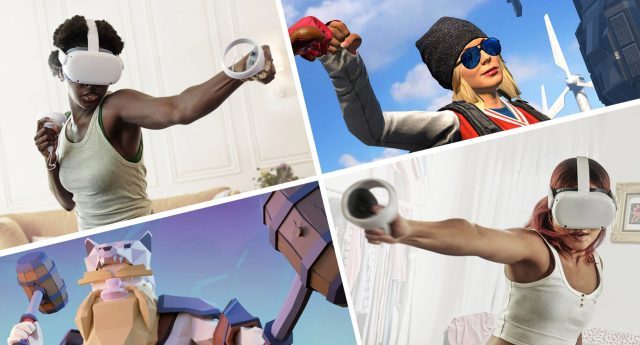
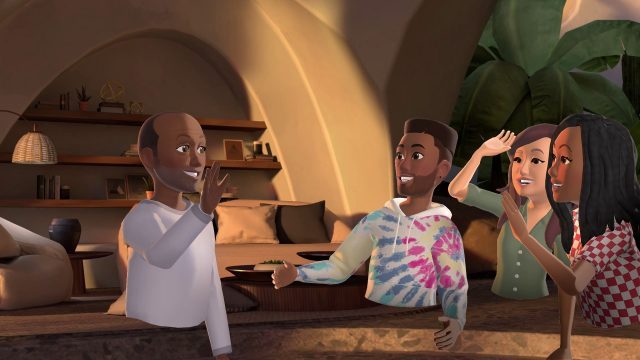
Rec Room, a social VR game which also supports non-VR devices like PC, console, and mobile phones, has reached an impressive 3 million monthly active VR users, which the company says is just a fraction of its total monthly active usership.
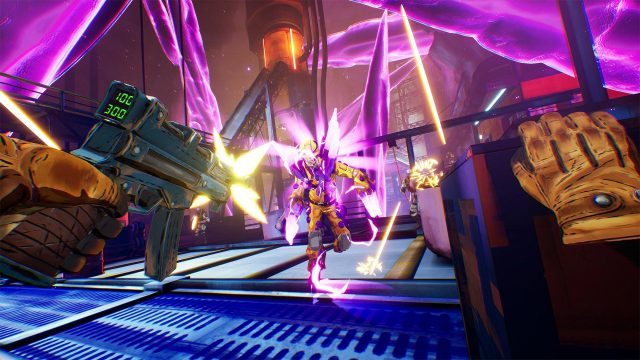
Fracked (2021), the action adventure game from veteran VR studio nDreams, is set to leave PSVR exclusivity in May, as it’s landing on PC VR headsets via Steam and Viveport.
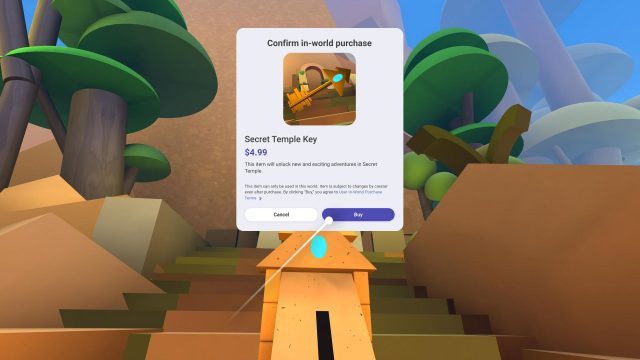
This week Meta announced that it was beginning to test selling tools so that creators can sell things inside of Horizon Worlds and earn real money. Now the company has offered up more detail about how that will work, including the fees creators will pay on earnings made through the platform.
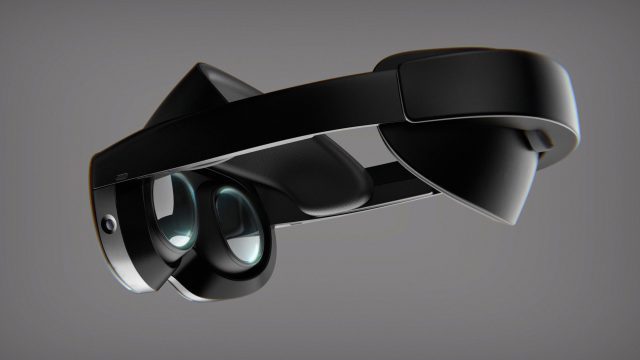
Project Cambria | Image based on photo courtesy Meta
Tech analyst Ming-Chi Kuo is known for making predictions based on Apple supply chain leaks, but this time Kuo alleges Meta is getting ready to release a ‘Pro’ branded follow-up to its most popular VR headset to date, Quest 2. We aren’t able to independently verify these claims, however it sounds a lot like Kuo is describing Meta’s Project Cambria.
Meta announced today it is enabling new in-world monetization tools for a “handful” of creators in Horizon Worlds. The tools will allow them to sell access to items and experiences inside of the app. Eventually, Meta says, it hopes people can “earn a living” in the metaverse.
At GDC last month, Meta shared the clearest look yet at the number of apps reaching various revenue milestones on the Quest platform. So far, 124 apps have earned $1 million in revenue or more, while 8 have exceeded $20 million.
Electric Hat Games, the studio behind VR platforming pioneer TO THE TOP (2017), announced they have a sequel in the works called Super Kit: To The Top.
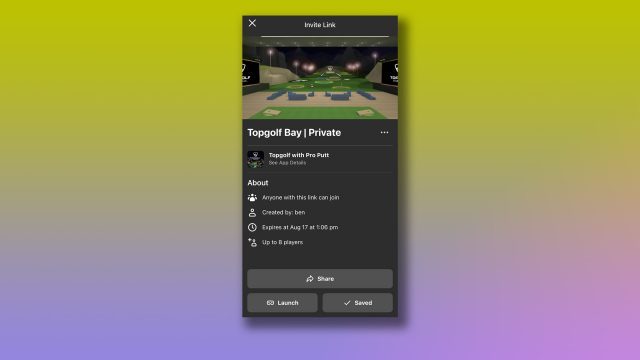
Last year Meta added the ability to send simple invite links to your friends which would bring you together into the same place in VR. It’s a great way to easily join up with friends in VR, but it seems very few people know the feature exists.
YouTuber SadlyItsBradley claims to have seen actual photos of the production model of Meta’s next-gen mixed reality headset, Project Cambria. Though they aren’t sharing the source photos, they worked with a 3D modeler to create a detailed rendering of what the photos showed.
It’s been a long road for Lucky’s Tale. After being remastered for Quest 2 in November 2021, and SteamVR headsets a month later, it’s finally come to PSVR.
Playful today released Lucky’s Tale on PSVR, priced at $20. The game only supports DualShock 4 controllers, as it combines traditional platforming with a more immersive view of the world (re: no PS Move). The game’s store page (linked above) also shows it’s been enhanced for PS4 Pro.
To learn more about its history and launch on Quest 2 late last year, continue on to the article below:
Playful today announced during the Upload VR showcase that Lucky’s Tale is finally leaving Oculus exclusivity as it makes its way to PSVR and SteamVR headsets, releasing on the PlayStation Store, Steam and Viveport sometime “soon”.
The studio also threw out a new trailer to show off some of the game’s updated visuals. The original article announcing Quest 2 availability follows below.
Original Article (November 18th, 2021): Playful Studios (formerly Playful Corp) developed the original Lucky’s Tale for Rift, pitching it not only as a launch title for the early consumer VR headset, but making it available as a free, in-the-box addition for all new Rift owners at the time.
Now Quest 2 users can hop around the bright and colorful world as series protagonist Lucky Swiftail, a young fox on a quest to save his best friend Piggy from a tentacular monster named Glorp.
It launches on the Oculus Store for $20 today, coming exclusively to Quest 2 (re: not original Oculus Quest). It hasn’t been confirmed whether Lucky’s Tale is a cross-buy title with Rift, however we’ll update this article once we know.
Playful says Lucky’s Tale has been remastered for Quest 2, bringing updated lighting, rendering, and remixed audio to the game. It’s also refined character movement, and imported the updated character model seen in New Super Lucky’s Tale (2020), the game’s non-VR sequel which is still only available for flatscreen consoles and PC.
Lucky’s Tale is a fun little game which serves up a few hours of pretty standard platforming fare, albeit in an immersive 3D world that sort of drags yours point of view behind the titular Lucky as you move through different worlds and encounter the evil Glorp at every turn. It’s one of those ‘fun for everyone’ games that basically everyone can enjoy.
Lucky’s Tale was developed around a limitation that sounds positively ancient; it was first meant to be played with the Xbox controller, which was Rift’s only input method for the first few months after launch—a few months before Touch was even a thing. Granted, Touch controllers have all the same buttons as an Xbox gamepad, although it goes to show just how much VR games have changed in the past few years in terms of direct user interaction and immersion.
Meta is again cancelling its F8 developer conference this year. Meta skipped F8 in 2020 and 2021 explicitly due to the COVID-19 pandemic, however this year the company says it’s taking a pause to work on the metaverse.
Last year Meta announced that it would finally be bring social features to the Quest home environments, allowing users to easily get together in the same virtual space. We aren’t there yet, but the company has taken a first step in that direction by adding node-based locomotion to all of Quest’s home spaces.
This week Epic Games released the latest version of its next-gen game engine, Unreal Engine 5. Though the new version brings improvements in many areas, its most notable features are Lumen (global illumination) and Nanite (micro-polygon geometry), which could be game-changers for VR immersion. Unfortunately the company says neither feature is ready for VR developers.