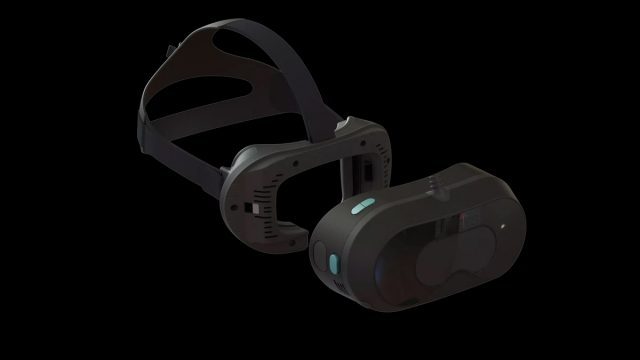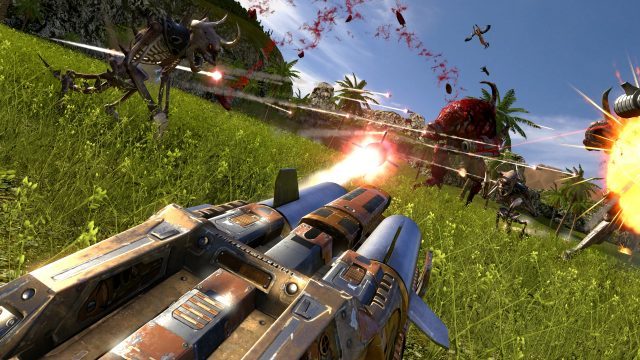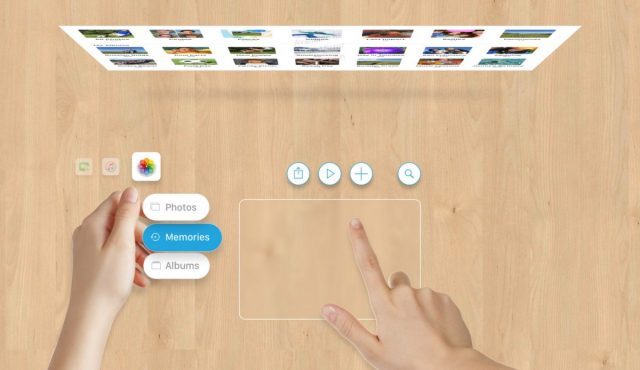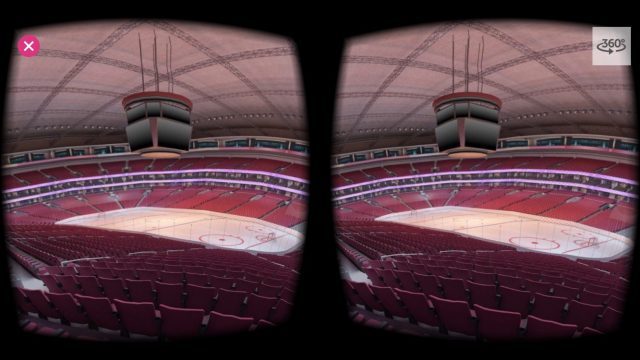
Alongside the official reveal of the Google Pixel phone last month, Google announced Daydream View, a VR headset and controller combo designed for use with the company’s first Daydream-ready phone. Now available on the Google Store, Verizon and Best Buy, Daydream View is coming in with 10 apps and 41 more planned for release by the year’s end.
AltspaceVR, the social VR platform, today announced a new feature that will let you rewatch live VR performances. Called ‘VR Capture’, the solution is particularly handy if you live in a far-off time zone but still want to experience the comedy stylings of AltspaceVR regulars like Reggie Watts.
Depending on who you were rooting for in the US election, last night was either a shocking and sobering wake-up call to a reality that you don’t feel a part of or it was a jubilant celebration of a victory that was doubted and underestimated by the mainstream political and media establishments. Either way, what’s clear is that there’s a cultural divide in America that’s split nearly evenly between the percentage of people who voted in the election. Trying to understand the other side of the cultural gap can feel like entering into an entirely different parallel universe, and I feel like virtual reality has an important role to play in bringing more empathy and understanding to each side.
I had a chance to catch up with VR Playhouse co-founder Ian Forester at Oculus Connect 3, where he shared with me some of his vision for how VR could change the way that the learn and understand the world. He sees that there are three primary ways that we learn about the world including our direct sensory experiences, our direct observations of other people, and then a lot of indirect cultural indoctrination that comes from the mainstream media, education, and the culmination of all of our social interactions.
LISTEN TO THE VOICES OF VR PODCAST
Ian sees that VR has the potential to provide us with a wider range of direct sensory experiences with a diverse range of people and cultures within social VR experiences, and that this has the potential to give us more access to learning from our interactive direct experiences rather than from information that we’re consuming from different sources of external authority.
It feels like the United States is at real crossroads right now with the political culture gap that exists right now, and this interview with Ian starts to discuss how VR could help us move beyond our existing methods of cultural indoctrination. Rather than passive consumption, VR allows us to have interactive experiences that could help engage and connect us to each other in new ways that transcend the capabilities of any other technologically-mediated interfaces.
I tell people the reason I'm working in VR is because of its potential to inspire empathy by connecting very different sorts of people.
Robin Hunicke, executive producer on Journey (2012) and now co-founder of game studio Funomena, is creating a visually rich new Oculus Touch title that wants to be played by anyone and everyone.
PS4 Pro launches this week. The new console packs significantly more power than the standard PS4 and is aimed at 4K gaming. When it comes to PSVR, which is limited by its 1080p screen, the biggest gains we’re seeing so far are in loading times.
The Game Awards 2016 is building towards its third year, scheduled for December 1st at the Microsoft Theater in Los Angeles. Spiritual successor to the ten-year run of the Spike Video Game Awards, The Game Awards is considered the biggest annual award event for the video game industry, and 2016 promises to be bigger than ever.
Google announced at the W3C WebVR workshop in October that they would be shipping a WebVR-enabled Chromium browser in Q1 of 2017. I had a chance to catch up with Google’s Josh Carpenter last week to talk about some of the work that Google is doing to enable innovation on the open web, and more about his W3C talk on HTML, CSS & VR and some of Google’s early experiments with hybrid apps that combine OpenGL with web technologies.
Ubisoft today rolled out free VR support for Trackmania Turbo, the latest installment in the online multiplayer arcade racer series. The update is now available for owners of the game on PlayStation VR, Oculus Rift and HTC Vive.
Pokémon GO isn’t exactly what we’d call augmented reality—based on the game’s (and smartphone’s) lack of computer vision and environmental mapping—but fans of the megalithic pocket monster franchise aren’t sitting on their hands waiting for Nintendo or Niantic to build a real augmented reality version of Pokémon. Case in point: KennyWdev and Joshua Liew’s imagined AR battle system for Microsoft HoloLens, aptly named PokéLens.
Sony’s new, more powerful PS4 Pro is due out on November 10th. The system is fully compatible with PlayStation VR, but what difference will the extra power of PS4 Pro have on the PSVR experience?
Announced just last week, Microsoft’s Surface Studio all-in-one computer has been met with excitement and touted as an example of the company’s new approach to innovation. With a mobile GPU on board, you shouldn’t expect to be able to run the most demanding VR titles, but Microsoft says Surface Studio will be able to manage some VR experiences.
WebVR is gaining significant momentum; last month the biggest players in the browse space came together to discuss the future of VR on the web at the W3C Workshop on Web & Virtual Reality. There, Google said that the company soon plans to ship a public version of Chrome on Android with support for WebVR 1.1.
Adobe have down off their solution for editing immersive 360 VR videos within VR itself as they took to the stage at their annual ‘MAX’ event last week to demonstrate their prototype in-VR editor for Premiere, ‘CloverVR’.
Hot on the heels of Sony’s recent PlayStation 4 powered PSVR VR headset Launch, the next, more powerful iteration of the PS4 console will launch on November 10th and Sony have announced the games set to feature ‘Pro’ enhancements, including 13 for PlayStation VR.