Road to VR Executive Editor Ben Lang Holding GDC 2015 Q&A
Road to VR’s Executive Editor, Ben Lang, is holding a Reddit Q&A about the latest VR tech from GDC 2015 right now! Feel free to drop some questions.
Valve and their partner HTC stole VR enthusiasts’ hearts at GDC last week when the unveiled their Steam VR platform. Now, a new game coming to Steam VR, Skyworld, demonstrates a use for that room-space tracking with this debut trailer.
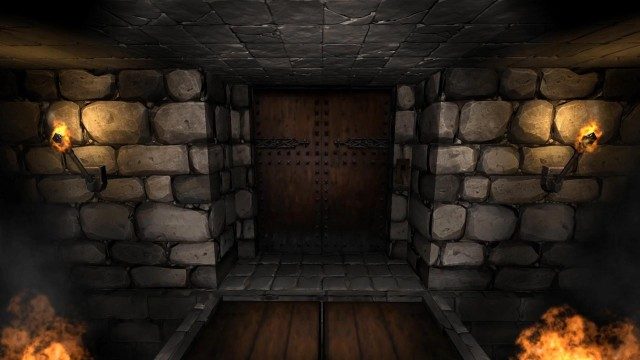
A grid-based dungeon crawler, Crystal Rift is built from the ground up for virtual reality, yet draws on some very traditional game mechanics. The team behind the Oculus Rift adventure game have released a new trailer, introducing the game’s level editor.
Developer Three One Zero has a 9 minute trailer for its ‘astronaut in peril’ title ADR1FT, which also promises ground-up Oculus Rift support. Debuting at the Video Game Awards last year, it highlights why we’re excited about this title.
Reload Studios, a group comprising ex Infinity Ward and Disney veterans, are due to officially unveil their previously teased multi-player VR shooter at the next VRLA Spring Expo on March 22nd.
Last week at GDC, Valve revealed not just a headset, but a stage upon which pioneering storytellers and game designers will create the first VR experiences of a defining platform.
Resident programmer at Cloudhead Games has illustrated (literally) the huge progress that’s been made in the last few years in VR hardware, culminating obviously in GDC 2015 and it’s Valve Steam VR revelations.
Body/Mind/Change is a trans-media experience that was built to accompany a recent celebration of film director David Cronenberg and his work. As part of the project Blair Renaud, developer of Technolust, got to meet the man behind Scanners and The Fly. Renaud shares his experiences and we talk with the team about how the project came to be.
A Lucasarts classic has been given a thoroughly modern makeover, it’s received Oculus Rift DK2 support, thanks to the work of coder xLava.
Last year, shortly after George Lucas sold LucasFilm off to Disney for $4.05 Billion, Lucasarts – the interactive entertainment division of Lucas’ empire – was closed. Lucasarts was responsible for a pile of classic gaming franchises, one of which is regarded by many as one of the best made in the Star Wars universe.
Jedi Knight was the sequel to Dark Forces, and spawned two sequels. The third, Jedi Academy, was developed by Raven Software, who upon hearing of Lucasarts’ closure, decided to release the source code.
xLava took this source code and decided to work in virtual reality support and has now released an Oculus Rift DK2 compatible version. What’s more, xLava hasn’t just grafted pre-warping and stereoscopy onto the original game, he’s altered the HUD to be more comfortable in VR and permanent first person mode.
You can the latest build over at the project’s homepage here, including installation and configuration instructions.
We’ve not had a chance to give it a spin just yet. If you do, let us know what you thin in the comments below.
[NUREN]: The New Renaissance is the first VR project to get a slice of Epic Games’ development fund, coming to the tune of $18,000 worth of “no strings attached” funds to further the development of the virtual reality experience.
As Ben Lang says in his interview introduction, Will Provancher is one of the OG’s of virtual reality. Tactical Haptic’s ‘Reactive Grip’ controller was one of the few peripherals shown back at GDC 2013 that aimed to enhance immersion compared with standard input devices. The Road to VR team caught up with Tactical Haptics again at GDC 2015 to chart the system’s progress over the last 2 years.
OSVR has announced at GDC 2015 that it plans to update it’s Hacker Developer Kit (HDK) open source headset to 1.1 bringing with it a collection of enhancements. OSVR’s Yuval Boger walks Ben Lang through the hardware and software advancements since we last met the team at CES 2015.
Road to VR last caught up with Sixense at CES, where they demonstrated an early integration with Gear VR to add positional tracking. The ‘Jedi Training’ demo now comes to GDC, running on Unreal Engine 4. Ben Lang Speaks to Creative Director at Sixense Danny Woodall on what the engine was like to work with.

Lighthouse is Valve’s laser-based tracking system that forms the bedrock of Steam VR’s input system. Alan Yates, Hardware Engineer at Valve was a key player in the system’s design and implementation. Alan, frustrated with being asked the same questions over and over on Twitter, produced a nano-FAQ on Lighthouse. Here are the highlights.