
Pico Reportedly Releasing Vision Pro Competitor in 2026 with Self-developed Chip

20

Zhenyuan Yang, Vice President of Technology at Pico parent company ByteDance, reportedly revealed plans for Pico’s next XR headset, which is said to sport a self-developed display chip and 4,000 PPI microOLED display.

The News

According to Chinese news outlet Science and Technology Innovation Board Daily (via Nweon), Yang was speaking at ByteDance’s annual scholarship award ceremony when he mentioned specific plans to release a new Pico XR headset in 2026.

The self-developed chip was started in 2022, Yang reportedly revealed on stage, noting the chip is now in mass production. The chip is said to overcome real-time processing bottlenecks in high-resolution, high-frame-rate mixed reality video, with it capable of reducing system latency to about 12 ms while maintaining high-precision image quality.

It’s also said to improve performance in SLAM, motion compensation, and inverse-distortion workloads, which demand high compute efficiency on low-power devices, Science and Technology Innovation Board Daily reports.
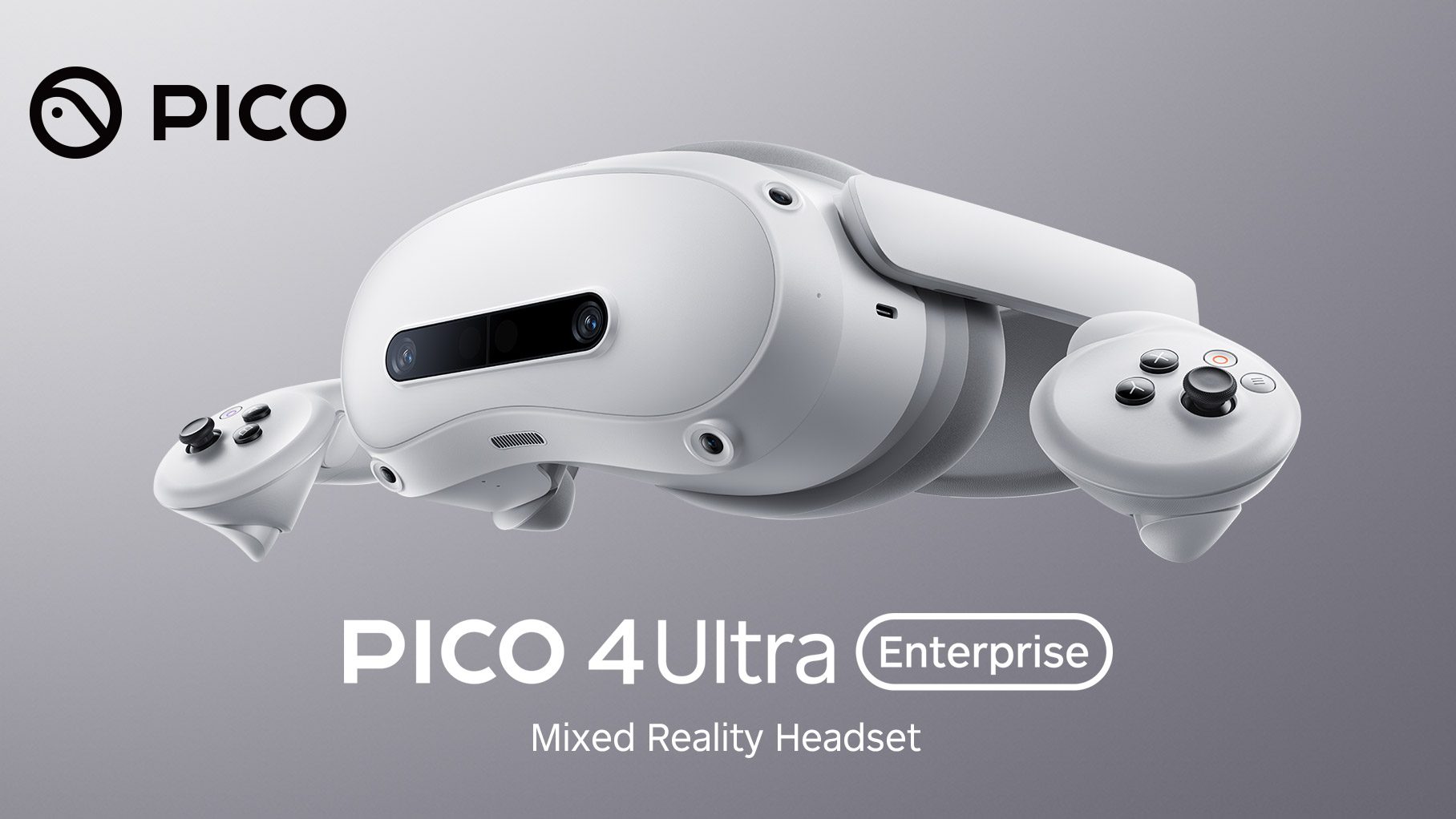
Image courtesy PICO

Supposedly slated to launch in 2026, the headset will pair this chip with a custom microOLED display which is said to approach 4,000 PPI—slightly higher than that of Apple Vision Pro’s 3,386 PPI.

According to the report, Pico’s microOLED display reaches an average 40 PPD (over 45 at center), and addresses brightness limitations by incorporating microlens (MLA) technology and optical compensation for uniform color and luminance. Additionally, Pico is also developing its own data-capture systems to train advanced eye-tracking, gesture-tracking, and spatial-understanding models.

Yang emphasized that since 2023, ByteDance has shifted Pico’s strategy away from aggressive content and marketing spending toward long-term technological investment, increasing XR R&D rather than retreating from the market.

“In 2023, we decided to reduce our investment in content and marketing, and instead focus more firmly on our technology strategy,” Yang said (machine translated from Chinese). “This was because the hardware experience of our products was not yet mature enough to support large-scale market applications. This adjustment led to some misunderstandings at the time, with many people saying that ByteDance was no longer pursuing this direction. In fact, quite the opposite.”

This follows an initial report from The Information this summer, which alleged Pico was developing a pair of slim and light MR “goggles,” reportedly codenamed ‘Swan’, which are said to weigh just 100 grams.

SEE ALSO
Steam Frame vs. Valve Index Specs: Wireless VR Gameplay That's Generations Ahead

My Take

More competition is great, although US-based audiences hoping for a new Vision Pro competitor from Pico may be left waiting.

The company’s headsets are typically only available in China, East and Southeast Asia and Europe—but not in North America, and not for the lack of trying either. An additional stumbling block: Pico headsets have typically been priced above Meta’s equivalents, which has limited appeal in Meta-supported regions.

Still, ByteDance, the parent company behind TikTok and Chinese equivalent platform Douyin, has actually overtaken Meta in revenue, putting the parent company in a better position than ever to bolster its XR platform as a premium offering globally.

This article may contain affiliate links. If you click an affiliate link and buy a product we may receive a small commission which helps support the publication. See here for more information.

Well before the first modern XR products hit the market, Scott recognized the potential of the technology and set out to understand and document its growth. He has been professionally reporting on the space for nearly a decade as Editor at Road to VR, authoring more than 4,000 articles on the topic. Scott brings that seasoned insight to his reporting from major industry events across the globe.
  • Super interesting piede of news. So both Pico and Meta will release Vision Pro competitors next year

    • Arno van Wingerde

      Do we know Meta has something lined up for 2026, and would that be OLED? It seems out-of-line with Meta’s current course….

  • ErickTheDiver

    Anyone know the estimated sales of Pico 4 vs Quest?

    • Christian Schildwaechter

      As Pico is only present in China, some Asian countries and Europe, the main driver should be sales in their home market, and a couple of years ago China had quite a vibrant VR scene.

      From a post by CINNO Research about XR sales in 2025 (mp_weixin_qq_com/s/EMaXQ4uRwTASJoGo5evkEg), translated via Google translate:

      1. Market performance: In the first half of 2025, the overall sales volume of the domestic XR consumer market was 261,000 units, an increase of 9 % month-on-month and a decrease of 21 % year-on-year.

      VR devices: The domestic consumer VR market is in a slump, and VR device sales are under pressure. In the first half of 2025 , the sales volume of consumer VR was 75,000 units, which is the lowest in nearly three years. The main reason is that there is less investment in the VR content ecosystem in China , and there are no major new products released in the first half of the year.

      Most of the 261K units are birdbath HMDs used for media consumption, with smartglasses selling about twice as many units as all XR HMDs. Pico holds 46% of the VR domestic market, while Meta, who don't even sell in China or offer the services required for Quest there, hold 28%, with no significant shifts for some time. There are no official numbers anywhere, but Pico probably hasn't sold more than 1M headsets worldwide, while the Meta Quest 2 had sold 20M by early 2023. So Pico 4 to Quest 2/3 sales may be 1:20 or worse.

  • Christian Schildwaechter

    TL;DR: It's Pico's version of Apple's R1 signal processor.

    So that self-developed display chip would be similar to the R1 used in parallel to the M2/M5 in AVP, a dedicated signal processor connecting to lots of cameras and sensors, and doing all the head/hand/controller/eye tracking plus passthrough with geometry correction. The R1 is kind of a separate computer that mostly sends the results of the tracking to the main SoC, which allows passthrough to still work on AVP even while the main OS is rebooting.

    On the Pico it would probably be paired with whatever XR SoC Qualcomm is currently cooking up. A lot of people were disappointed that Samsung didn't already try this on the Galaxy XR, as the separate display processor both leaves more performance for OS and applications, and also improves visual quality. According to some comparisons, the image on AVP looks sharper despite the GXR having higher resolution displays, and this is most likely due to there being more compute available esp. for passthrough and overlaying virtual objects. The reasons were most likely cost and GXR being a template for future AndroidXR HMDs, so using proprietary hardware was probably a no-go for Google.

    The M2 AVP had an extremely low 11ms motion-to-photon latency, basically one frame at 90Hz, and the M5 running at up to 120Hz might have pushed that down to 8ms. Qualcomm claims 11ms motion-to-photon latency on the XR2+ Gen 2, but that is most likely for unprocessed passthrough, not for a depth corrected view. Pico saying their chip offers "reducing system latency to about 12 ms while maintaining high-precision image quality" again hints at performance similar to the M2 AVP, with a depth corrected view with one frame latency at 90Hz.

  • Andrew Jakobs

    When in 2026, and at what price? Currently the Pico 4 ultra is at a discount for €399(abd on amazon €10 extra off if you use the BF code). I wonder if Pico has just set the price lower to offload the current stock. Still a bit decisive if I should just upgrade to it from my Pico 4, for some better PCVR streaming and much faster performance of standalone (Teambeef sideloaded 'pc'games) or WinXlator.

  • Sky Castle

    I don't get the appeal of Pico products. If you buy Pico VR headset you lock yourself out of exclusive Quest games. With the upcoming "Pico Pro XR" lets just call it that, You lock yourself out of the apple eco system and possibly android xr as well. I'm all for competitive market, but software support is just as if not more so important than hardware superiority.

    • polysix

      Quest is shite. Quest games are shite. All standalone games are shite. No loss there. META have ruined VR ever since they killed the rift.

      • Nevets

        Forgot to take your meds today, happyman?

      • NL_VR

        Rift was shite.

      • Hussain X

        Quest & Quest standalone contribute a lot to PCVR, without which PCVR would be in a far worse state. It's also nurturing a new generation of VR players for the future.

        • kakek

          You've got a point.
          I get why he blames Meta for PCVR slowing down, but when you think about it they financed more PCVR titles than anybody else, and still produce the best overall value headsets.

      • Andrew Jakobs

        Without Meta VR would have died again…

    • Arno van Wingerde

      I do not completely agree with @polysix:disqus, but 90% of Quest Games is cartoonesque garbage for 10 year olds. Not entirely surprising given the Hardware limitations and Meta‘s „focus“ on Worlds. There definitely are good games as well, but for some people PCVR a few games with good graphics and gameplay beat the multitudes of garbage. Then, for those people Steam plus good (but expensive) head sets is the way to go. I am curious to see how Valve‘s sets will play out, I would love to see this thing running Steam OS.

      I enjoy my Quest3, but in spite of the cable and small sweet spot and general hassle of the PSVR2, I do enjoy the superior graphics, once I have gone through the hassle of donning the headset, logging in (WTF?) I enjoy HCotM more than just about my complete Quest library.

      • JanO

        It might be a generational thing, but I've been an adult playing adult PC games since the DOS days… Believe me, in those days you had to be an adult just to figure out how to make that shit work! The sad thing is the industry has never got past just selling better graphics… Not better games.

        There were definately great games during those days. And now that the horsepower of a standalone VR headset is beyond that of those computers of old, there is absolutely great content for an adult audience if you look for it. Are graphics better on an expensive PC? Of course they are, but as most people who love race cars, I still use a sedan to go to the grocery store…

    • flynnstigator

      Trying to establish their own store was a big mistake. Most industries can only support a single major open platform and 1 or 2 walled gardens. HTC, Pico, even Pimax all thought they could cobble together their own stores in a world where Meta and Sony already used up all the oxygen in the room for walled gardens and Steam was already dominant for PCVR.

      They should have worked with Google or Valve, or pushed an open .apk approach where anything you buy from them would also work on any ARM headset that supports sideloading and vice versa. If you could buy a Pico today and know that you can upgrade to a Play for Dream or Pimax tomorrow and keep your software library, you're a lot more likely to consider it against offerings from Meta, Sony, or Valve.

      As it is, they created a chicken-egg problem where stand-alone buyers don't buy the device because they don't want to be locked into an unknown proprietary store and they can't try out the store because they don't have the device. It's a no-win scenario for Pico.

      • Christian Schildwaechter

        Cross-platform isn't all that easy, has become feasible only recently for XR apps, and there are still lacking areas. That it is possible at all is due to OpenXR, but that didn't even exist when HTC, Pico or Sony launched their own VR platforms. And it has been deleloping rather slowly, first incorporating multiple vendor specific extensions to then finally converge onto on generic standard.

        AFAIK there is still no official eye tracking definition, instead there were separate extensions by Meta, Varjo etc., then an OpenXR extension that sort of combines the features that companies first market tested with their own extensions, with companies like Meta then gradually shifting features from their own to the generic extensions. And only in a future version of OpenXR will that generic extension become part of the standard.

        So while it would have been nice if the smaller VR companies had united under one banner early on with generic APKs running on all Android + OpenXR HMDs, that simply wasn't possible back then in the way it is now.

        And they actually tried. HTC started their Wave VR platform in 2017, opening their OS to other vendors, very similar to what Meta did with Horizon OS years later. And HTC had more than a dozen Wave partners, incl. Pico. It still went nowhere, partly due to app sales again being funnelled to HTC's Wave store. And outside a high price enthusiast market, there is basically no money in consumer VR hardware due to the competition from Quests sold at cost, so having their own store seemed to be the only viable option for many.

    • Andrew Jakobs

      Because the Pico 4 is a great headset? If you but a quest, you lock yourself out if the apple evo system and android xr. On the pico you can already sideload android apps.

  • Mam Mem

    Love Pico since the launch of Pico 4v1. The hardware is really excellent and the comfort is unbeaten. But i have mixed emotions about this news. Pico is already dead, it appears very little new software ports, no app updates, rarely system updates, no customer support. So my Pico 4 Ultra purchase was useless, due to no software exists for the leg trackers. And that imitation of Apple promise no goods for usability and price. Just the same Meta has left VR since firmware v81. So my main hope is Steam with that new box/HMD combi and still Sony.

  • xyzs

    I would never buy Pico again.
    I had my fair share of Chinese writing.
    Their lens distortion profile was years behind Meta's.
    The ecosystem was emmmptyyyyy.
    Just put AndroidXR or SteamOS in these headsets, or sells exclusively in China, but otherwise, the mix is not working.