2016’s Record Breaking VR/AR Venture Funding Totals $1.8 Billion

With 2015 breaking previous records, industry observers entered 2016 wondering if VR/AR funding would be able to keep pace.
With 2015 breaking previous records, industry observers entered 2016 wondering if VR/AR funding would be able to keep pace.
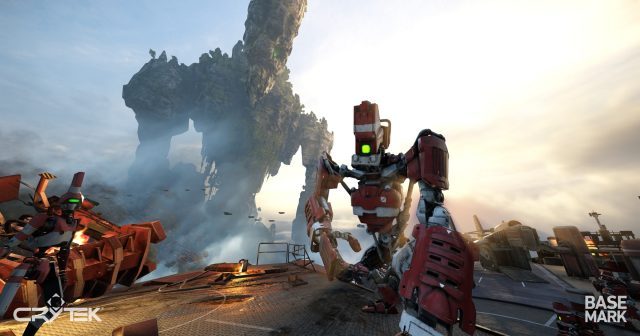
Basemark has officially launched its virtual reality performance benchmark, VRScore and the package comes complete with an ingenious, low-cost hardware assisted solution to help ensure results are accurate.

This week the eyes of the virtual reality industry are on a federal court in Dallas, Texas where ZeniMax (and child company id Software) and Facebook (and child company Oculus) have been engaged in legal battle over a dispute which could cost Facebook $4 billion. ZeniMax alleges that a former employee used VR code that it owned after being hired by Oculus, and further that Facebook should have known that the code was ZeniMax property. With jury deliberations now starting, a verdict could come as soon as today. Here’s what you need to know about the case.
 Guest Article by Brian Sommer, IME Law
Brian is an interactive media and entertainment attorney at IME Law, where he focuses his practice on the intersection of traditional entertainment and immersive media. He also serves as Co-Chair of the VRARA Licensing Committee. You can follow Brian on Twitter @arvrlaw, and @IME_Law.
For 13 days, attorneys in the Dallas federal court have been selling the jury very different stories. “One of the biggest technology heists ever” is how ZeniMax attorney Tony Sammi described to jurors Facebook’s acquisition of Oculus in opening statements.╫ In Thursday’s closing arguments, Oculus attorney Beth Wilkinson told jurors ZeniMax and Id Software are “jealous, they’re angry and they’re embarrassed” over the success of Oculus and the acquisition by Facebook.╫
At first blush, this lawsuit appears to be a complicated mess involving two plaintiffs, five defendants, nine causes of action, over 900 court filings (many sealed from the public) and a demand for more than $4 billion in damages. Without having access to many of the critical motions filed in the case (due in part to the Court’s order sealing such filings), it is not possible to assess in exacting detail certain critical arguments made by each side. But, from arguments, publicly-available filings and reports that have been made available to the public, it appears that the essence of the lawsuit can be distilled down to this: this is a dispute about who owns the intellectual property (“IP”) that was vital in creating the Oculus Rift.
Will the jury agree with ZeniMax that its proprietary computer code was a foundational component of Oculus’ success, or will the jury side with the defense’s argument that Oculus code was developed independently and based upon publicly known code and different solutions?
Starting today, jurors begin sorting through hundreds of facts and applying them to the issues contained in the jury instructions, weighing the credibility of witness testimony and evidence presented. Here are three key issues that could drive jury deliberations:

Defendant John Carmack is heralded as one of the most recognized and accomplished video game programmers and virtual reality engineers in the industry today. He co-founded Id Software (plaintiff), which was later acquired by ZeniMax (plaintiff). In April 2012, while employed as Id Software’s Technical Director, Carmack discovered through an Internet forum that Palmer Luckey (defendant)—who would go on to become the founder of Oculus—had developed a prototype virtual reality headset called the “Rift.” Carmack contacted Luckey, and Luckey sent Carmack a very early Rift prototype. Carmack is alleged to have immediately started to evaluate, analyze and modify the Rift prototype using research, software code and tools owned by id Software.
Carmack and Luckey’s friendship quickly turned business-like by May 2012 when Luckey in his personal capacity signed a nondisclosure agreement (“NDA”) with Id Software’s parent company ZeniMax, according to information from the case.
Companies use NDAs to ensure ideas or trade secrets disclosed to another party remain confidential. NDAs usually prohibit the recipient of confidential information from using or disclosing any information that they receive under the NDA, except for agreed purposes. Since an NDA is a contract, all of the legal principles surrounding contract law (e.g., elements needed to form a contract, defenses, etc.) are used to analyze an alleged breach of an NDA.
In June 2012, Luckey formed Oculus on the heels of successful demonstrations by Carmack (employed at the time by ZeniMax) and Luckey at the E3 Convention. ZeniMax alleges that through early 2013, and while bound by the NDA, Carmack and other Id Software employees collaborated with Oculus and Luckey to debug and refine the Rift.
ZeniMax alleges Luckey breached the NDA by taking ZeniMax-owned proprietary information and then using it without permission and disclosing it to Facebook. Oculus and Luckey contend the NDA is unenforceable for a number of reasons, including because the NDA was signed by Luckey in his personal capacity before Oculus was founded, a key material term was never defined, and for other legally nuanced reasons. In response, plaintiffs assert that Oculus is bound by the NDA because Oculus is a mere continuation of Luckey’s prior work. The jury’s outcome may hinge on the many factual findings related to the NDA.

Capcom’s latest entrant to its popular Resident Evil franchise is currently being played in VR by almost 10% of its players, according to global statistics from the developer.

Virtualitics is new company started by NASA JPL and Caltech alum. offering a new platform to leverage the immersive properties of virtual reality in order to better aid human comprehension and use of ‘Big Data’.

Google has put out the welcome mat and unlocked the doors to all developers wishing to develop apps for their Daydream VR platform, but in order to keep the standards high have also issued a “Quality Requirements” guide.

Facebook’s Mark Zuckerberg has tapped Hugo Barra, Xiaomi’s current Global VP, for the position of CEO at Oculus VR. Barra will be tasked with not only leading Oculus, Facebook’s subsidiary, but all of Facebook’s VR projects. Barra will be replacing Brendan Iribe who stepped down from the position last month to head the company’s PC VR group.

Deus Ex fans with VR hardware can rejoice as developer Eidos Montreal have launched a new, free VR experience based on their latest title in the series, Mankind Divided, and it’s quite the looker.

The Official PlayStation Blog has shared Sony’s most downloaded games of last year. This includes a dedicated list for PlayStation VR, representing almost three months of software sales since the hardware launched in October. PSVR now has more than 50 titles supporting the headset, check out the most downloaded in 2016 below:
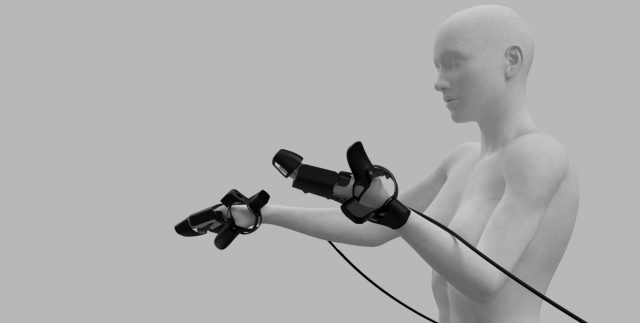
EXOS is a new haptic enabled VR glove which uses force feedback to deliver the sensation of physicality when inside immersive applications.

3rd Eye Studios is a new VR developer team formed from Remedy Entertainment alum and they’re working on a new, original made-for-VR anthology inspired by 70’s sci-fi television shows. Here’s an exclusive first look at some of the first art for the game.
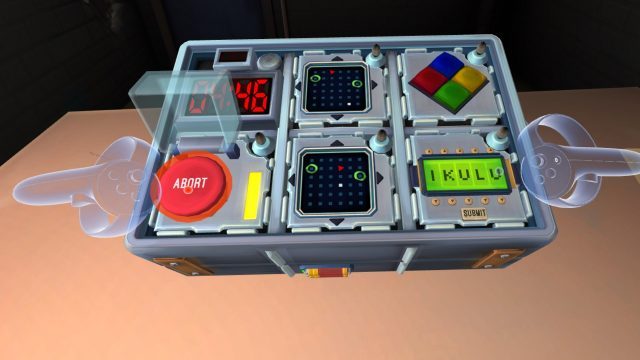
Keep Talking and Nobody Explodes is an undeniably fun VR party game that you can play together with a big group with only one VR headset. Now the game has added much requested support for both Vive and Rift’s VR controllers.

Achieving a wide field of view in an AR headset is a challenge in itself, but so too is fixing the so-called vergence-accommodation conflict which presently plagues most VR and AR headsets, making them less comfortable and less in sync with the way our vision works in the real world. Researchers have set out to try to tackle both issues using varifocal membrane mirrors.

 According to a report by The Verge, HTC’s VP of Design is leaving the company to join up with Google’s Daydream VR team.
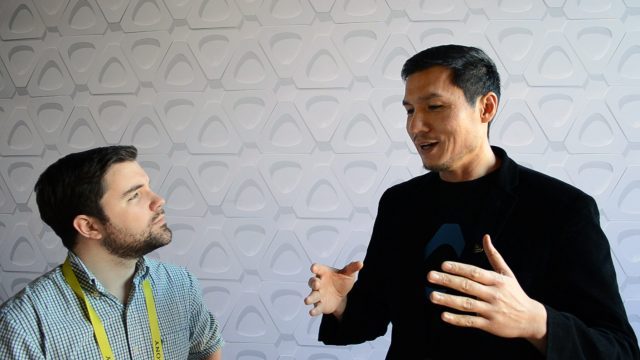
Over the course of the last 50 years, capital markets have significantly codified a generational model approach consumer technology products. New “generations” of products are expected to come at a regular pace and provide increased features and reliability at the same prices. But depending upon the product type, the typical life cycle from one generation to the next can vary greatly. With the first wave of VR headsets now available to consumers, the time will come for the next generation to be announced and eventually launch. But when?