‘Skyrim VR’ Launching on PC April 3rd with Support for Vive, Rift, and Windows VR
Formerly a PSVR exclusive, Skyrim VR is coming to PC via SteamVR, with officially listed support for the HTC Vive, Oculus Rift, and Windows VR headsets.
Sixense, the company behind the much-belated positionally tracked STEM controller system, just released an update stating the company is “getting close to be able to start production,” which should follow an estimated 4-week retooling and finalization of production samples.
Valve today released an update to SteamVR Beta that introduces a new system that automatically adjusts the VR game’s resolution in accordance with your GPU’s rendering ability. Presented by Valve Graphics Programmer Alex Vlachos in an official announcement, the auto-resolution tuner is, according to Vlachos, designed to squeeze the best possible visual experience out your GPU, lower the cost of VR, and also make developers’ lives a little bit easier.
If you’ve used your Oculus Rift since the beginning of February, you likely already have a small surprise waiting for you in your account.
Oculus Research’s director of computational imaging, Douglas Lanman, is scheduled to give a keynote presentation at SID DisplayWeek in May which will explore the concept of “reactive displays” and their role in unlocking “next-generation” visuals in AR and VR headsets.
As VR display resolutions become more packed with pixels and new controller types such as Valve’s Knuckles dangle tantalizingly in front of us, one thing that often goes overlooked is haptic feedback. There are plenty of companies out there working to help define the first real haptic standard outside of tiny vibration motors seen already in VR motion controllers, and now it appears Microsoft can be counted among them with their newly revealed CLAW controller prototype.
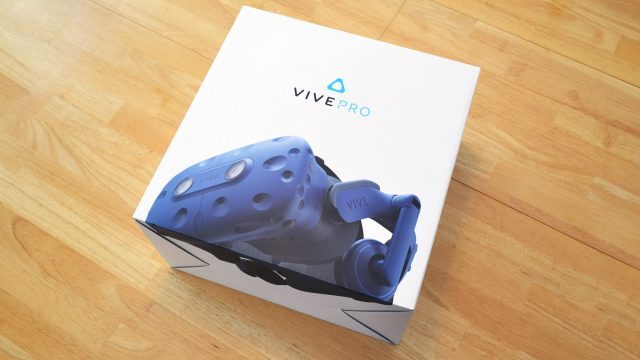
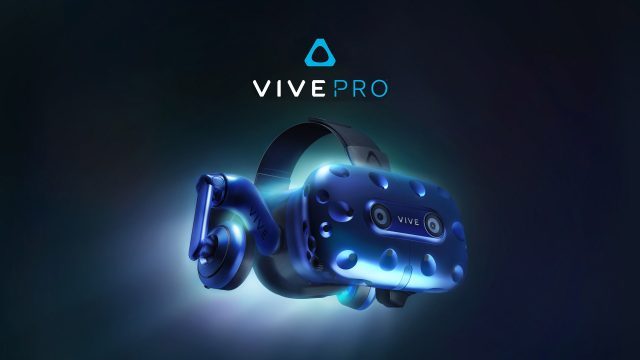
HTC Vive Pro, the company’s higher resolution VR headset targeted at prosumers, isn’t on sale yet, although developers have been receiving Vive Pro as early as mid-February. While there still isn’t a comprehensive look at all of the gubbins to go along with the headset, Cloudgate Studio co-founder Steve Bowler recently tweeted a few snaps of Vive Pro that give us a clearer view of some of the differences coming to the headset’s Link Box.
Enterprise VR headset manufacturer VRgineers and Leap Motion, the company behind its eponymous optical hand tracker, announced they’re working together to embed Leap Motion’s tech into professional-grade VR headsets.
Offering an update to backers of the successful Pimax “8K” Kickstarter, which aims to deliver a high resolution VR headset with an ultrawide field of view, Pimax says ‘M1’ pre-production units should be complete by April, with initial backer shipments of the final “8K” headset starting in Q2.

Holonet is an open source project that implements the Decentralized Identity Specifications for open web VR platforms like WebXR. A self-sovereign identity system could enable the seamless portability of your avatar identity across multiple sites without having to use centralized authentication methods that would require you to login to every site with a unique username and password, or have to re-upload assets onto every metaverse world that you visit. The Decentralized Identity Foundation formed in May 2017 with a number of blockchain companies and bigger companies like Microsoft who got together to open source their blockchain identity IP in order to create a number of decentralized identity open standards.
The American Dream is set to launch on March 14th, and the moment, most unfortunately, couldn’t be more timely. The game’s gun-fueled gameplay takes US gun culture to the extreme, examining a world where babies are born packing heat and guns are the answer to everything. In the wake of a string of tragic mass shootings in the US, the nation is embroiled in debate, pitting the loss of innocent life against the constitutional right to bear arms. At the same time, part of that conversation has seen renewed finger pointing at violent video games as part of the problem.
Wedding VR, a marriage simulator created by Japan-based game studio Voltage Inc., came to the Oculus Store and Steam recently. In it, you become a bride-to-be, replete with wedding dress, bouquet and impossibly tiny hands only fit for a character transported from manga/anime and realized in 3D. “Who is this for?” you may ask—apparently fans of Voltage’s prolific ‘romance games’, a genre of dating sim decidedly focused on males as the object of amorous pursuit. The fact that it’s subbed in English and is also featured on Western-facing digital store fronts means we get to say something about it though.
Google announced at last year’s Society for Information Display (SID) Display Week that the company was actively working on a VR-optimized OLED panel capable of packing in pixels at a density heretofore never seen outside of microdisplays – all at a supposedly ‘wide’ field of view (FOV). Now, it appears that the company is going to talk in detail about that high-resolution OLED at this year’s SID.