RollerForce attempts to blend gunplay with a rollercoaster. Following on from the atmospheric iOmoon, Headtrip Games’ latest wants to take you on a very different ride on the HTC Vive, with support “coming soon” for Oculus Rift with Touch.
The first chapter of Angels and Demigods, 7 Keys Studios’ lightly gamified, anime-style “VR visual novel,” is out, and four more chapters are waiting on funding from a Kickstarter launched September 28. Available for Vive via Steam, Cardboard via Android and iOS, and desktop via Mac OS and Windows, chapter one aims to expand to Samsung Gear soon.
Ricoh, the Japanese imaging and electronics company, today announced a new model of the Theta, the company’s pocketable 360 camera. It’s called Theta SC.
Steam Dev Days, Valve’s annual developer conference, just started and from the tweets we’ve seen (no press allowed!) VR is getting the star treatment this year already.
Oculus Medium may be the first professional 3D modeling creation tool for the Oculus Touch controllers. It was created with the goal to democratize the process of creating 3D art and prototyping 3D-printed objects. The Medium developers didn’t set out to build a high-end industrial art tool, but early beta testers have been starting to integrate Medium within their professional 3D graphics pipelines.
LISTEN TO THE VOICES OF VR PODCAST
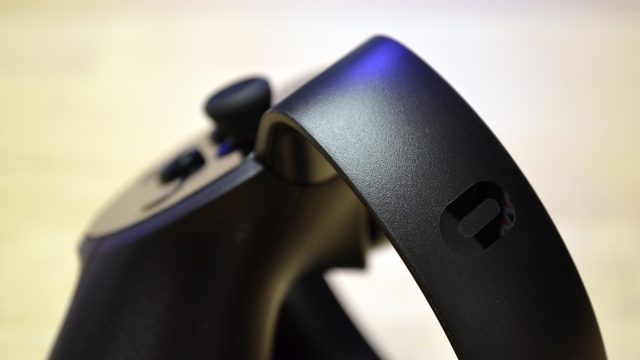
There have been a TON of improvements and UI developments to Medium over the last year, and it’s in the process of final improvements before being released with the Oculus Touch Controllers on December 6th. I had a chance to talk with Oculus Medium lead Brian Sharp about some of the design intentions behind Medium as well as some of the surprising ways that it’s already being used by professional artist like Goro Fujita. We talk about the evolution of the 3DUI, and how they wanted to stick to physical metaphors that anyone could understand rather than abstract concepts that only graphics professionals can grok. Medium is a great example of a VR program that demonstrates the power of immersive computing and how it can be much more intuitive and easy learn than previous 2D methods.
Valve’s annual Steam Dev Days event is underway and news about how the company is investing in VR’s future is seeping out. One interesting development is that they’re reportedly investing in 60Ghz wireless video streaming specialists Nitero, with a view to bringing wireless VR to their virtual reality offerings.
At GTC Europe in Amsterdam last month, NVIDIA’s ‘VR Village’ was host to a number of cutting-edge virtual reality demos, many of which we’ve had our hands on before. But there was something new being shown behind closed doors.
Inside a Lighthouse base station | Photo courtesy Valve
Valve have revealed that their room-scale tracking technology SteamVR has now been licensed to over 300 companies, many of which plan to release products integrating the tech in 2017.
Epic Games has had a long history of releasing new demo content at big gaming and developer conferences to showcase the latest Oculus hardware, and this year was no different. Oculus Studios provided funding to further develop the Bullet Train demo from last year into a fully-fledged FPS game called Robo Recall. This demo had one of the most polished and mature game mechanics expanding upon the Bullet Train bullet capture-and-throw mechanic into new weapons and upclose hand-to-hand combat with stylized arcade AI robots gone rouge.
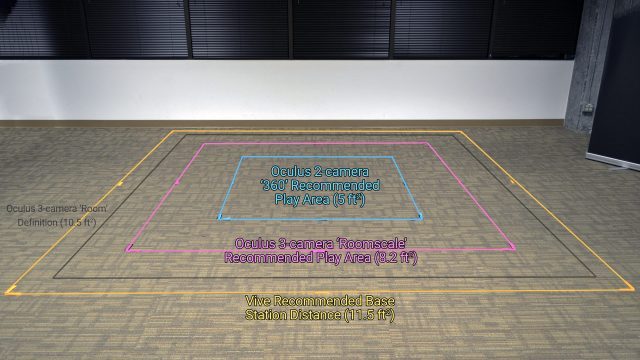
I had a chance to talk with Epic Games VR lead Nick Whiting and artist Jerome Platteaux about their design process, deeper intentions, and overall art style and direction of the game. They debuted a new locomotion technique that was designed to help subtly guide players to facing the true north of the front-facing cameras, and Nick admitted that there are some design constraints to creating a game with the Oculus’ recommended front-facing camera arrangement. Jerome also said that there are new gameplay options that open up with a potential third tracking camera, but they didn’t give any more specifics as to whether Robo Recall intends on supporting the optional room-scale type of gameplay.
In the 2nd of our 3 part developer diary series from Battlezone developers Rebellion, Game Designer Grant Stewart writes on making levels that don’t just use VR, but also welcome you into the game world.
One of the flagship announcements at last week’s Oculus Connect developer conference, Epic Games’ Robo Recall is a slick, polished first person shooter built for Oculus’ forthcoming VR motion controllers Touch. Here’s 12 minutes of raw gameplay from the Connect 3 demo to give you some idea of what to expect when the game lands early next year (see embedded video at the top of this article).
A new annual conference from Greenlight Insights is angling itself to sate the growing desire for “actionable insights” from the rapidly expanding VR industry. The 2016 Virtual Reality Strategy Conference aims to layout the “new rules” of the VR economy.
In this episode of the Voices of VR podcast, I recap some of my highlights from Oculus Connect 3, but also dive into some of my biggest concerns and questions coming out of this year’s big developer conference. My two biggest concerns were the lowering of the minimum specification for an Oculus-ready machine, as well as some new announcements from Oculus about their support for room-scale VR.
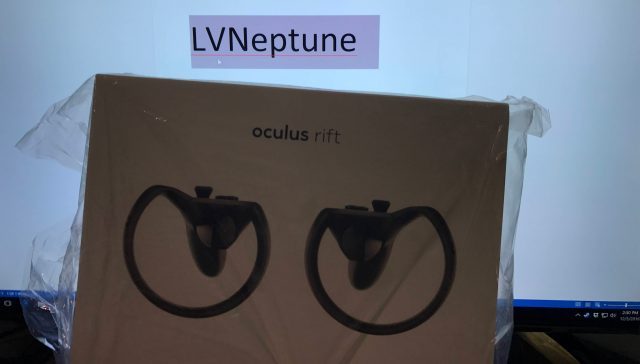
Oculus Rift owners take note: pre-orders for Touch begin today at 12pm PT (your local time), including VR Sports Challenge, The Unspoken as well as an extra sensor and adapter for Rock Band VR. The pre-order bundle will cost $199.