New Magic Leap Videos Shows AR Shopping and Voice Control
A new video of Magic Leap’s augmented reality tech in action was shown at a conference in China today.
A new video of Magic Leap’s augmented reality tech in action was shown at a conference in China today.
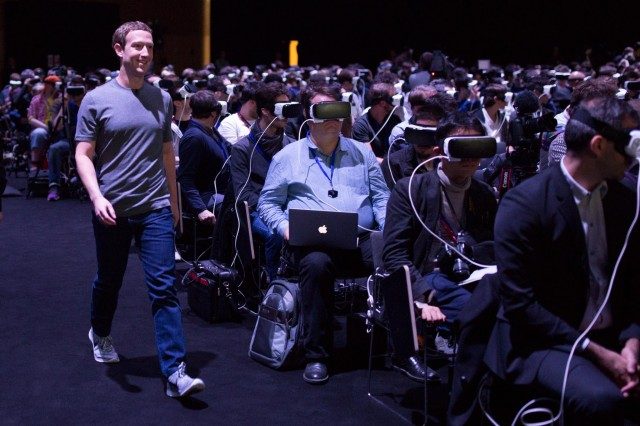
Facebook CEO Mark Zuckerberg says the company is working seriously on augmented reality R&D, but he believes it will take time for the technology to catch up to where VR is today.

 Pokémon Go has quickly become the #1 mobile game of all time, and while there’s been some debate as to whether it should be considered Augmented Reality or not, it’s clear that location-based gaming has taken to the next level.
I had a chance to unpack some of the game design principles to see how it’s optimized to facilitate cooperative social gameplay with Roadhouse Interactive’s VR Director Kayla Kinnunen at Casual Connect this week. Kayla talks about how Pokémon Go has connected her to more strangers in two weeks than in 15 years, how it’s changing her relationship with her wife, encouraging her to walk more, as well as some of the social contract issues and deeper lessons for the future of augmented and virtual reality gaming.
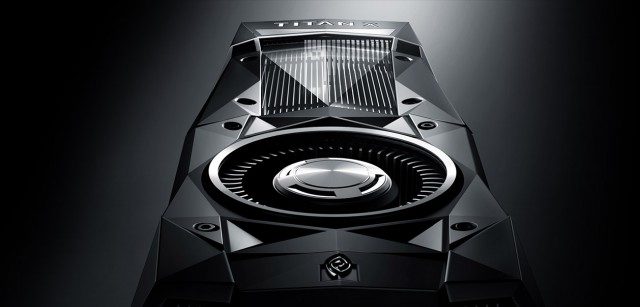
This evening at an artificial intelligence event at Stanford, NVIDIA CEO Jen-Hsun Huang revealed the next-gen Titan X, the company’s crazy-powerful, crazy-expensive high-end GPU.

Listings on Amazon have revealed prices for some PlayStation VR games, giving an idea of what Sony plans to charge for the first wave of virtual reality titles to hit the console platform.
NVIDIA Research has demonstrated a new method of foveated rendering which the company says is nearly invisible to users. Researchers behind the new approach say the method can drastically reduce rendering workload, allowing for more detailed virtual reality scenes.

 What are the game design considerations for creating a VR experience that will be compelling for not only the primary player, but also the spectators who may be watching it on a livestream with VREAL? This was the big question that I discussed with VREAL’s Director of Developer Relations Tadhg Kelly, who has been collaborating with VR developers to make sure that an experience works for both third-person spectators as well as the primary player.

 When people dream about what they want to do in VR, it inevitably involves actually moving around within a virtual environment. But VR locomotion triggers simulator sickness in a lot of people, and solving it is one of the biggest open problems in virtual reality. NextGen Interactions’ Jason Jerald wrote a comprehensive summary of much of the pertinent academic research about VR in The VR Book, and in Chapter 12 he summarizes the five major theories of what may cause simulator sickness.

Among more than 9,000 games on Steam, Valve’s VR title The Lab is heading the platform’s list of top rated games.

Mr. Robot fans take note: a special one-time-only 360 experience is headed your way for Oculus Rift, HTC Vive, Gear VR and Google Cardboard-enabled smartphones exactly at 10:45 AM PST on Thursday, July 21st.

The Assembly is a first-person adventure game that wants to put your moral fiber to the test. Much like a novel, the game alternates back and forth between two characters: a brilliant neurologist entering the shadowy research institute eponymously dubbed ‘The Assembly’, and an equally brilliant virologist trying to get out. As both characters, you come to better understand why the mysterious organization was driven to the shadows, and why it should probably stay there.
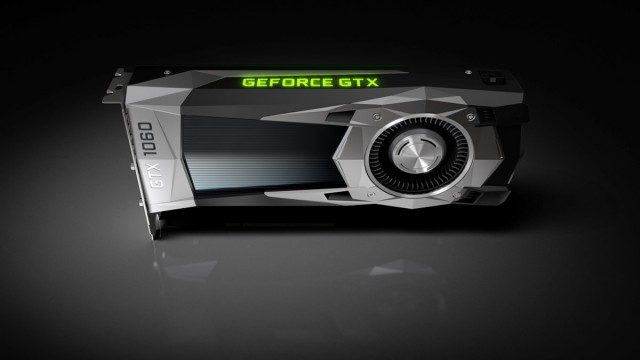
Today marks the launch of NVIDIA’s GTX 1060, the least expensive of the company’s 10-series GPUs so far revealed. According to Nvidia, the GTX 1060 matches the performance of the former flagship card, the GTX 980, but at only 120 watts. Starting at $249, the 1060 faces off against AMD’s $199 RX 480.
There’s been a lot of talk about the latest data from Valve’s latest Steam Hardware & Software survey, most of it drawing erroneous conclusions about overall market share of VR headsets while missing out on a very interesting data point.
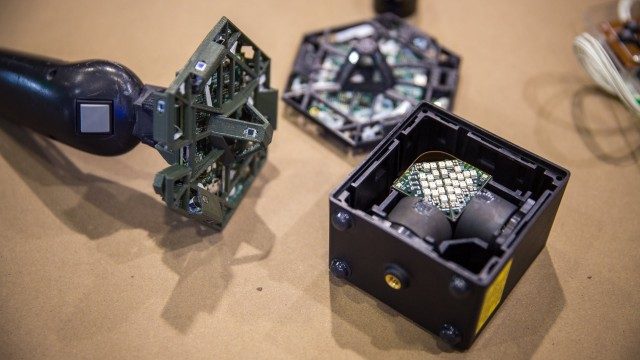
Valve’s ‘Lighthouse’ tracking system affords the HTC Vive a ‘room-scale’ tracking space for the VR headset and its controllers through the use of area-sweeping lasers. But exactly how accurate is it? Oliver Kreylos, a VR researcher at UC Davis, has a great analysis of the system which tells us that and much more.