Analyst: ‘Facebook Earnings Call Didn’t Rule Out 2015 Oculus Rift Launch’

2

A report regarding a Facebook earnings call from Gamasutra earlier this week painted a dim picture for an Oculus Rift 2015 release date. However, an equity analyst who spoke with Road to VR says that the call didn’t rule out a 2015 launch.

These Brilliant Sculpture Masks Chart Virtual Reality’s History

0

1Welcome to Zenka’s Mini-museum of VR History

Jenny Carden, aka Zenka, is a Los Angeles-based artist who created a unique exhibit that showcases the history of virtual reality. More than 20 life-sized ceramic raku ‘masks’ depict notable virtual reality and augmented reality headsets. Her interesting perspective captures the humor and nostalgia associated with clumsy high tech beginnings of VR. It also shows the progression of the medium towards a polished, consumer driven technology.

The exhibition contains everything from Ivan Sutherland’s famous ‘Sword of Damocles’ from the 1960s to various NASA research experiments through the Oculus Rift and early Valve prototypes; not to mention a few other obscure curiosities. Zenka not only crafted these works of art by hand, but she also published an a timeline charting the developments of virtual reality headsets online. All of her sculptures can viewed on a personal timeline as well.

“The show’s title, Presence, not only speaks to the fact that the subjects depicted are ironically sealed in their own worlds – it is actually a virtual reality buzz-word used to describe the strange tipping point when a person’s brain and body miraculously click over to a point where VR becomes ‘physically’ real to them” says, Zenka. “When a headset achieves presence,” she explains, “there is no way your body would let you jump off a bridge in this state, even though it is fictional.”

Zenka’s exhibit was located at the District Gallery in the heart of the Arts District in Los Angeles, California. The art show began with an opening party on March 7th, 2015. The doors remained open for the public up until April 26, and she plans on taking custom orders for six months after.

So as the number of virtual reality devices starts to balloon with the explosion of the medium, we’ve taken the opportunity to chart the technology’s history through Zenka’s sculpture.

Use the navigation arrows above to move through the slides.

2It all Starts with a Lump of Clay

Zenka sculpted each ‘mask’ out of clay and fashioned them to look like the real headsets. Some of the faces seen in the art work are real people, including some of Carden’s friends. She also produced the heads of celebrities like Sergey Brin the co-founder of Google, and others like renowned actor Jeff Bridges wearing an Avegant Glyph headset (see above).

3Raku: the Firing Method of Choice for this Exhibit

The entire collection was developed through through a type of Japanese pottery known as “Raku.” This method involves removing red hot ceramics from a kiln at a temperature of 1750 degrees and then dumping them into a metal container filled with paper. This causes the the material to immediately bursts into flames.

Raku is documented as a 16th century Japanese firing technique that was westernized and reinvented in Los Angeles hundreds of years later. During a recent resurgence of Raku in the 1960’s, Ivan Sutherland was inventing the very first virtual reality headset he called the “Ultimate Display”. This is part of the reason that Zenka chose to work with the medium.

“I am drawn to raku because the rustic, crackle and iridescent glaze effects give my futuristic sculptures the feeling that they have been dug out of an architectural dig from the past.” says Zenka.

4These Items Are Beyond Hot

Once the lid of the metal container is closed, the area inside is deprived of oxygen causing the metals to produce unpredictable and iridescent effects. From there, smoke soaks into the unglazed clay to create rich black matt surfaces. Afterwards, the works of art are removed carefully from the heat and placed somewhere to let them sit – cooling them down to room temperature.

5‘The Sword of Damocles’ (1968)

With the help of his student, Ivan Sutherland, computer scientist and Internet pioneer, created what is considered the first virtual reality and augmented reality head-mounted display (HMD) system. They named it the ‘Sword of Damocles’ in reference to a Greek mythological weapon because of the cumbersome nature of the system as it hung from the ceiling.

The ‘Sword of Damocles’ was at the time dubbed “the ultimate display” by the research team. As the Wikipedia page for the device states, it was “primitive both in terms of user interface and realism, and the graphics comprising the virtual environment were simple wireframe rooms … The weight of Sutherland’s HMD, and the need to track the head movements necessitated the HMD being attached to a mechanical arm suspended from the ceiling of the lab. The formidable appearance of the mechanism inspired its name.”

The legendary headset now sits, preserved for posterity, at the Computer History Museum in Mountain View, California.

6NASA VR (Circa 1980s)

NASA has been researching virtual reality for decades. In the 1980s, people like Scott Fisher and Mark Bolas worked at the Ames Research Center. They looked for ways to use the platform for remote presence. The idea was that, instead of sending people into the hostile environment of space, NASA would instead use robots. Astronauts could then don a VR headset and remotely operate the unit from the robots’ point of view, limiting the risk to human life.

Optimized-Zenka-NASA-2

7Sega VR (1993)

In 1991, the Japanese multinational video game company known as Sega announced a head-tracked virtual reality headset that was in development. At that time, the corporation was flush after the success of their Sega Genesis gaming console. With available funds, Sega put money into research and development for a VR device primed for a market release a couple years later. They dubbed the headset Sega VR.

A prototype of the headset was shown at the Winter Consumer Electronics Show (Winter CES) in 1993. The device was planned for release later that year with a projected at $200 and would be released with four launch games, including a port of an arcade game called Virtua Racing. Shortly after that announcement, Sega pushed back the date to spring 1994; attributing the delay to development difficulties. Unfortunately, the headset never made it to market and remained only a prototype hidden within the history books of VR’s lifetime.

8I-glasses 920HR (2009)

This relatively unknown device was created by a company called Ilixco. According to the company’s website it contained a 920,000 pixel high resolution Head Mounted Display and weighed only 2.4 ounces. The headset featured “a virtual image size of 80 inches” as seen from 5 feet, with the capability of viewing 3D formatted programming in true stereoscopic 3D.” It could connect to standard video source of the time (DVD, VCR, MP4 Player) via the included cables. The I-glasses even had adjustable brightness and contrast features as well.

9Sensics SmartGoggles (2009)

These headsets were untethered, Android based units with multiple cameras embedded. Dubbed ‘SmartGoggles,’ the system was developed for first-person experiences with hand tracking, which provided a natural interaction with the included applications.

10Google Glass (2009)

These devices were pieces of wearable technology that contained an optical head-mounted display (OHMD). Google’s mission was to prove that wearable technology and computer vision was viable. Glass displayed basic information which the user perceived as a heads-up display. Owners can pull data on demand from the web and snap images and video controlled via voice commands.

Google started selling a prototype of Google Glass to qualified “Glass Explorers” in the US in April 2013, for a limited period for $1,500, before it became available to the public in May 2014, for the same price.

A couple of years later, Google announced the discontinuation (or as they put it, “graduation”) of its beta phase. The dedicated team then teased what they were calling ‘Glass 2.’ On a side note, Google also invested money into the extremely secretive AR company Magic Leap, which has left the world wondering what they will do next.

Zenka’s artistic take on the augmented reality headset is modelled on Google Co-founder, Sergey Brin’s visage.

See also: Google Glass “Graduates” from Google[x], New Dedicated Team Teases ‘Glass 2′

11ImmerSight Tracking Ring (2013)

ImmerSight’s positional tracking system could be used with any head mounted display including the Oculus Rift headsets. It was produced by a company in Germany and utilizes a webcam with a “fashionable” pentagon device worn on the head. This units tracks translational head movements which can be used to enhance immersion.

See also: ImmerSight Brings Positional Tracking to Any HMD, Makes You Look Like an Alien

12Oculus Rift DK1 (2013)

After Oculus’ successful Kickstarter campaign, the virtual reality company began sending out the initial iteration of their development kits to content creators. The large, box-like device was odd looking, but it was by far better than anything else seen on the market. Soon, developers started making immersive environments. The reactions of those trying the headset for the first time took the world by storm.

13Oculus Rift DK2 (2014)

The second version of the Oculus Rift developer kit was released in 2014. It came with precise, low-latency positional tracking that opened the door to entirely new interactive and gameplay opportunities. The headset included a low persistence OLED display that helped to eliminate motion blur and judder, two of the biggest contributors to simulator sickness.

This particular piece encapsulates look of awe that is often seen on people’s faces, lost in virtual reality.

14Valve ‘Dot Tracked’ VR Prototype (2014)

While Oculus was releasing developer kits, Valve started showing people their room-scale approach to virtual reality. The headsets at first used cameras to track reflective dots on the headset to determine the orientation. This tracking method however was flipped inside out and and a laser system was added. This turned the platform into a scalable system that could account for input solutions. Soon, Valve and smartphone manufacturer HTC teamed up to produce a slick headset ready for consumer purchase that is projected to be released at the end of 2015.

See Also: Valve Reveals Timeline of Vive Prototypes, We Chart it For You

15Samsung Gear VR (2014)

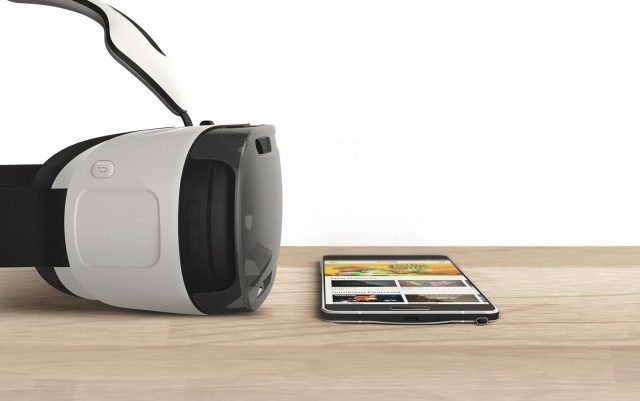
Around the same time as the Facebook acquisition, Oculus partnered up with Samsung to create a mobile virtual reality headset that paired with the new Note 4 smartphone. This would bring VR to the public like never before. It helped proliferate the industry and allowed those with a specific smartphone to gain access to the medium through a custom headset. Although there was no positional tracking, it gave people an additional portal to teleport themselves into VR experiences, which the platform desperately needed.

16Oculus Rift Crescent Bay (2014)

At Oculus’ inaugural developer conference ‘Connect’ in 2014, the company showed off a brand new prototype, the closest yet to a consumer grade experience. The device is lightweight, included 360 degree positional tracking and dual high resolution panels. The IR tracking LEDs can be seen in Zenka’s representation of the headset.

17Oculus Rift CV1 (?)

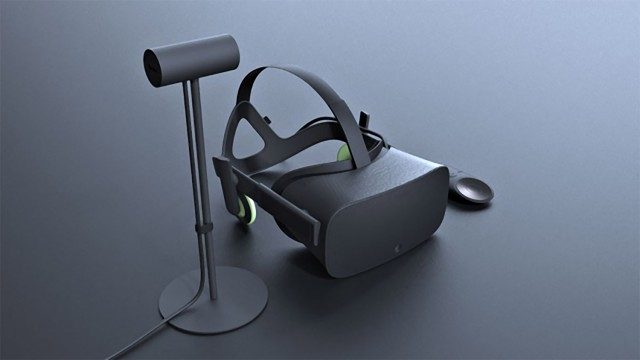
No one knows what Oculus’ eventual foray into consumer VR will look like, but that of course hasn’t stopped people from speculating.

This final piece is Zenka’s impression on the eventual CV1 will look like. Expected to arrive late 2015 / early 2016, device that is primed for a projected late 2015 or early 2016 release. Zenka’s take bears more than a passing resemblance to the original Kickstarter design, as featured in the campaign’s promo video of the time.

ConVRge Weekend Events: Leap Motion Q&A and Road to VR Team AMA

0

ConVRge, the online VR social space, has announced its event lineup for this weekend and they include an informal AMA with the Road to VR team as well as a developer focused Q&A with Leap Motion ‘Experience Engineer’ Isaac Cohen.

Samsung Gear VR for S6 Hands-on, “the best picture quality we’ve ever seen”

4

We had the Samsung Gear VR team in our office recently and they gave us a hands on look at the new Gear VR headset for the Galaxy S6 and S6 Edge. Here are some of the notable improvements.


dan fergusonThis guest article comes to us from Dan Ferguson, Director of Interactive Digital at Reel FX, a Golden Globe nominated visual effects and animation studio. Dan is responsible for creating digital experiences for the company’s VR and mobile clients, including the Pacific Rim: Jaeger Pilot VR experience which debuted at Legendary Pictures’ 2014 Comic-Con digital activation, and the Insurgent VR mobile app created for the Lionsgate film – Insurgent.


First of all, the headset is lighter and the phone connector is tighter. Apparently it’s 15% percent smaller than the original Gear VR for Note 4. Newly added is a silent fan that helps keep the lenses fog free.

One thing we noticed and totally appreciate is the USB port on the bottom of the headset, which allows you to charge while the phone is plugged into the unit. We do a lot of events and having a plug on the outside is going to come in handy for keeping the phones powered throughout the day. The original Gear VR didn’t have a plug on the outside, you had to remove the phone to charge.

samsung-gear-vr-for-s6-3The focus wheel on top of the Gear VR for S6 gives you an extra 10-20% more tuning ability over the original. This diopter adjustment brings the virtual reality image into focus without the need for glasses, offering a more comfortable view and increasing the field of view by allowing the lenses closer to the user’s eyes than if they were wearing glasses.

See Also: New Gear VR for Galaxy S6 and S6 Edge Goes on Sale May 8th in U.S, Pre-orders Start Tomorrow

samsung-gear-vr-for-s6-5For those of you that always had a hard time locating the trackpad on the side of the unit, they have added a small tactile bump, which is great for finding the center of the pad. The trackpad feels like it’s been indented a little more, making the edges more pronounced.

We got to look at some of our latest work on the Galaxy S6 which fits beautifully in the headset. I have to say that it delivers the best picture quality we’ve ever seen in a VR headset. The 577 PPI pixel density of the S6’s 2560×1440 display is fantastic, removing the screendoor effect that has plagued headsets for years (the Note 4 used in the original Gear VR has a larger display of the same resolution, resulting in a lower pixel density). The future looks great.

samsung-gear-vr-for-s6

The Samsung Gear VR for S6 is now available for pre-order from Best Buy and will be available for sale from BestBuy.com and Samsung.com starting on May 8th.

Widescale Tracking and Real Props Make for an Even More Immersive VR Experience

0

Kenzan, a Geneva based 3D visual effects company, has recently released a video showing a curious motion capture installation that could have you discovering a pharaoh’s tomb in a setting that blends the physical world with the virtual. The company calls it Real Virtuality.

New Version of ‘Surge’ VR Music Video Includes ‘Ultra’ Option for Beefy Graphics Cards

0

Surge, an impressive real-time VR music video, has been recently updated with an additional graphical setting to make the experience look even sharper for those with powerful graphics cards.

New Gear VR for Galaxy S6 and S6 Edge Goes on Sale May 8th in U.S, Pre-orders Start Tomorrow

3

Samsung today announced that the new Gear VR for the Galaxy S6 and S6 Edge will go on sale May 8th and become available for pre-order on the 24th. The new mobile VR headset from Samsung (made in collaboration with Oculus) is still sold under the ‘Innovator Edition’ tagline.

Altspace Beta Weekend 24-26th – Featuring SVVR Livestream and New D&D Game Board

0

AltspaceVR is hosting another Beta Access Weekend on April 24-26, and this time the social VR space has added a few more features to watch out for, features that when you say them out loud, could alienate you from casual acquaintances and your extended family… in a good way.

Sixense Teams up with SapientNitro to Show VR’s Marketing Potential

0

Last weekend Sixense, creator of the STEM controller, came for a visit to digital agency SapientNitro’s NYC office. Armed with VR headsets and STEM controllers, the order of business was to demonstrate the marketing potential of virtual reality technology to clients from SapientNitro’s impressive roster.

Rupert Murdoch, 21st Century Fox CEO, Checks out NextVR on Samsung’s Gear VR

0
rupert murdoch gear vr nextvr
NextVR co-founder DJ Roller watches Murdoch watch NASCAR. Photo courtesy Murdoch Here.

Rupert Murdoch, CEO of 21st Century Fox and News Corp, had a chance to try on Samsung’s Gear VR recently. NextVR introduced Murdoch to their 360 degree NASCAR recordings.

Google’s Chief Technology Advocate Joins as Wearlity Sky CEO as Kickstarter Passes $60,000

3

Wearality Sky has surpassed half of its crowdfunding goal of $100,000 for their VR smartphone adapter, a device that offers a 150 degree field of view (FOV) for 5–6 inch phones. With former Google Chief Technology Advocate Michael Jones signing on as new CEO of the startup, adding to the already major league cast of the project, the sky’s the limit (sorry).

We Preview ‘Crystal Rift’ on the Oculus Rift – Now Available on Steam Early Access.

0

Crystal Rift from Psytec Games promises a return to the halcyon days where 3D, grid based gaming was at the cutting-edge albeit this time in VR. So what does a retro-inspired, virtual reality dungeon crawler feel like? As the game hit Steam Early Access yesterday as part of their Early Access program, we’ve gone hands on with Oculus Rift version to find out.

360 Film Aims to Save Majesty of Grand Canyon Using the Power of VR, Kickstarter Now Live

1

The untouched beauty of the Grand Canyon has inspired poets, novelists, film makers, and more than 4 million recreational visitors per year to make their way to the dramatic cliffs that border the Colorado River basin. 360 Labs aims to preserve that legacy with a new 360 degree documentary that will go into the heart of the canyon that is currently in danger of being forever changed by a new construction project.

How to Configure VorpX to Play GTA V on the Oculus Rift

1

PC Game launches don’t come much bigger than Grand Theft Auto, and GTA V’s launch just last week has been no exception. Similarly, VorpX’s rapid addition of GTA V support to allow players to experience the game on the Oculus Rift has been phenomenal. But how do you get the best out of GTA V with VorpX? Here’s an official guide from the developer himself, Ralf Ostertag.

39,929FansLike
13,574FollowersFollow
66,541FollowersFollow
27,800SubscribersSubscribe

Latest Headlines

Features & Reviews