
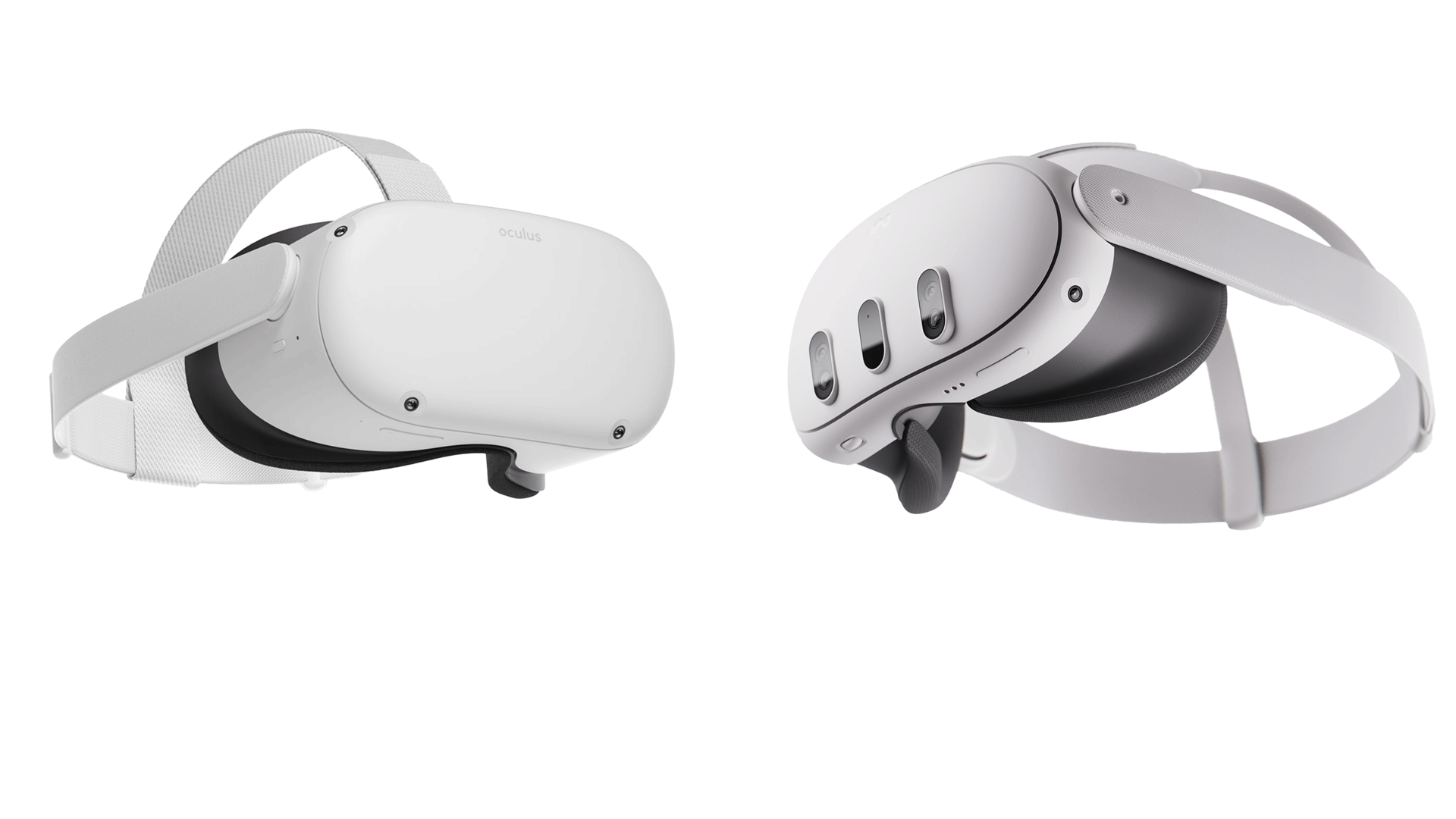
Quest 3 Passes a Critical Milestone as the Most-used VR Headset on Steam

12

Nearly two years after its launch, Quest 3 has finally claimed the top spot as the most-used VR headset on Steam. Though the metric is measured by Steam’s stats, the importance of the milestone has little to do with PC VR.

The News

Quest 2’s four-and-a-half year streak as the most-used VR headset on Steam has finally come to an end, dethroned by Meta’s own Quest 3. Fittingly, Quest 3’s ascendance comes almost exactly two years after the headset was first released on October 10th, 2023.

That’s according to the latest Steam Hardware & Software Survey, which reports some baseline statistics about what kind of hardware and software is used by the platform’s population, and to see how things are changing over time, including the use of VR headsets.

The latest data shows that Quest 2 has fallen to 26.17%, while Quest 3 just barely ahead for the first time with 26.68% of the share of monthly-connected VR headsets on the platform.

The next closest headset is Valve’s own Index, coming in at a distant third with 13.47% share.

While it took Quest 3 two years to steal the throne, Quest 2 had a more meteoric rise. It took just a few months after release for Quest 2 to overtake the then-reigning champion, Rift S. And it held onto the #1 spot for a staggering four-and-a-half years… until now.

SEE ALSO
Meta Reportedly Reshapes Metaverse Division Amid Leadership Shifts, Putting AI at Its Core

Released back in October 2020, Quest wasn’t just a more affordable and refined version of Meta’s promising new line of standalone ‘Quest’ headsets. It was also launched right in the midst of the Covid-19 pandemic and the lockdowns that ensued; a time when people were looking for ways to connect and escape without leaving their homes.

While Quest 2 was launched as the company’s most affordable standalone headset to date, Quest 3 launched with a higher price and without the boost of a global pandemic. It may have taken two years for it to take the crown as the most-used VR headset on Steam, but that doesn’t make the moment any less important.

My Take
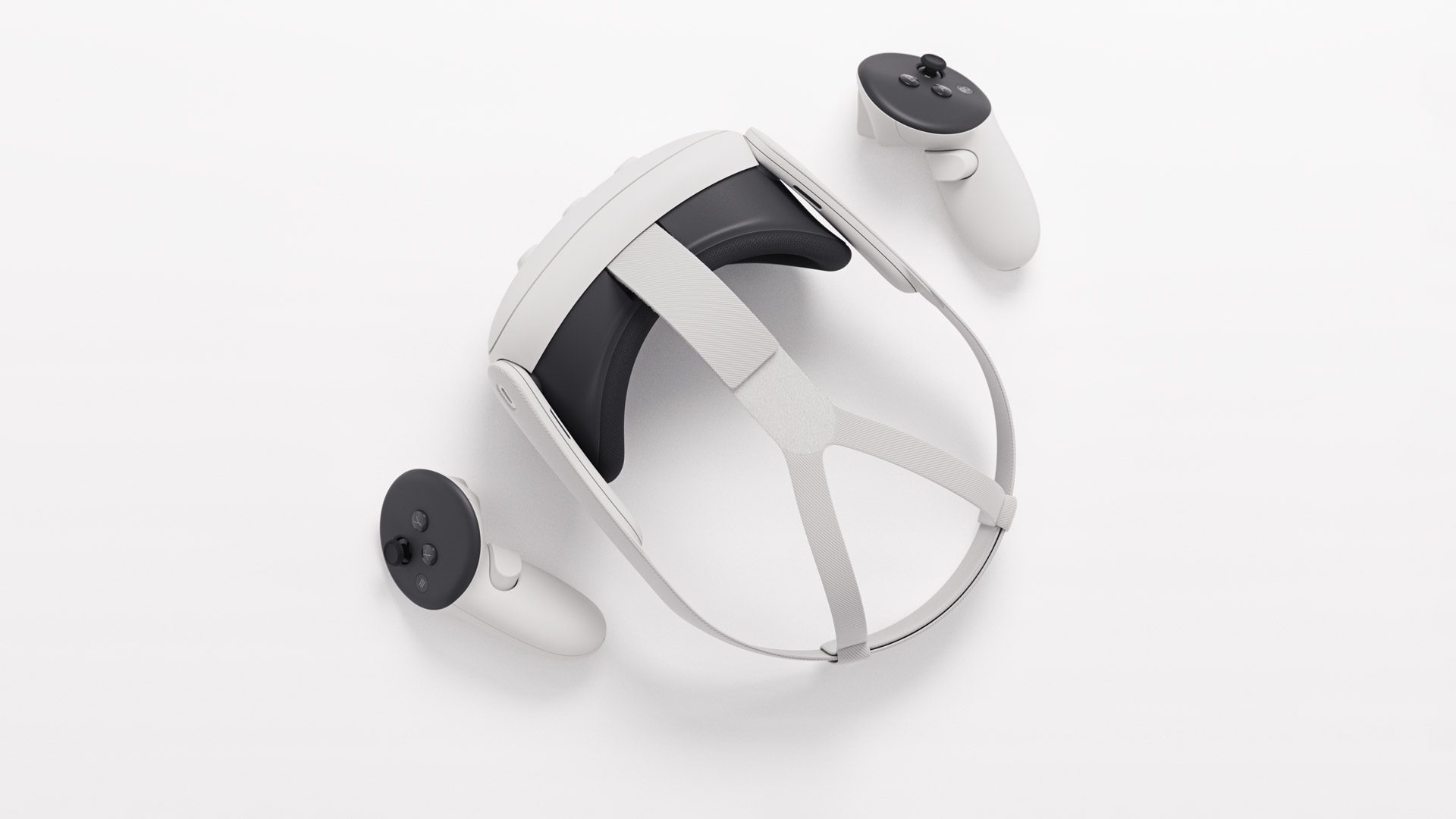
Image courtesy Meta

Quest 3’s rise to the most-used headset on Steam actually has little to do with PC VR. More importantly, I see it as the most concrete sign we have that the transition between Quest 2 and Quest 3 is finally tipping toward the latter.

This has important implications for developers and Meta’s VR ecosystem.

At launch, Quest 3 was heavily marketed around its “mixed reality” (AKA passthrough AR) capabilities. Indeed it had significantly higher resolution passthrough cameras with color—a huge improvement over the grainy, black & white passthrough capabilities of Quest 2.

But with such a huge population of Quest 2 headsets, developers had little incentive to build mixed reality content that only worked well on Quest 3. And so most developers stayed focused on building pure VR content that would run just as well on either headset.

Even among the pure VR content, many developers weren’t initially focused on tapping Quest 3’s extra power and resolution; understandably, it was difficult to commit the resources to optimizing for a headset that was just getting a foothold among the Quest population.

That led to a string of major releases that launched either without consideration for Quest 3 at all, or at best, an eventual post-launch patch with improvements for Quest 3. Even Meta’s own major first-party release, Asgard’s Wrath 2 (2023), wasn’t well optimized for Quest 3 at launch; it took five months before the game was finally updated to tap the headset’s greater power and visual quality.

Today, I think we can say the tide has finally shifted. Quest 3 is not only the most used headset on Steam; its sibling, Quest 3S, has nearly the same capabilities, and itself holds a 7.87% share of VR headsets used on Steam. Combined, the two headsets make up 34.55% of the headsets used on Steam.

The shift between generations is undeniably here.

That’s not to say that Quest 2 is out for the count. It’s still the second-most used headset on Steam and surely makes up a huge portion of active Quest users overall. But whereas Quest 2 had clearly been the primary focus for most developers, the time has come for Quest 3 and 3S become the greater priority.

The shift was a long time coming, especially for Meta. The company had been banking on mixed reality as a killer feature for its new headsets; even if it was (and I’d argue the company still hasn’t proven that out), Meta’s own success with the proliferation and longevity of Quest 2 prevented mixed reality from taking center stage. As I wrote back in 2023, a late surge in Quest 2 sales, a higher price point for Quest 3, and a lack of a ‘killer app’ for mixed reality slowed the transition to the next generation seemingly more than Meta would have liked. Hence it taking a whole two years for Quest 3 to finally eclipse Quest 2 as Steam’s #1 headset.

Now as Quest 3 and 3S are ready to take the spotlight among developers, users may start to see more of the mixed reality vision that Meta had promised at the launch of Quest 3.


This article may contain affiliate links. If you click an affiliate link and buy a product we may receive a small commission which helps support the publication. See here for more information.

Ben is the world's most senior professional analyst solely dedicated to the XR industry, having founded Road to VR in 2011—a year before the Oculus Kickstarter sparked a resurgence that led to the modern XR landscape. He has authored more than 3,000 articles chronicling the evolution of the XR industry over more than a decade. With that unique perspective, Ben has been consistently recognized as one of the most influential voices in XR, giving keynotes and joining panel and podcast discussions at key industry events. He is a self-described "journalist and analyst, not evangelist."
  • Sven Viking

    Slightly surprised 3S isn’t higher, but I guess a lower percentage of 3S buyers would be using PCVR.

  • Christian Schildwaechter

    TL;DR: The Steam survey separation between Quest 3 and Quest 3S is broken, Quest 3S sells a lot more than Quest 3, with price the driving factor. I wouldn't expect more/better MR apps anytime soon.

    Unless something has radically changed in the last few weeks, only Steam Link correctly reports the headset type as Quest 3 or Quest 3S. Both Meta Quest Link/Air Link as well as Virtual Desktop report a Quest 3 for both Quest 3S and Quest 3. So the 26.68% Meta Quest 3 listed in the current Steam hardware survey are really all Quest 3 and 3S used with Meta Link and VD plus the Quest 3 from Steam Link, while the 7.87% listed under Meta Quest 3S are only those used with Steam Link.

    We know that during the holiday season 2023 the Quest 2 outsold the freshly released Quest 3 by at least 4:1 on Amazon US, and a year later the ratio between Quest 3S and Quest 3 was similar. This makes it extremely unlikely that Quest 3 is by now the most used VR HMD on Steam, it is most likely still Quest 2, then Quest 3S, then either Index or Quest 3. Quest 3/3S as a family sharing the same performance no doubt now dominates, even if resolution and lenses differ, which could provide an incentive to developers to release more titles optimized/only for them.

    But it makes quite a difference whether Quest 3 or Quest 3S is more popular. If indeed the more expensive Quest 3 was the preferred model on Steam, this would indicate a shift towards an audience willing to pay more for a HMD for an improved experience. And I'd argue that PCVR users will benefit more from the higher resolution and pancake lenses on the Quest 3, simply because their PCs can render visually more complex games at much higher resolutions incl. supersampling. For those playing the Quest versions of Gorilla Tag, Beat Saber or Horizon World, resolution and clarity are not really the limiting factor.

    If the wrongly reported Quest 3 and Quest 3S numbers on Steam hide that we basically just saw a switch from Quest 2 to Quest 3S, that's less encouraging for those developing mixed reality apps. The passthrough cameras on Quest 3S are better, but the display quality is worse than on Quest 3, and even on Quest 3 the MR experience is at best passable and still very fuzzy. And a switch to Quest 3S will be mostly driven by this being the cheapest model, not because people now want MR apps. If Meta still sold the Quest 2 for lets say USD 200, a lot of people might pick it over the USD 300 Quest 3S, and at least on Amazon 80% completely ignore the Quest 3 during the Black Friday/Christmas shopping season.

    There were a number of indicators that Quest 2 retention was around 40%, and Meta CTO Andrew Bosworth has stated that newer users engage less with the platform than those jumping on the Quest train early on. Which is understandable, the first ones were the enthusiasts that were driven by their interest in the medium itself, while we now see a lot of esp. younger users that learned about Quest from billions of Gorilla Tag views on TikTok, play nothing else and mostly use it to hang out with friends, with some parallels to how a lot of people use(d) Counter Strike as a social activities with their friends. We have seen falling app sales, and Meta has reacted to this and Gorilla Tag's success by pushing their free-to-play Horizon Worlds down everybody's throat/feed.

    So no, Quest 3 is not the most popular HMD on Steam, it trails behind Quest 3S and Quest 2. And Quest 3S sales are mostly the regular turnover due to still low retention, and Quest 3S being the only cheap option. And new users have shown less interest in buying Quest apps, tending to apps with graphics that didn't even tax a Quest 2, let alone requiring the performance of a Quest 3/3S. So even ignoring that it is still pretty hard to come up with decent MR game concepts in the first place, I'd say the signs the market gives to MR developers on Quest are actually worse than one or two years ago. The main reason to still go that direction would be that Apple, Google and others are clearly aiming for the MR market, so in the (not so close) future there will be a lot more high quality MR HMDs and users.

  • namekuseijin

    there's a chance VR market just shrank as a whole, Q2 use stopped and Q3 "grew" relative to this shrinkage…

    VR is so cooked with idiotic leaderships…

    • NL_VR

      People say VR is dead, Cooked, whatever.
      still there is to much games to play so at least I dont have time to play everything and new games keep releasing evey month.

      unrelated to this article and comment.
      i think many people saying VR dead and overall complains arent really any VR gamers.
      They want something with VR but they dont know what they want. They maybe even get the most high end stuff out there but can't be satisfied. The truth is VR are probably not for them (but they wish it was) and they should just move on.

      • Christian Schildwaechter

        TL;DR: VR is not dead, not even dying, but it also has never grown up, and is now apparently locked into staying in the baby phase for the foreseeable future.

        I don't think anybody here would say that VR is dead, but it is losing momentum. Early predictions from 2016 came with exponential growth expectations that never panned out. Then there was another boost when Quest 2 released with an incredible value proposition and removing the need for a PC. It all depended on Meta willing to lose more money, but at least it kept going on, slowly towards becoming mainstream. Then Apple showed AVP in 2023, triggering another wave of interest, and lots of venture capital investments that probably paid for Play for Dreams and others.

        But we are in a more serious drought now. Neither Quest 3 nor Quest 3S got anywhere the reaction as the Quest 2, they were more evolutionary than revolutionary. The active user count very slowly rose to the 10M Zuckerberg had declared the minimum for being self-sustaining, but at the same time the audience shifted away from paid apps. And after landing a surprise hit with the Meta Ray-Bans, not only Meta has shifted a lot of focus on smartglasses. Apple is now playing catch-up, shifting resources from a cheaper and lighter 2027 Vision Air to their smartglasses project. Samsung are also urgently working on smartglasses, which may bind resources that would be required to launch Project Moohan outside of South Korea anytime soon.

        VR isn't dead, and won't die, because it already has too many uses. And tools like UEVR allow (enthusiast) users to create themselves what AAA studios aren't willing to offer. But VR won't see a lot of extra investments because the market seems rather small. The future looked a lot brighter when trillion dollar companies pumped billions into MR HMDs, because their technology also works great for VR use, even if they were intended for watching movies and using iPad/Android apps. But the focus shifting from MR HMDs to way less capable smartglasses now puts a damper even on this indirect support for the VR market.

        No doubt even smartglasses will one day allow for full immersive uses with large FoVs, but that's more than a decade away, and we now might be "stuck" with 4K microOLED as the peak display tech for VR for a long time. Which will be a great improvement over what we have today, but who knows how much money Meta, Apple or Sony are willing to pump into further developments if the path to XR dominance switches from going with the full feature set and then over time making it lighter and cheaper, to starting with very light and cheap smartglasses and then slowly adding features as technology improves.

        I first tried VR HMDs in the 90s, and have waited for it ever since, once a year checking stores like tekgear to see if HMDs finallly fell below USD 10K. With the DK1/DK2/CV1/Vive I fully expected VR to take the world by storm, then hoped for the Quest 2 to take it mainstream, then for a future, lighter Apple Vision to do the same. The straw I'm currently clutching to is Valve's Deckard. I get why current HMDs are too cumbersome for most, but don't get why almost nobody in my environment is really interested in the medium itself. And with recent changes it seems that we are on a path that will keep VR a tiny niche for a very long time.

        • NL_VR

          Yep you said it, beeing a nische is not dead.
          I dont think people get interest because they dont know what they missing out or they simply dont bother.
          People in general just get lazier and lazier i think it would be good for people health to actually play VR games than sitting down playing flatgames.

          • Christian Schildwaechter

            What puzzles me is the "don't bother" part for people that have been given a carefully curated demo and reacted with the expected WOW effect, but then never ask about it again. I was hooked 30 years ago by something with 320*240 per eye resolution stretched over 100°. Obviously not by the quality of the experience, but by the potential of a medium rendering completely artificial worlds to move around in, or whatever you want to be immersed in.

            It is very apparent that many people don't really care about things that don't impact their regular life. People not wanting to go to space makes kind of sense, because there is still a significant chance of getting killed in the process before you even have a chance of being exposed to high radiation levels. Not wanting to see space in VR is less driven by self-preservation. And it's not even about physical activity, there are plenty of impressive VR experiences about being somewhere else that you could use while lying down.

            There's probably a reason why when AVP puts people on the moon, there is usually a large virtual movie screen involved, as this is close enough to "regular life" to be acceptable, with the added bonus of being in space without dying.

          • NL_VR

            Yep I don’t understand it either.
            Many people just want the same thing as they think they want. Not bothering with something new.
            People are lazy and lazy in mind

  • Uhm, I would say yes and no.
    Yes, this is a huge milestone, and it is great to see Quest 3 finally surpassing Quest 2 somewhere.
    No, because (as I've written on my blog) SteamVR counts only for a minor part of Quest usages, usually the one of techie people (like me, or you, Ben). And people like us are more tempted to buy the latest version of a tech gadget… so people on SteamVR are for sure upgrading before the kids that play Gorilla Tag on Quest 2. My bet is that for pure standalone use, Quest 2 is still more popular, for now.

    Btw as Upload VR reported, the distinction between Quest 3 and 3S is flawed in this kind of hardware detectors. So we can safely talk about the Quest 3 Family, but not reliably talk about Quest 3 and 3S quota

  • Rogue Transfer

    Due to the longer development cycle for making better quality content, it'll take quite a lot longer for developers to start releasing focused games that really utilise Quest 3/3S capabilities.

    Typically, a development time is a minimum of two years for a game. So, we will continue to see very few Quest 3/3S only games until after the Quest 4 is launched. Only by that time, will developers be releasing titles that meet Quest 3/3S-level.

    And since most Quest games(with the odd exception) now have a lower bar in market quality than they were(with the focus on Horizon Worlds too), things look pretty bleak for standalone content getting better. It's regressing, much like happened with the Wii, but worse, a lot of trash games littering the store. A lot of F2P, cash-grab games and micro-transaction based Horizon Worlds content are spreading with Meta's new focus.

    The one bright spark for content is when using a Quest 3 with PCVR. Even the Quest 3-first game ports have nearly always ended up much better quality with the PCVR port(e.g. Alien Rogue Incursion, the recent updated PC Hitman VR, etc.). Then, there's all the high quality Unreal Engine games getting better quality UEVR profiles, offering even more quality things to play(with a sufficient GPU for newer games).

  • polysix

    And is a massive reason why (most) VR absolutely sucks right now. The race to the bottom to questify everything in VR, with shat GFX and lighting, designed for LCD trash displays is really holding VR back.

    Thank god Sony didn't cave and go LCD and thank god we have ACTUAL AAA games that look AAA over on that system (RE:Village/GT7 etc), not these shallow standalone branded shovelwares on quest.

    As for PCVR, love it too and use my PSVR2 there (and even my old CV1 at times) but when I used my (ex)Quest Pro it was back to crappy LCD and compression and latency. No thanks.

    If Valve is about to release more of the same LCD quest rubbish with 'Frame' then they can count me out. I wouldn't even use LCD in VR anymore for free.

  • SkinnyElephant

    They probably did a deep research on pricing and what an average VR enthusiast would pat for one. Their price is in that range where even people who aren'tant one might give it a try.