
Snapchat Hires Hollywood Effects Artist as “Augmented Reality Designer”

Social media company Snapchat have just appointed a Hollywood effects artist Raffael Dickreuter who joined in June as a “Concept and Augmented Reality Designer.”
Social media company Snapchat have just appointed a Hollywood effects artist Raffael Dickreuter who joined in June as a “Concept and Augmented Reality Designer.”
DiRT Rally, one of the finest driving games out there, has finally arrived with official Oculus Rift CV1 support and it’s elevated our opinions of the Codemasters developed game even higher. Here’s 4 minutes of direct feed gameplay captured from the new release to give you an idea what it’s like to be at the wheel.
See Also: ‘DiRT Rally’ VR Review
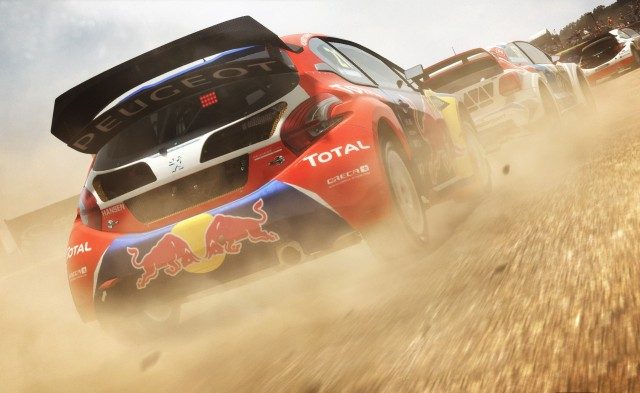
Available on the Oculus Store today (and via an update for the existing Steam version), DiRT Rally is the latest driving game to receive a VR makeover with Oculus Rift support. Originally drifting its way onto PC in April 2015, developer Codemasters took the plunge into rally simulation for the first time. The Early Access beta, which itself was unusual for the studio, resulted in plenty of community engagement and saw some experimentation, including early VR support for the Rift DK2, hence the huge anticipation for the official release supporting the consumer Rift ‘CV1’ headset. Launching into what looks like a giant grey sphere with a tyre tread pattern, it’s a promisingly polished start.

 Josh Farkas has given over 6000 VR demos over the last couple of years, and he’s been in the position of having had to try to explain the potential of VR to many skeptical businesses. That’s in part because his Cubicle Ninjas was primarily a web development and creative agency before becoming an early adopter of VR. They’ve released two virtual reality applications so far including Guided Meditation VR and the augmented reality filter app Spectacle. I had a chance to catch up with Josh at SXSW in March where we talked about using the Gear VR to detect heart rate and provide biometric feedback, releasing the first augmented reality application for Gear VR called, and some stories from the frontlines of evangelizing virtual reality.
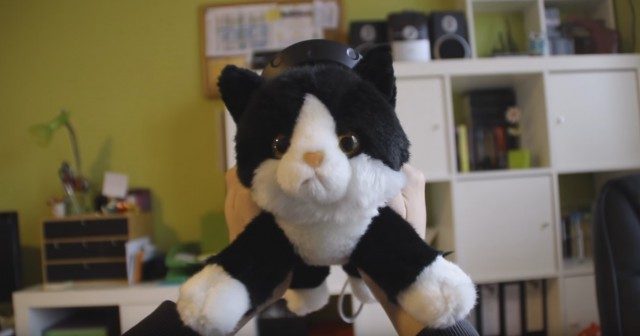
The virtual pet craze that started with the Tamagotchi is entering a new era with virtual reality, and leading the charge is a new project that aims to give you very own virtual cat, it’s called Konrad the Kitten and it uses SteamVR’s lighthouse technology to track a plush toy for a fairly unique, if somewhat amusing, VR experience.
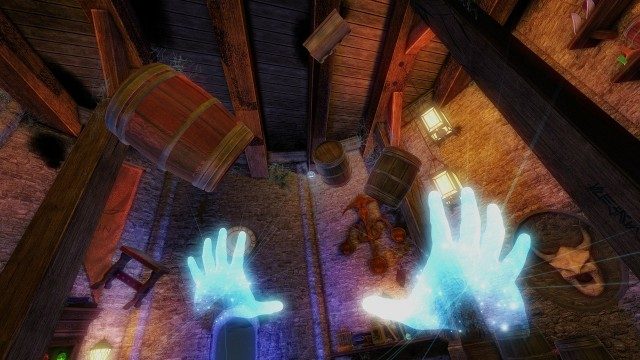
The immensely fun virtual reality wizarding simulator Waltz of the Wizard for HTC Vive has been updated with a new two player feature that lets a second non VR player join you in your spell-casting shenanigans.
Another Nintendo classic title from the past makes it into virtual reality courtesy of Gamecube emulator Dolphin VR. This time it’s the turn of Super Mario Sunshine, returning here complete with high resolution texture hacks and running at 60 FPS.

A new Swedish initiative hopes to encourage the country’s children, one fifth of which cannot swim, some suffering anxiety and fear of water, to take the plunge using a 360 VR video experience.
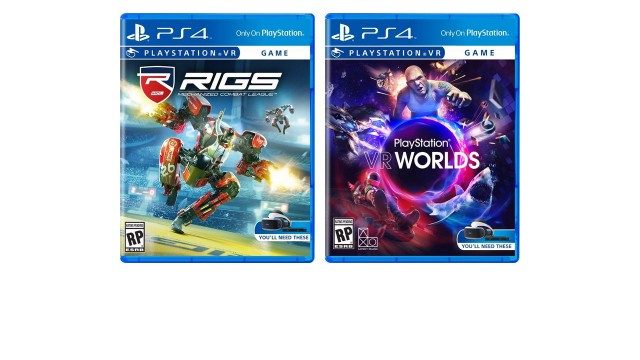
Sony have released example artwork for PlayStation VR launch titles that gives us a look at how the company intends to let consumers know they’ll need $399 worth of additional hardware before they buy the games.
Fruit Ninja, the popular franchise from Halfbrick Studios, has officially made its way into VR. Now available on Steam Early Access for HTC Vive, Fruit Ninja VR lets you slice and dice with the best of them using dual katana swords that are bound to have you playing the part of fruit assassin in your living room.
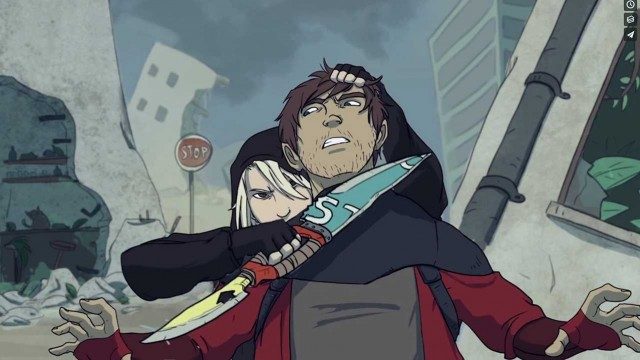
 The first time that I experienced Sequenced, I had no idea that my gaze directions might have been triggering different branches or small events within the story. Experiencing an interactive drama, but not knowing it was one of the design challenges that Valve’s Chet Faliszek has previously described to me. But there are many other challenges with balancing interactivity and narrative that Apelab CEO & Sequenced producer Emilie Joly explained to me at the Silicon Valley Virtual Reality conference in April.
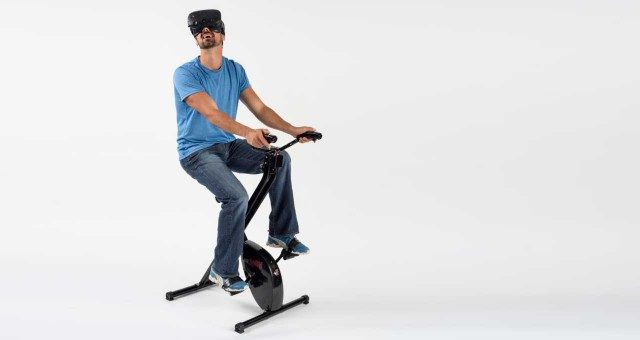
 VR on exercise bikes like VirZOOM is going to be AMAZING… for some people, and I may not be one of those people. Movement within virtual environments is a hard problem, and while VirZOOM addresses some of the challenges of VR locomotion, people who are sensitive to simulator sickness will likely still have issues with some of the games developed by VirZOOM.
I was pleasantly surprised to find that the physical action of moving my legs was enough activity to trick my mind into making some types of VR locomotion a more comfortable experience. However, there were still a number of other game design decisions that triggered motion sickness in me including tilting the horizon line, lots of vection and optical flow, accelerating and decelerating, and moving up and down hills.
I had a chance to up with founder Eric Janszen at GDC after going through their different game prototype demos to hear more about their design intention, how they were integrating interval training within their gameplay design, and some of their future plans of integrating more mobile VR headsets.
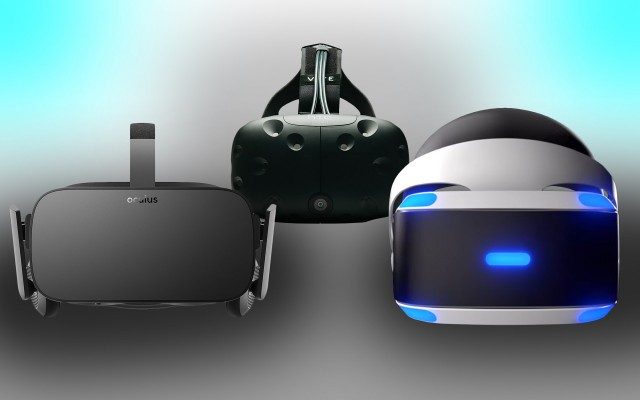
When it comes to Google searches, “HTC Vive” has recently matched “Oculus Rift” and may be continuing to rise.
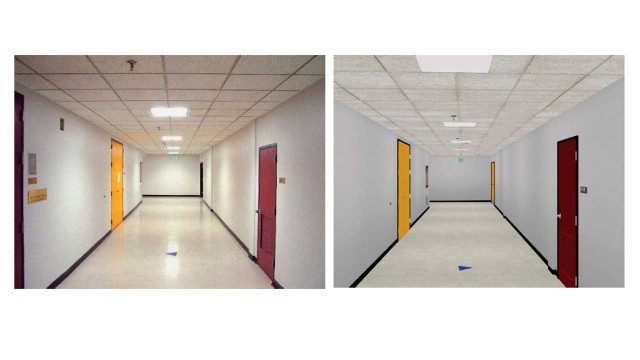
 Academic VR researchers have shown that “people typically underestimate egocentric distances in immersive virtual environments,” sometimes up to 20%. This could have huge implications for architectural visualizations, but also for anyone making aesthetic judgments based upon the proportion and scale represented within a virtual environment. I had a chance to catch up with University of Minnesota professor Victoria Interrante at the IEEE VR conference to talk about her 12 years of research into some of these perceptual and cognitive effects within virtual environments. We talk about some of the causes, the role of embodiment in distance estimation, photorealistic vs stylized environments, and the impact of having virtual humans within the environment.
LISTEN TO THE VOICES OF VR PODCAST
Music: Fatality & Summer Trip
DiRT Rally, the off-road racing sim from Codemasters, just got a brand new Oculus Rift trailer. Even better news: the VR version is officially coming to both the Oculus Store and pushing out to existing PC users simultaneously on July 11th.