Flying in virtual reality, a commonly held wish by enthusiasts since the dawn of the technology. The prospect of swooping over virtual landscapes, your mind convinced your body has taken flight is an extremely enticing one. Now that virtual reality technology is becoming a more and more accessible with the advent of the Oculus Rift, attention turns on how best to achieve this experience. There’s one thing you’ll certainly need for that realistic touch, convincing virtual terrain.
Australian company Aerometrex are working on just that. They are digital aerial mapping specialists who have focussed on providing realistic captures of towns and cities across the real world in order for them to to be realised in the virtual world.
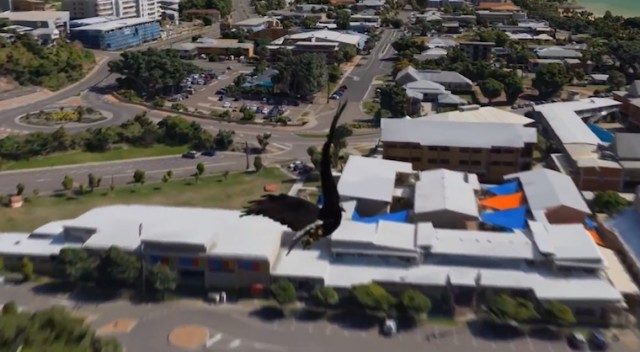
The company flies dedicated UAVs carrying sophisticated cameras across the desired location capturing extremely high resolution and geospatially mapped photos of the area. Combined with 3D depth sensing technologies (collectively known as aero3Dpro), this allows the company to produce astonishingly accurate and lifelike 3D models based on the captured data.
The captured imagery is adjusted, corrected and assembled by sophisticated software to produce a 3D map you can take a very convincing flight over.
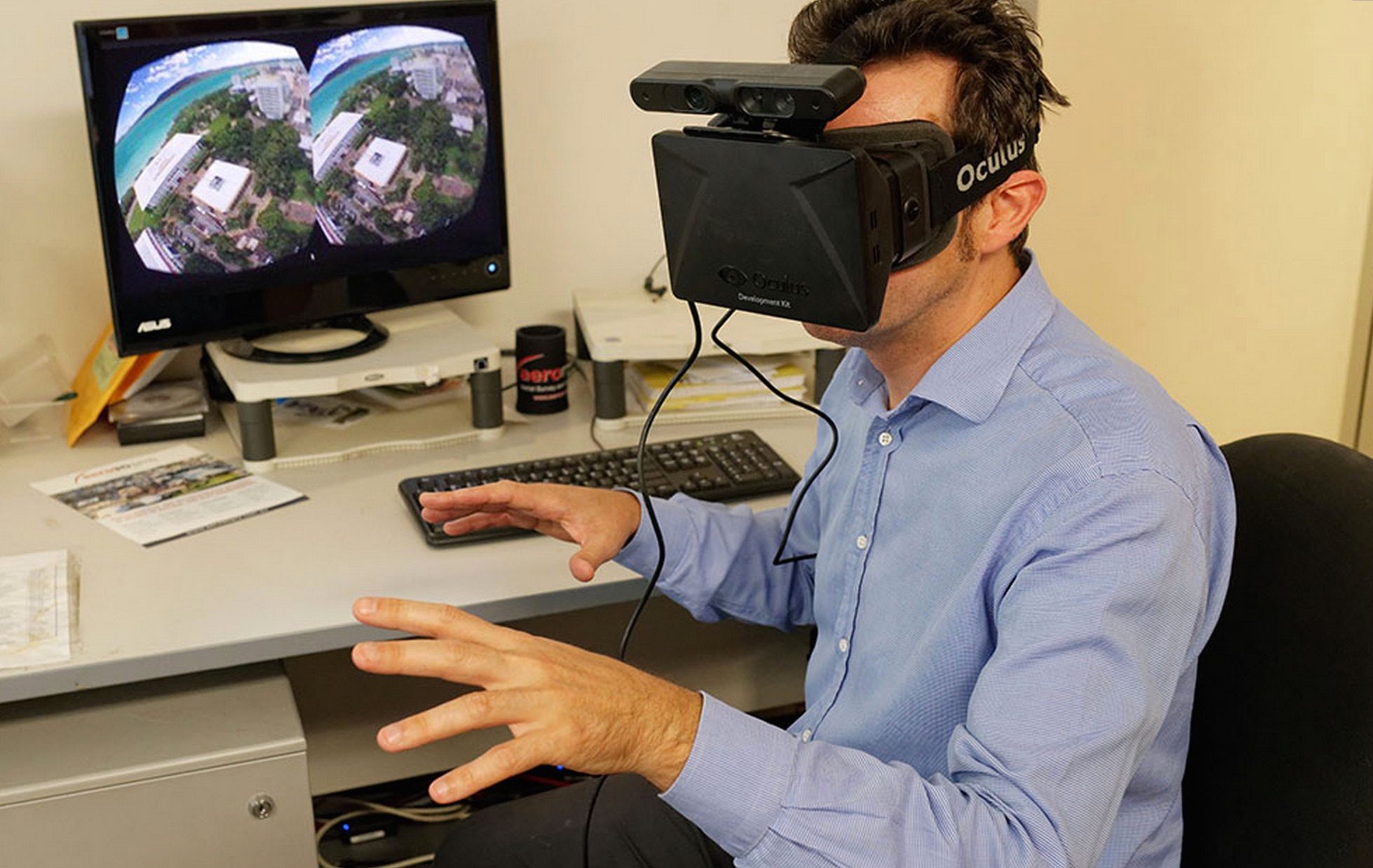
The company recently released a video demonstrating one of their 3D models being presented through the Oculus Rift (video top), and it’s an intriguing idea for presenting and communicating 3D space on such a large scale to people efficiently and effectively. OF course, all I want to do is zoom about pretending to be Superman – something that the video captures quite nicely.
As Aerometrex are focussed on corporate cliental however, it’s currently unclear if they’re ever likely to release tastes of the experiences on offer to the general public. The are apparently working on integrating Myo support, the gesture capturing hardware which senses muscle movement and translates it into input data, which would certainly allow naturalistic flight controls.
VRelia, a Spanish company recently formed with the aim of providing users with high resolution VR Headsets, has announced a partnership with ImmersiON, a startup formed from the key players behind TD Vision, a company with a history in 3D technologies and video codecs.
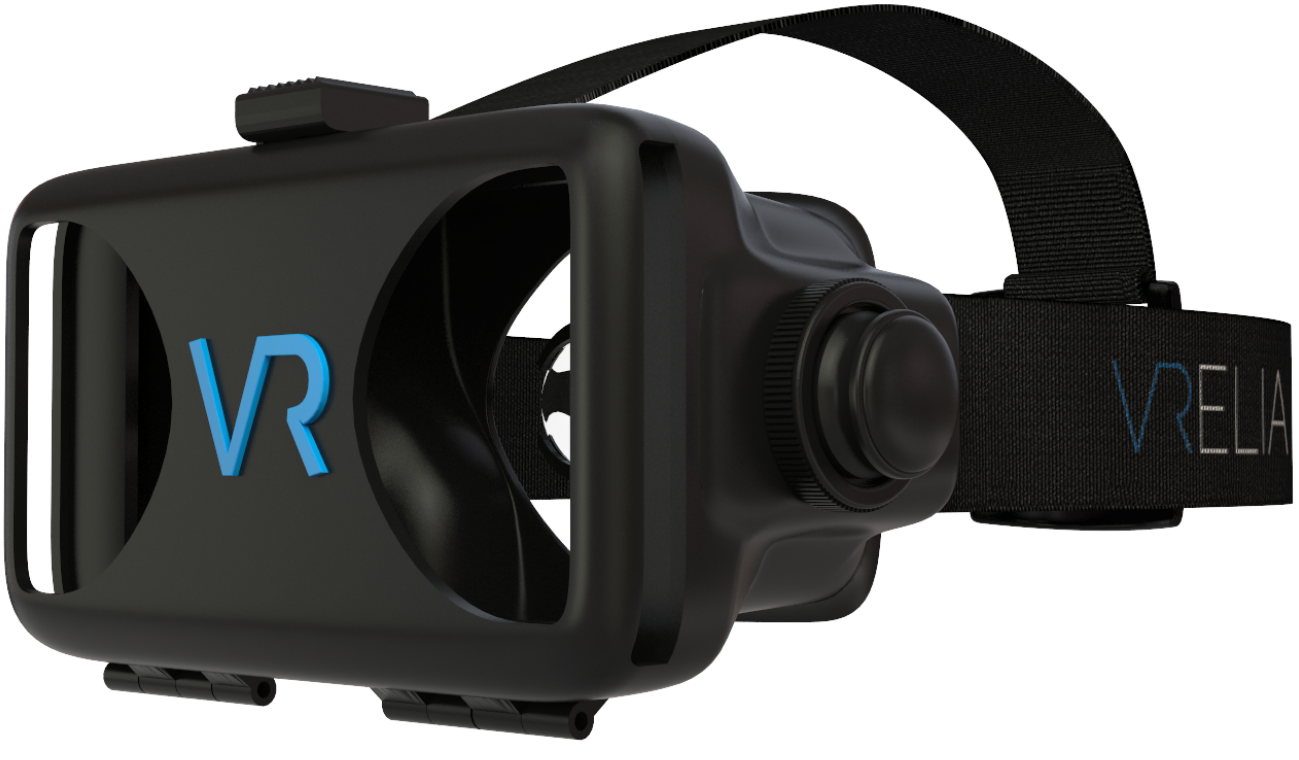
We first covered VRelia back in February, at which time they were planning to offer not one but three different VR headsets to compete directly with Oculus VR’s Rift. Since then, it looks like the company has returned to the drawing board and has now paired down it’s offering count to 2. The VREye Go, a headset smartphone harness much like that which we’ve seen from vRase, Durovis and countless others. The VREye Pro offers what’s claimed to be 2 x 5.9″ Full HD (1080p) display panels which the company claims delivers an effective resolution of 2190 x 1920, a slightly confusing figure given that 2 x 1080 (vertical resolution of a full HD panel) = 2160.
The VRelia VREye ‘Go’ mobile phone VR Headset
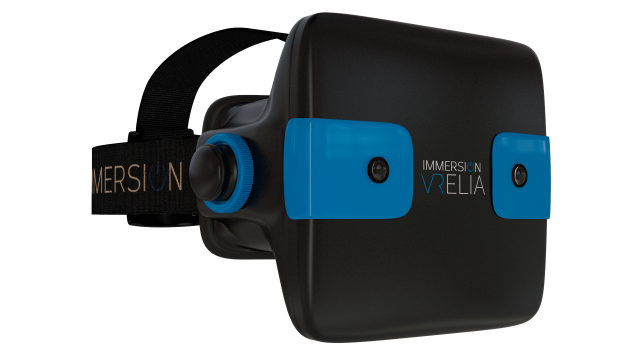
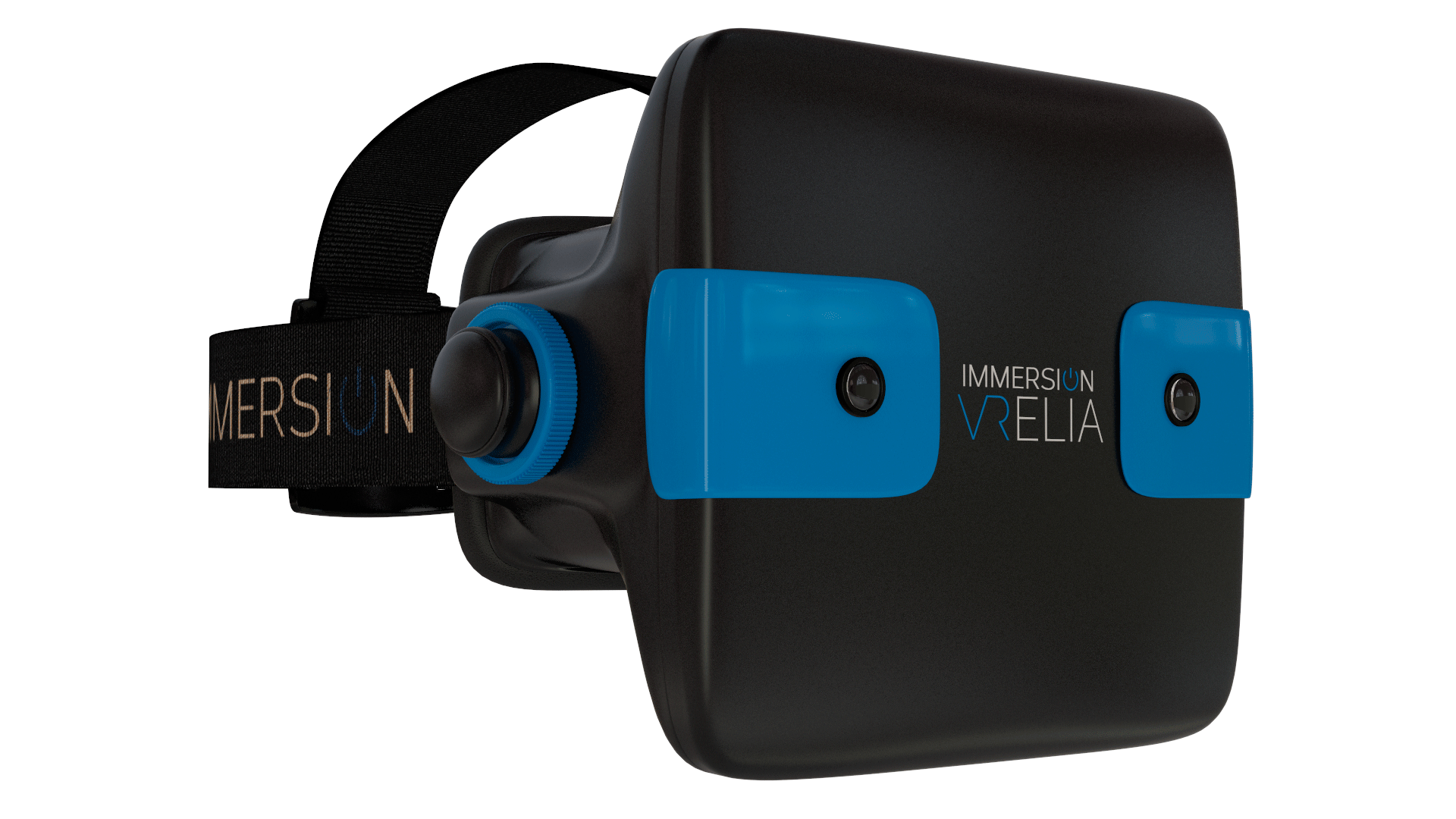
The products sold by ImmersiON share the same base specs as above and adds what looks to be dual front facing cameras in order to facilitate augmented reality experiences. It’s also key to point out that the images of all these HMDs are at this stage merely renders, and that should you choose to opt for pre-ordering one of the ImmersiON devices, you’re also opting in to beta test early versions of the new VR headsets as it seems there’s no final hardware as yet not to mention a complete absence of pricing. Furthermore, there’s no clear indication when those placing their orders might receive actual hardware.
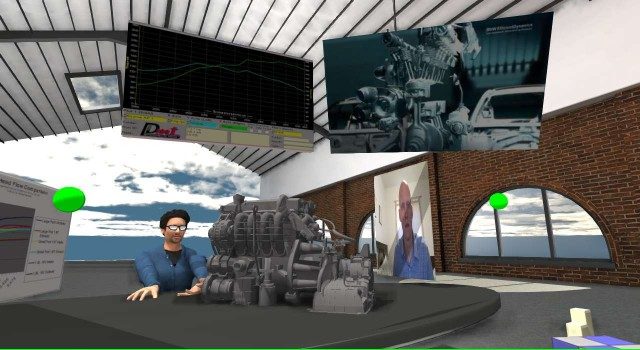
TDVision seems to have had their hand in many technologies over the years, including the production of their own VR Headset, the TD Visor. It’s their software platform called AlterSpace which is highlighted in a recent press release announcing the partnership though and this seems to take the form of an online collaboration, chat and social VR hub where people can hang out in VR, share online content and socialise. Beyond that, it’s not too clear how the software plays a part in pushing the VREye headsets, or even if / when it will be made available – the Alterspace website seems completely unfinished and the only documentation I could find on TDVision’s website seemed to describe concepts and planned features only.
Competition is great, on that we can all agree. But right now it’s simply unclear precisely what this announcement means for the VR Industry. With hardware that’s yet to enter the beta stage and an unclear roadmap for ImmersiON’s value added software packages, we’ll just have to wait and see.
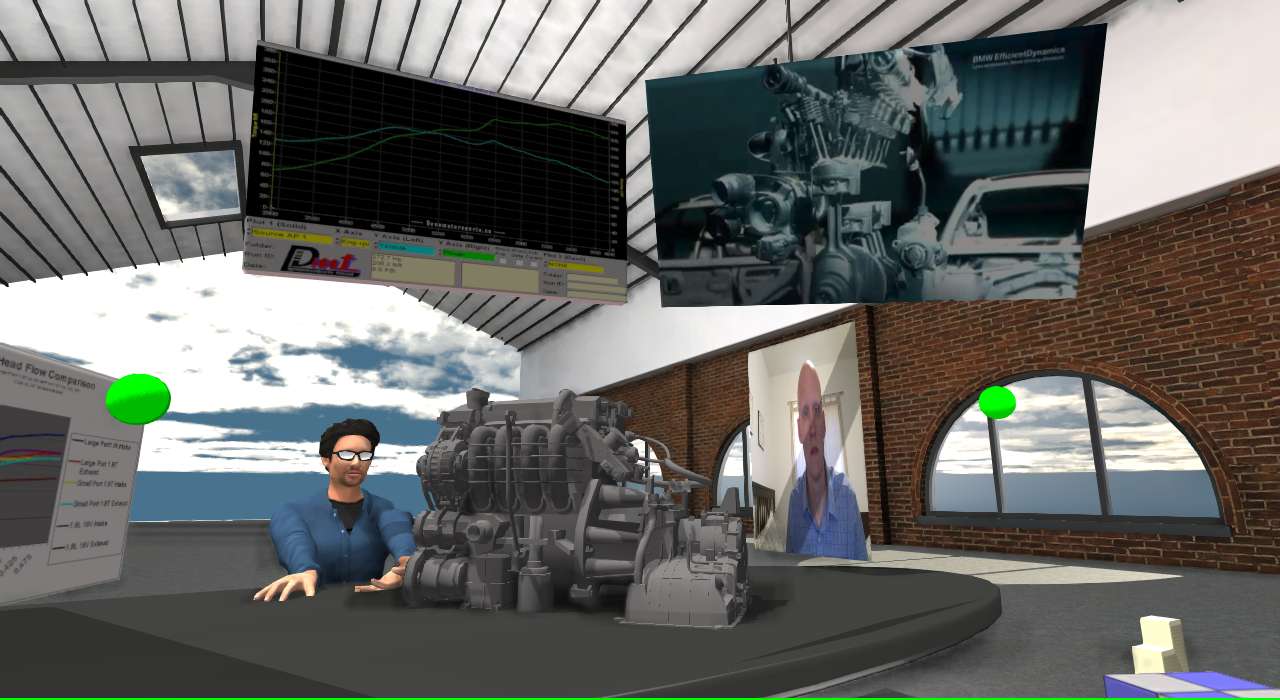
Altspace (formerly Qualia3D) is announcing that they’ve raised $2.5 million in venture capital to develop a shared virtual reality browsing environment. Investors include Google Ventures, Formation 8, Dolby Family Ventures, and more. Altspace is developing a shared VR environment with a heavy focus on browser-based interactivity.
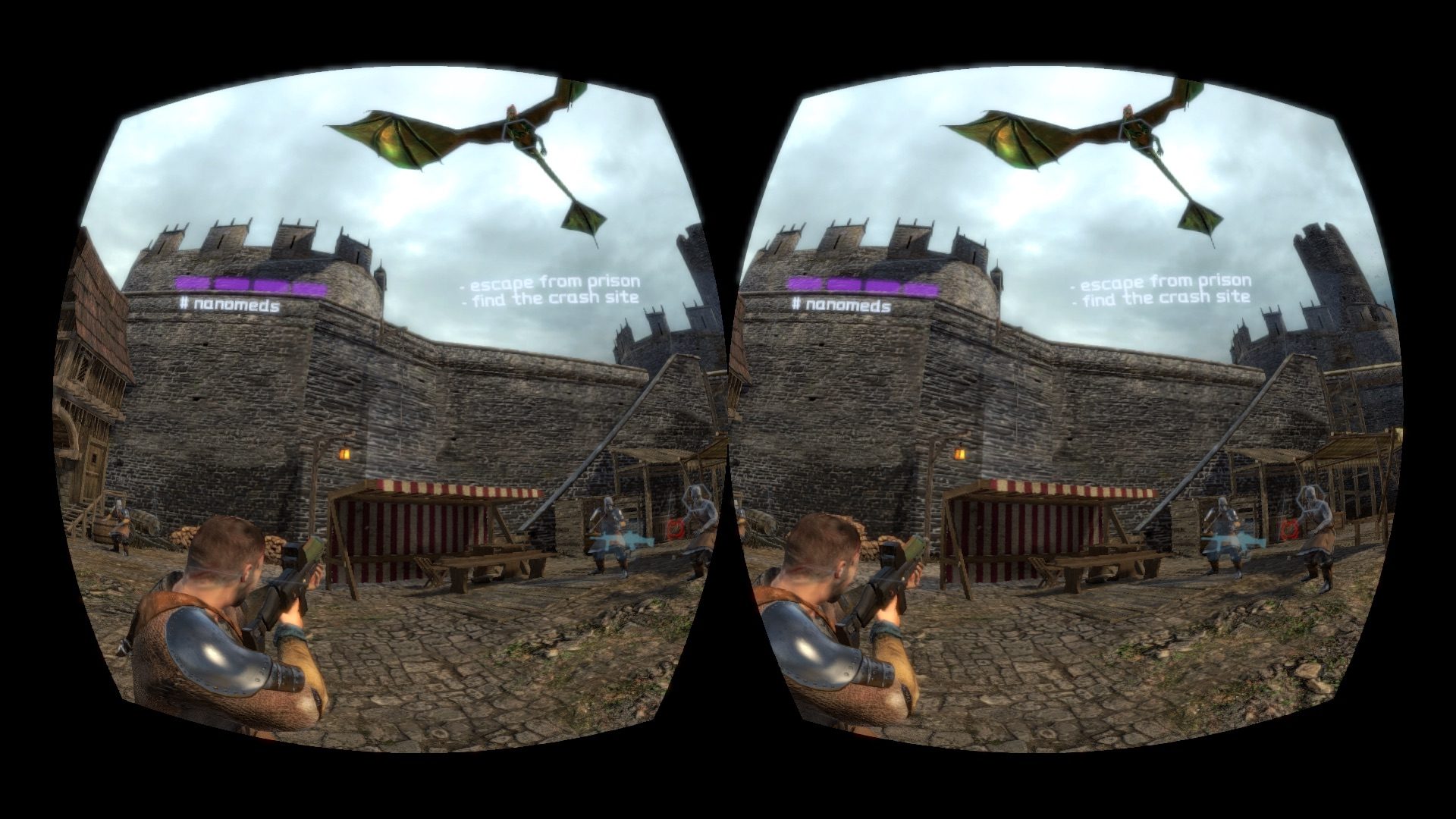
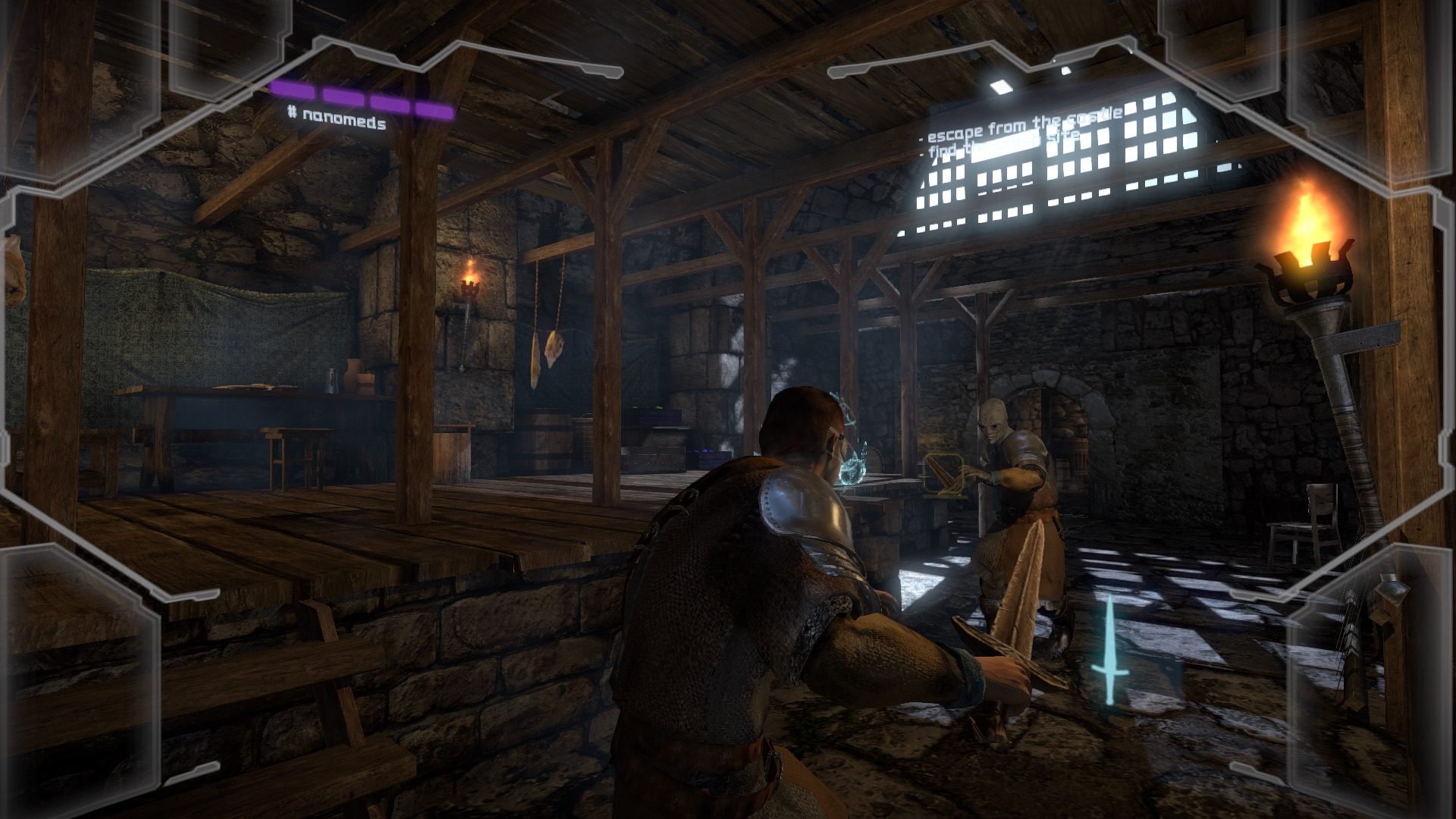
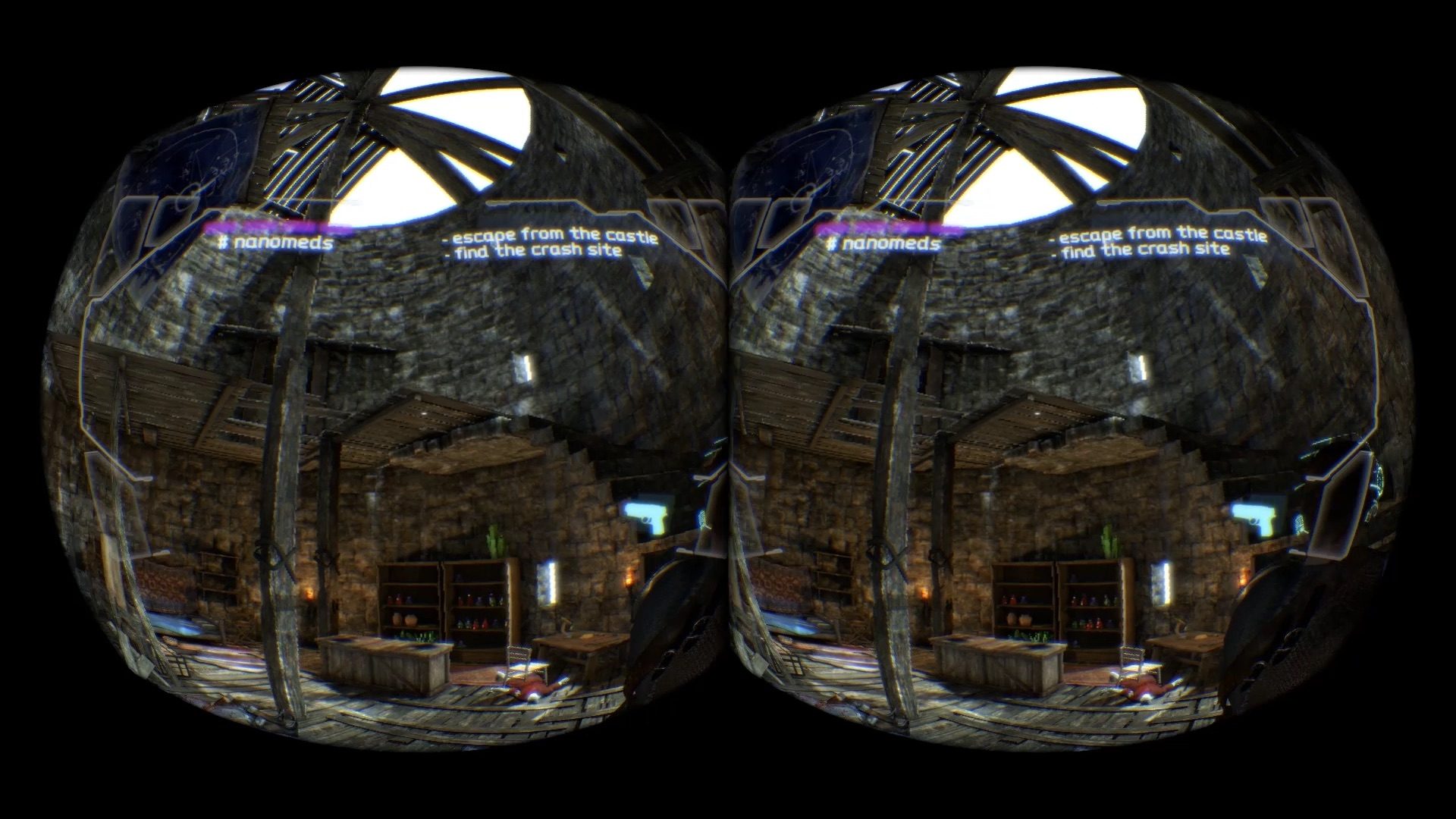
Virtual Reality is still and emerging (perhaps re-emerging) technology and gaming platform. As such, new surprises and interesting uses of the technology are never far away right now. ‘Aliens, Trolls and Dragons’ is an Action Adventure game with native Oculus Rift support that offers VR enthusiasts an over-the-shoulder 3rd person view on the the gameworld.
Lucky’s Tale blew some minds at E3, not necessarily because it looked particularly world shattering in terms of either gameplay or visuals, but because it was a slap in the face for anyone who believed virtual reality gaming was restricted to a first person view. A console style platformer, with an inventive on-rails and freestyle camera mapped to your head movements was a pleasant surprise indeed. ‘Aliens, Trolls and Dragons’ offers up a 3rd person view, with a Gears of War style offset view, mapped to head tracking.
In a new 12 minute gameplay video demonstrating the game’s native Oculus Rift support with the player glancing around the gameworld as their on screen protagonist slashes enemies with swords and surveys the environment. It’s a great looking game and certainly one of the better independently developed Oculus Rift titles out there.
The game itself is developed by Polish code house Kubold and will transport the player to a future where space travel has allowed mankind to reach far into the universe. You play a security officer from a crash-landed vessel, on a planet that bears an eerie resemblance to medieval earth. Your task, to find and free your crew mates by kicking the humanoid alien’s butts.
Guest writer Kevin Williams lifts the lid on a game which missed the glare of the media spotlight at E3 2014—Digital Combat Simulator.
During E3 2014, there was a crowded assortment of demonstrators on the Oculus VR booth. One of the exclusives that was only shown to a select group was from Eagle Dynamics, famous for the release of their ultra-realistic flight simulator brand Digital Combat Simulator (DCS), the free-to-play digital battlefield game, focusing on a military aircraft simulation.
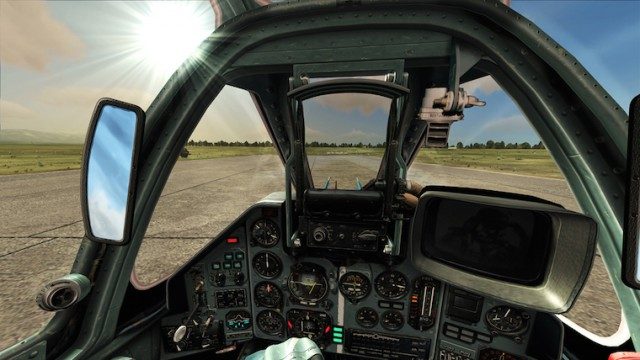
The company partnered with Oculus VR to present the latest version of their hyper-realistic simulator platform on the DK2; an early prototype demonstration allowed viewers to be placed in a selection of realistic recreations of extreme fight planes—their cockpits lovingly recreated and able to be experienced through the VR Headset.
This early glimpse at the new software build showed the promise of what ultra-realistic flight simulation in a VR head-mount offers. Though the demonstration did not have any ground-targets, or air combat, the flight model still put the DK2 through its paces.
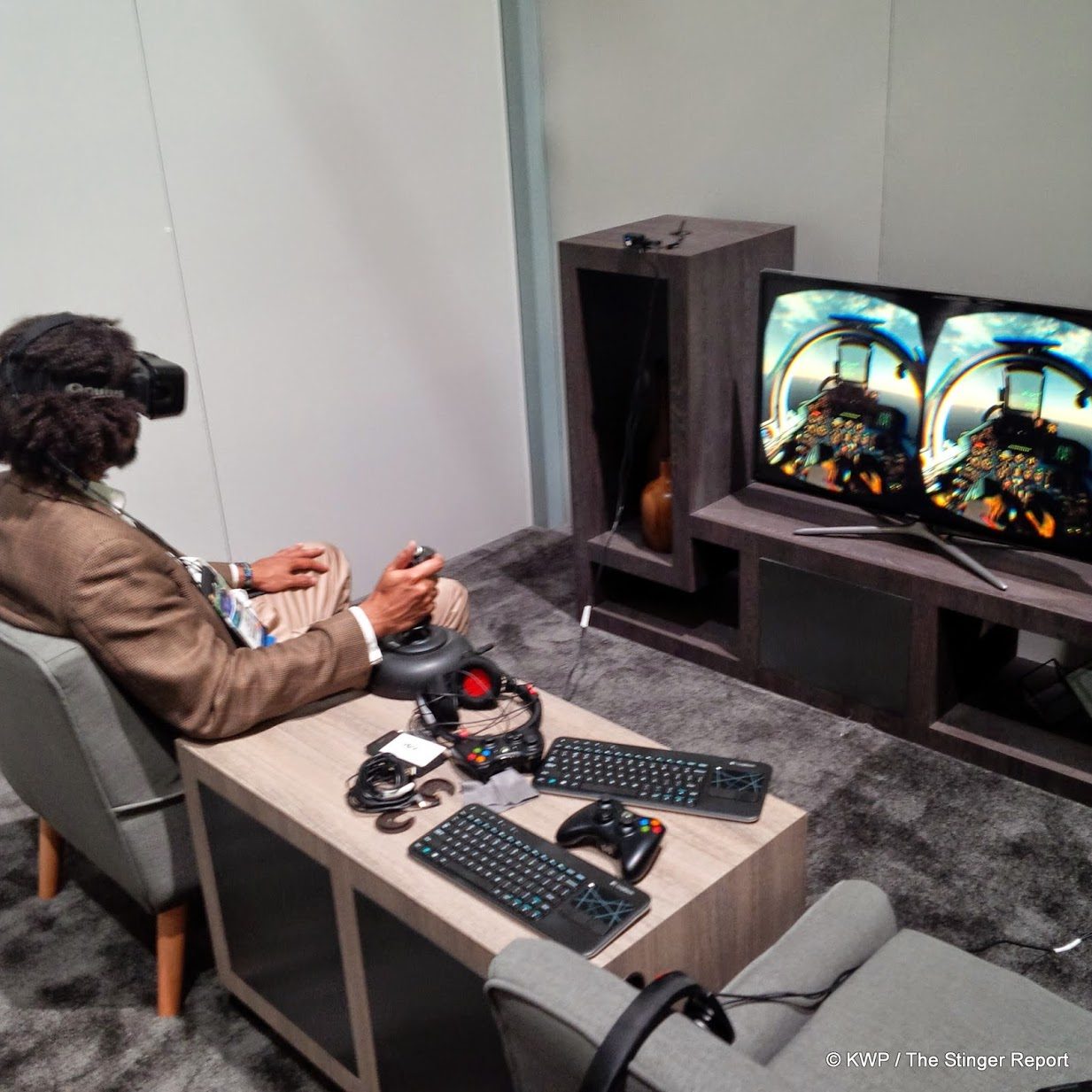
The sim was demonstrated by a consultant on the Oculus booth from the Imperial War Museum (Duxford, England) US military division. Limited information is available at this time into the planned release of the simulation title or how the relationship with Oculus VR will work (at this time the game was not a Oculus VR exclusive but being used as a proof of concept for the new development kit), more information on the release schedule and the final support of this title by Eagle Dynamics and Oculus VR planned to be revealed for later in the year. The first of the full flight simulation that will populate VR development, alongside race vehicles and the plethora of space flight projects in the works”
—
Kevin got to try out the flight simulator for himself and summarised his feeling thus:
– The ability to use the DK2 tracking to look round the detailed cockpit was amazing
– They so far sadly had no ground targets, but it was possible to see the flight model offered a new level of immersion
– Unlike the space simulators seen (Elite: Dangerous, EVE: Valkyrie) at E3, this was a major step forward in what VR HMD immersion can offer
As one of the first fully-fledged flight simulators to get the Oculus treatment, and given cockpit based experiences lend themselves extremely well to Oculus’ vision of the seated VR model, we’ve got high hopes for DCS in VR. We’ll of course keep our ears to the ground and update you on any news as we find it.
ABOUT THE AUTHOR – Kevin Williams has an extensive background in the development and sales of the latest amusement and attraction applications and technologies. The UK born specialist in the pay-to-play scene; is well-known through his consultancy KWP; and as a prolific writer and presenter (along with his own news service The Stinger Report), covering the
emergence of the new entertainment market. Kevin has co-authored a book covering the sector called ‘The Out-of-Home Interactive Entertainment Frontier’ (published by Gower). And is the founding chairman of DNA Association, focuses on the digital Out-of Home interactive entertainment sector.
Earlier this week, Oculus VR announced Oculus Connect, a VR developer conference to be hosted at the end of September in Los Angeles, California. Registration was slated to open this morning at midnight, but Oculus says they need more time before registration will be ready.
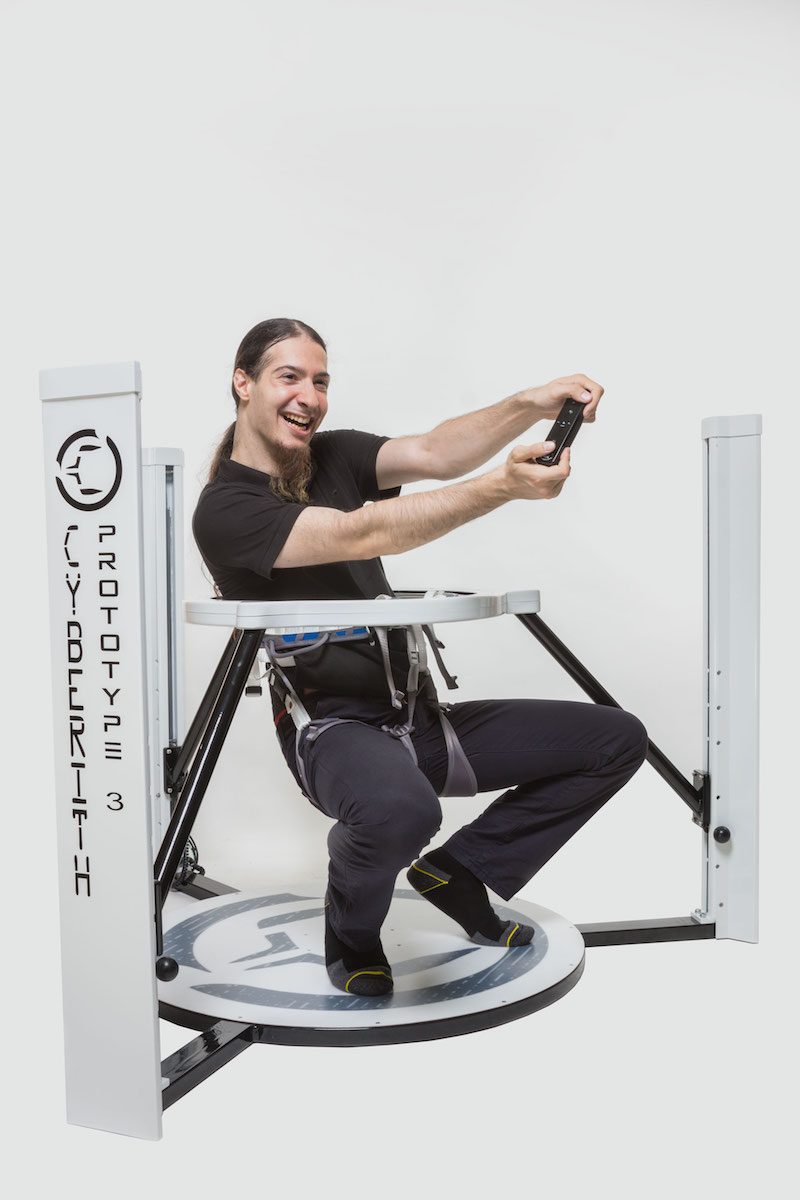
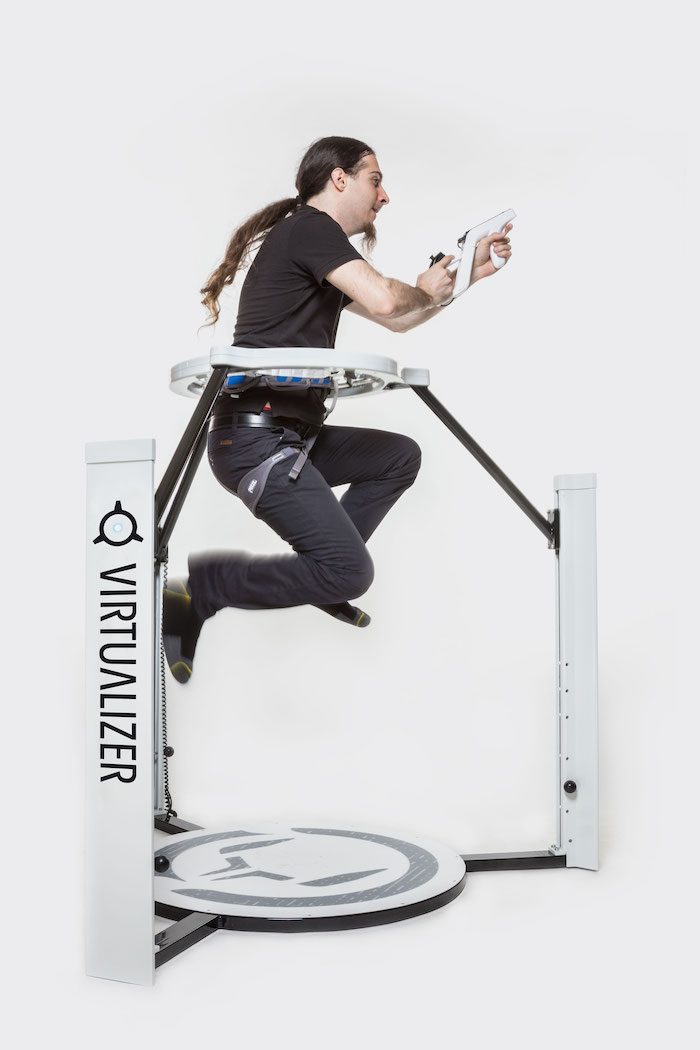
We’ve been following Austrian company Cyberith and its virtual reality locomotion ‘controller’ the ‘Virtualizer’ for a while now. The Virtualizer is an omnidirectional treadmill which uses a flat base with low friction which enables a user to run, crouch and jump with movement data captured and mapped to in game controls. The team have come along way since their public debut at Gamescom last year, where they barely made it to the show with a functional prototype.
Now, the company have re-branded themselves and announced that the long awaited Kickstarter campaign, hinted at back in our original interview with Cyberith’s CEO Tuncay Cakmak almost a year ago. The Kickstarter launches on the 23rd of July and will give backers the opportunity to get their hands on the third revision of the Virtualizer. In it’s latest promotional literature is keen to emphasise differentiators between it and it’s only real rival right now, the Virtuix Omni. From the press release:
To guarantee for an optimal immersive experience, the Virtualizer has a flat base plate, resulting in a natural walking sensation.
Using a flat base plate ensures a completely immersive experience. By using e.g. a bowl shaped base plate, the user’s feet hit the slope of the bowl earlier than expected. The resulting discrepancy between visual and tactile information immensely breaks immersion.
Omnidirectional treadmills are by definition, never going to be subtle devices. However, the company is keen to emphasise the portability and practicalities of owning such a thing:
The Virtualizer can be taken apart into its five core parts in a matter of minutes. The three pillars are 100cm (39.4”) high and the base plate has a diameter of also 100cm (39.4”). The distance between the center of the base plate and one pillar is 80cm (31.5”).
As a consequence of the vertically moveable ring-construction, the Virtualizer is accessible for a lot of different body shapes. The height of the user is thus almost irrelevant, but the theoretical limits are at 1m (3ft 3”) as minimum and 2.10m (6ft 11”) as maximum. The Virtualizer supports weight up to 120kg (265lbs). Importantly, it should be noted that the user’s hip measurement should not exceed 125cm (49”) in circumference.
This is a serious piece of gaming equipment, but it only requires a single USB connection for power and hooking up to your PC – what’s more, you can play in your socks!
No details yet as to the structure, goal or rewards to be offered by the Kickstarter campaign, but we’ll of course let you know the minute we know more.
We wish the Cyberith team the best of luck with the Kickstarter campaign, and we hope to get our hands (feet) on the latest prototype at Gamescom this year. In the mean time, check our their brand new website here.
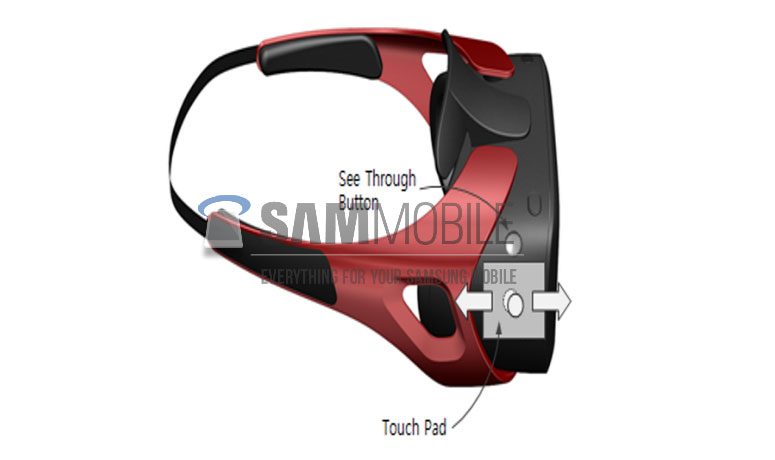
An exclusive report from SamMobile has dug up what it alleges are official assets surrounding Samsung’s rumored VR smartphone adapter. The report claims that the device will be called ‘Gear VR’ and be announced at IFA 2014 in early September.
Zero Latency, who has been developing a full-body virtual reality zombie experience, has just passed their $25,000 crowdfunding target with five days remaining. The funds are being raised to further develop the system and the backer rewards offer tickets to experience the action for yourself, assuming you’re near Melbourne, Australia.
It’s DK2 month, with swaths of developers and enthusiasts eagerly awaiting a knock on the door from their local delivery man. An anonymous source has revealed an unboxing of the highly anticipated Oculus Rift DK2.
Oculus VR today announced that the company will be hosting ‘Oculus Connect’ a VR-focused conference in Los Angeles, California this September. The company has also announced the acquisition, and open-sourcing, of RakNet, a networking middleware used in the games industry.
We wrote about Atajrubah recently and noted that the development team had moved to Unreal Engine 4 after spending much of the game’s life up to that point as a UE3 project. The Oculus Rift enabled open world survival game with an Arabian flavour looked great in example screenshots from the time.
Developer Nexy Media has released a new developer update announcing 3 new team members, update on gameplay elements and a new video which shows the stark contrast between UE3 and UE4’s rendering capabilities. It’s yet more affirmation that UE4 has been gathering a great reputation with indie developers like Nexy. We reported not long ago on White Lotus Interactive’s shift yo Epic’s new game engine and their almost universally positive experience when they too made the leap from UE3.
VRLA (Virtual Reality Los Angeles) is the brainchild of one Cosmo Scharf, a Film Production student at the University of Southern California and a self confessed VR Evangelist. Although one of the newer meetups on the block, VRLA has made quite an impact on the VR community and even gathered industry and community members alike at it’s recent VR Mixer event at this year’s E3 Expo last month.
For VRLA’s second meet up, Cosmo managed to arrange access to the Mixed Reality Labs (MxR) where the event was held. Cosmo was kind enough to bring us up to speed on who was there and what there was to see.
—
Cosmo’s Impressions of VRLA #2
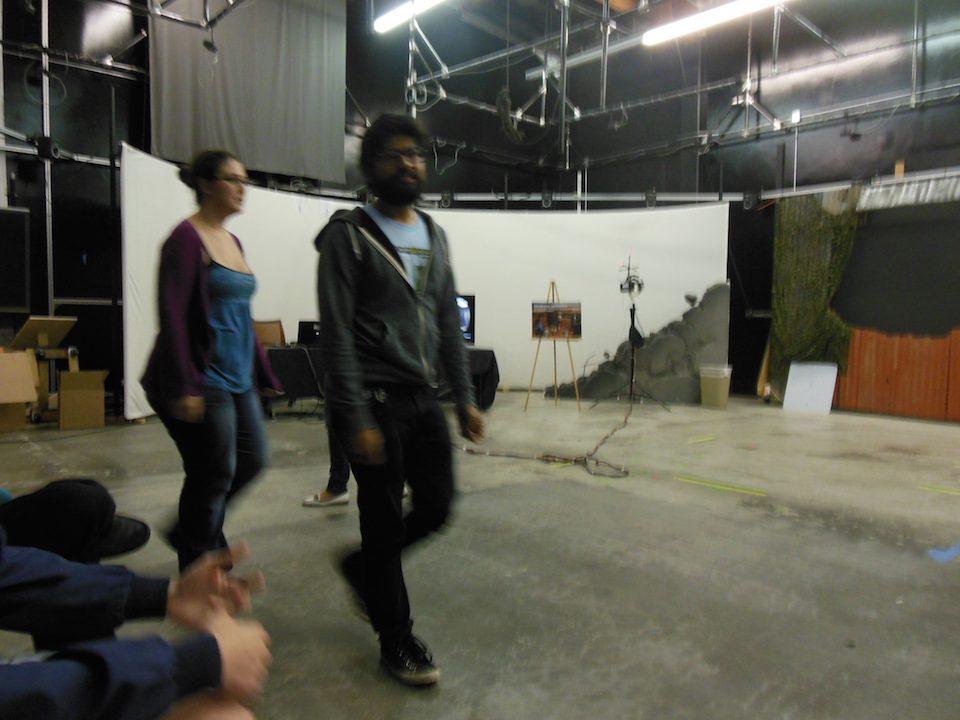
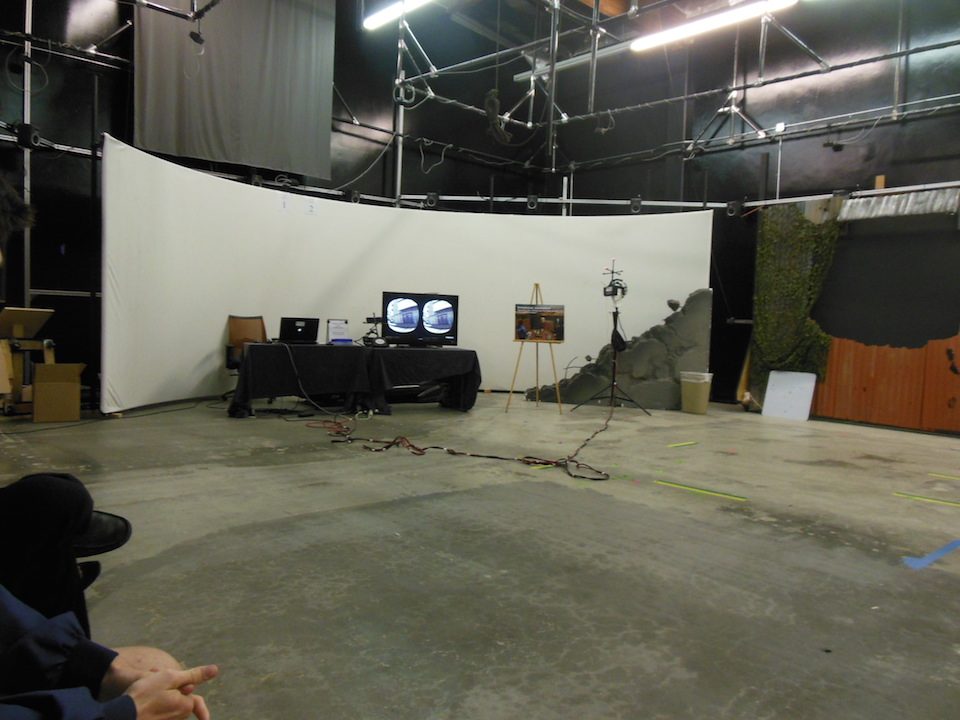
VRLA #2 was held this past Monday at the MxR lab, a facility dedicated to cutting-edge virtual reality research. While the MxR lab is usually closed off to the public, they opened their doors to a few hundred guests to host VRLA. Inside their building, they gave demos of Project Blue Shark, redirected walking (which creates the illusion of moving through infinite space), rapid avatar scanning, portable immersive viewers on devices like the iPad, and several others.
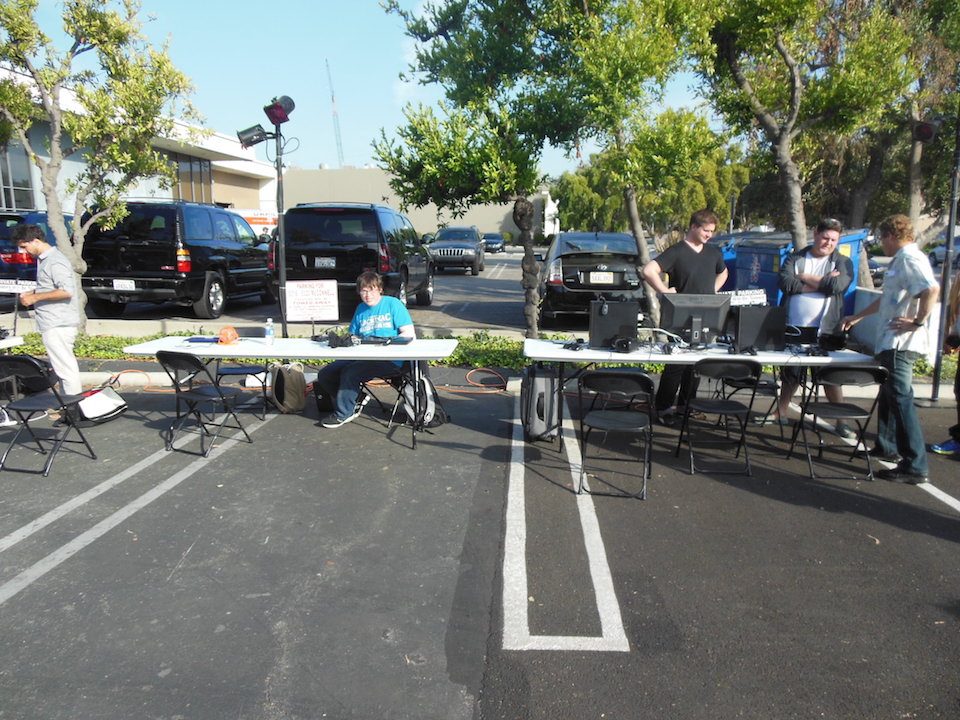
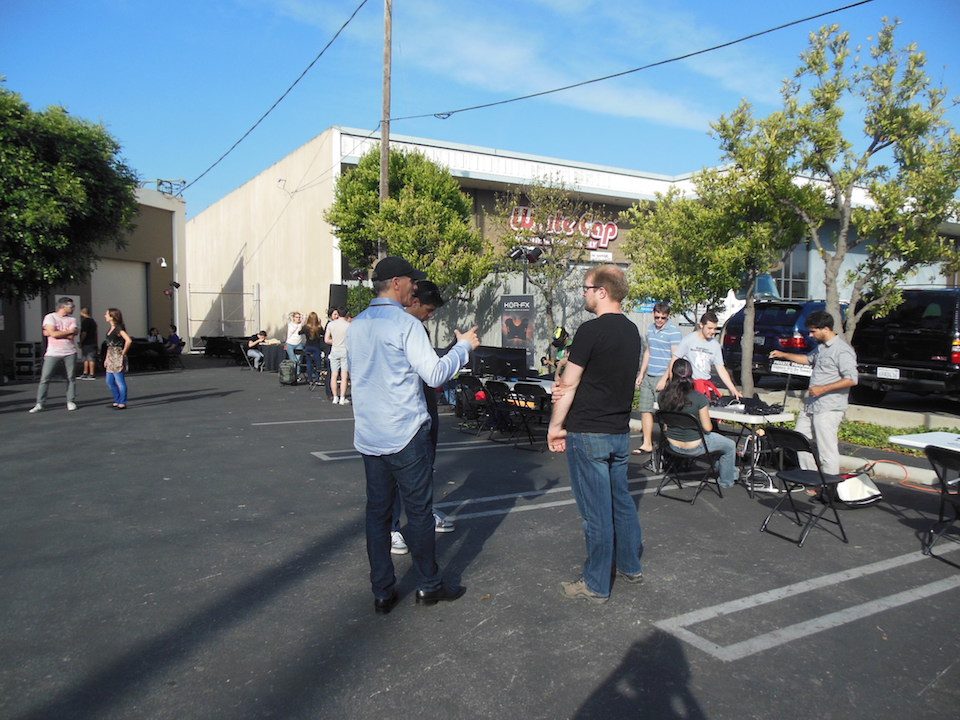
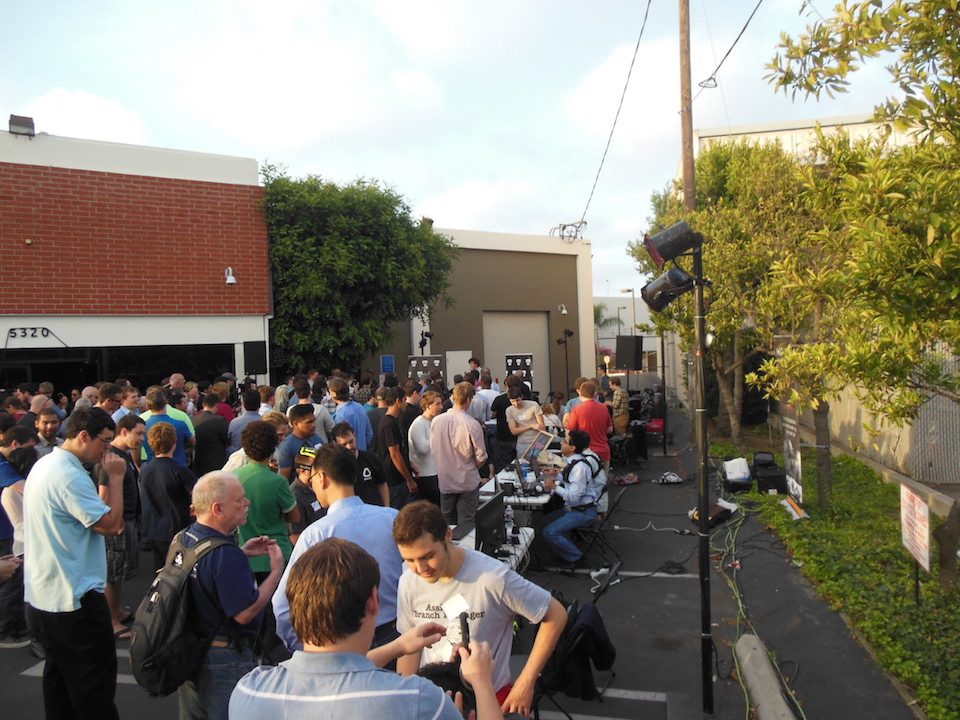
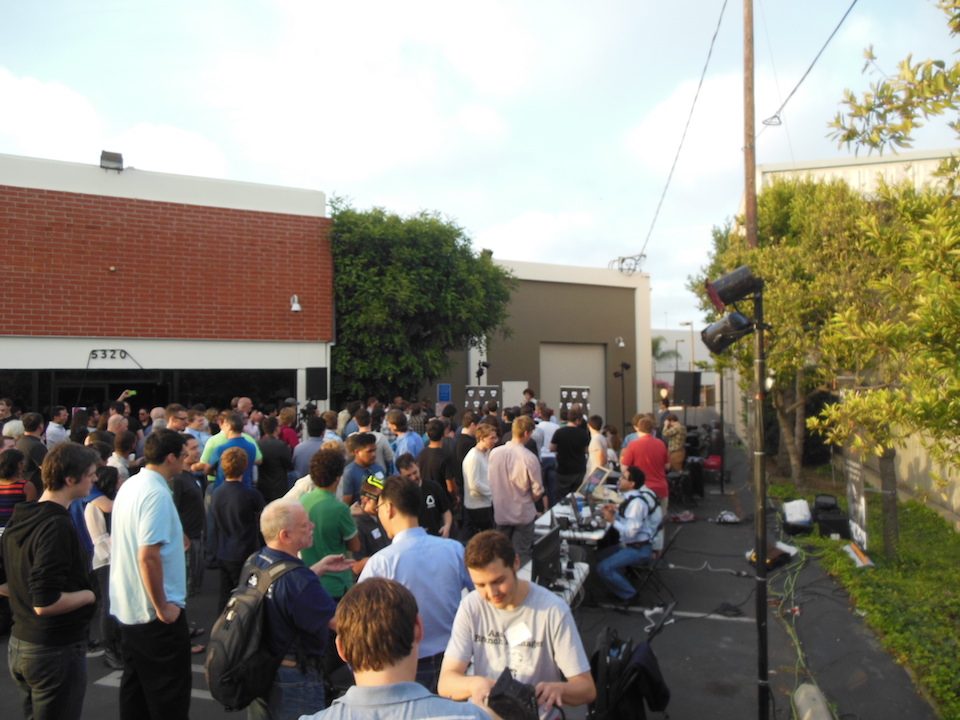
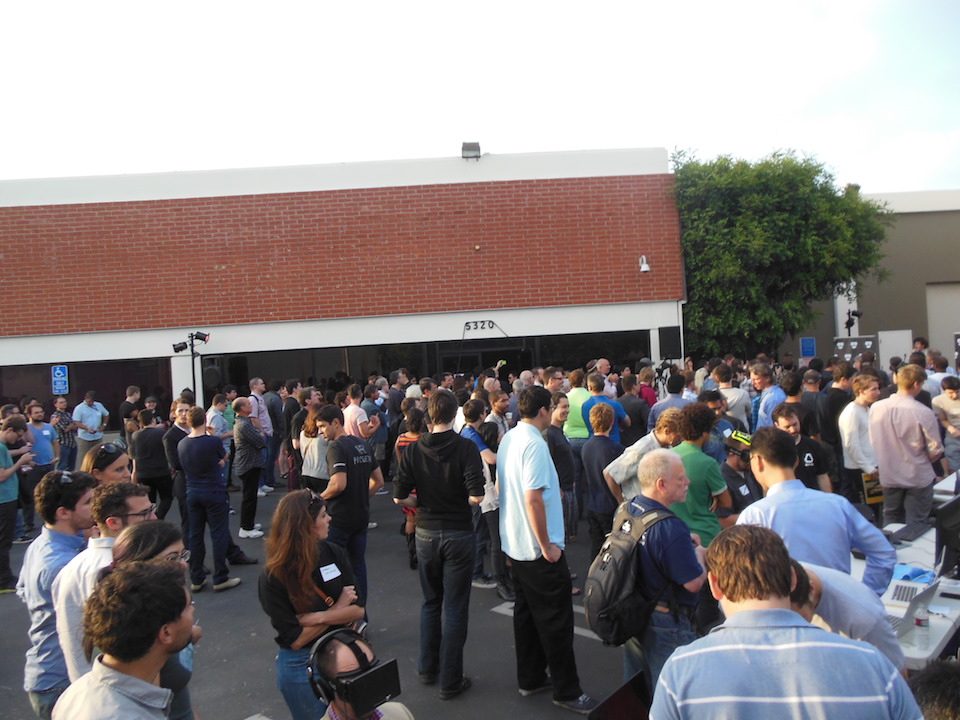
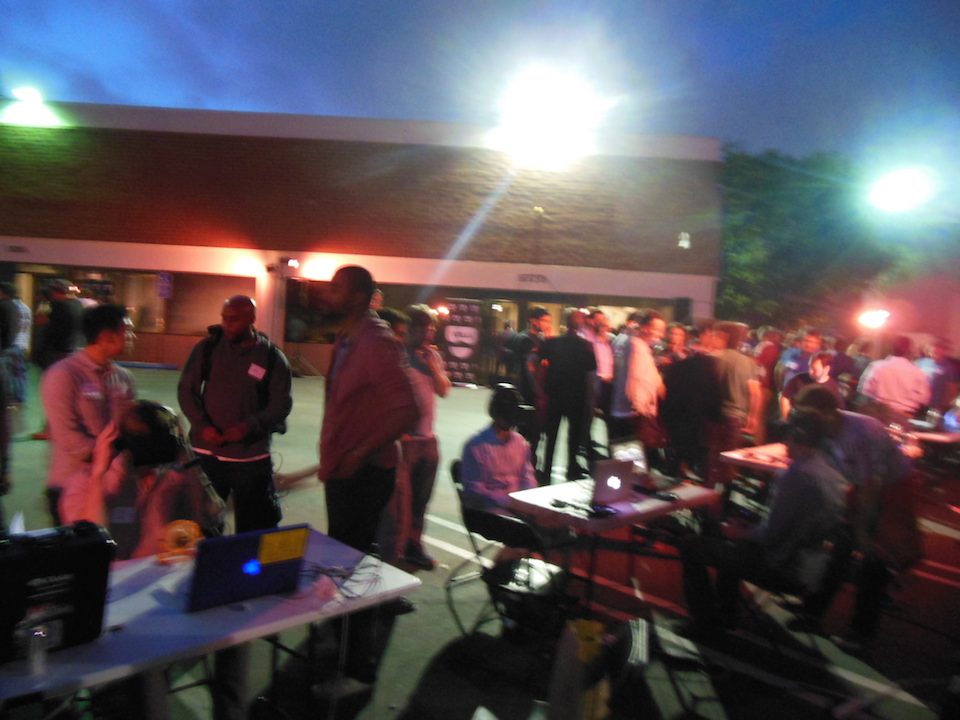
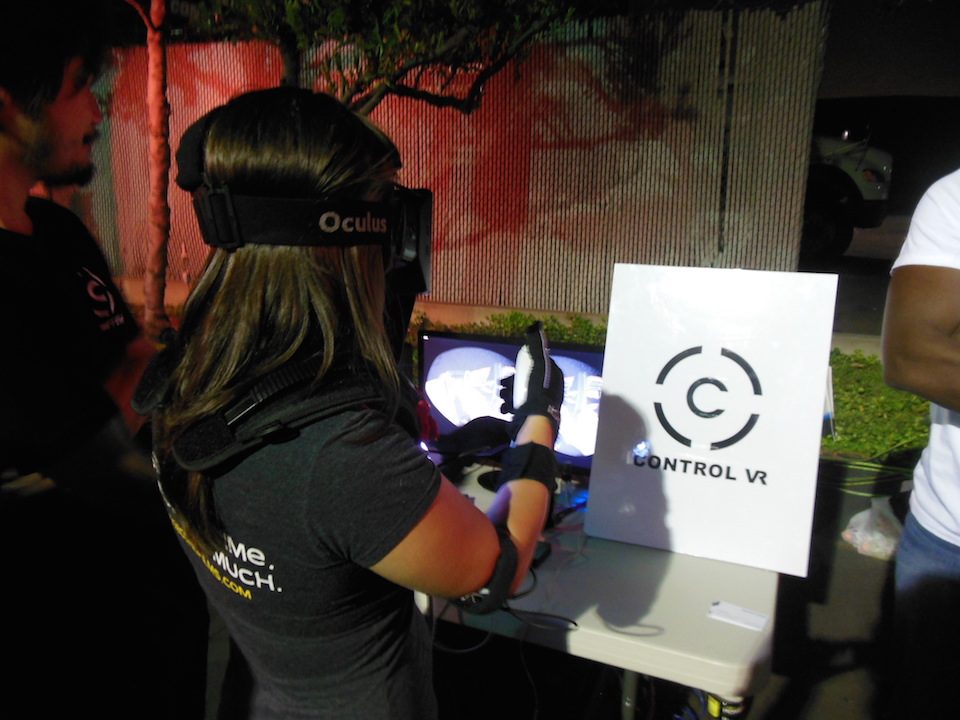
Exhibitors were set up outside on their parking lot while guests were waiting to go inside the MxR lab. Sixense was showing off their STEM system while Epic Games was giving demos of Couch Knights on the DK2. Control VR wowed attendees with their finger-tracking glove while KOR-FX impressed with its haptic gaming vest. Several indie games were also represented such as Classroom Aquatic, Rhea, Diplopia, and Eden River from Unello Design.
All in all, everyone had a great time! The event would not have been possible without the support of Apogee, leaders in audio recording hardware and software. Many thanks to The Grilled Cheese Truck for providing delicious food to our hungry guests.
—
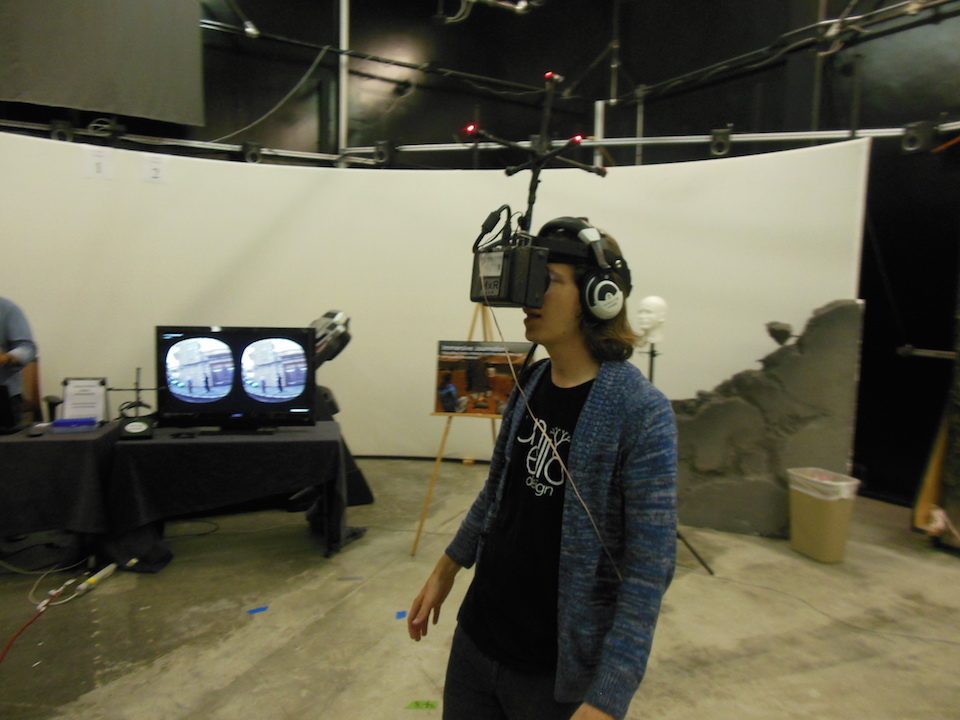
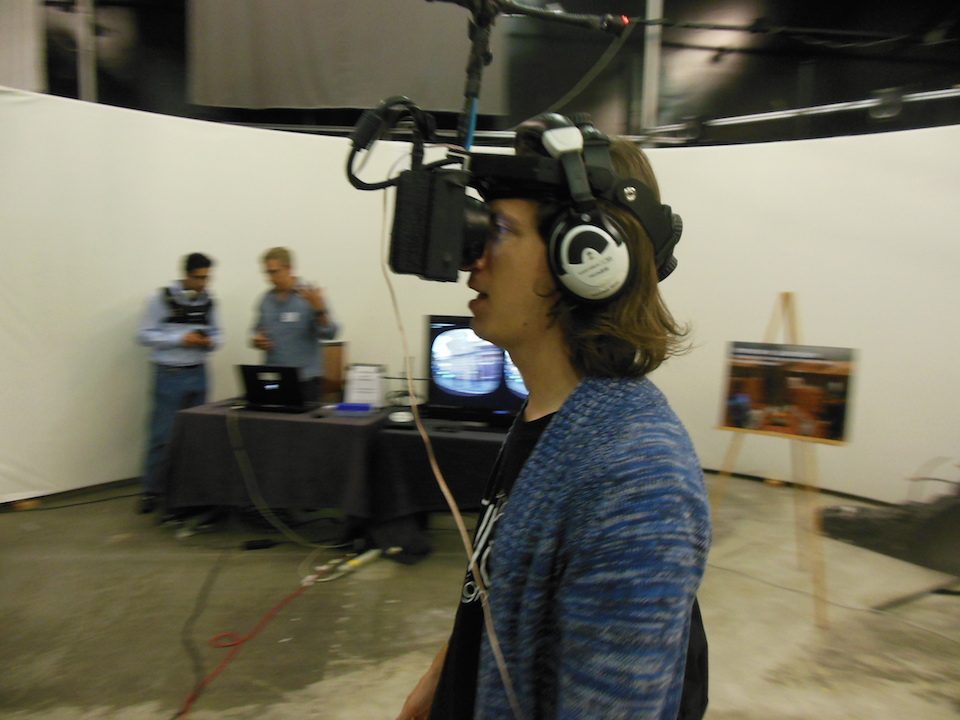
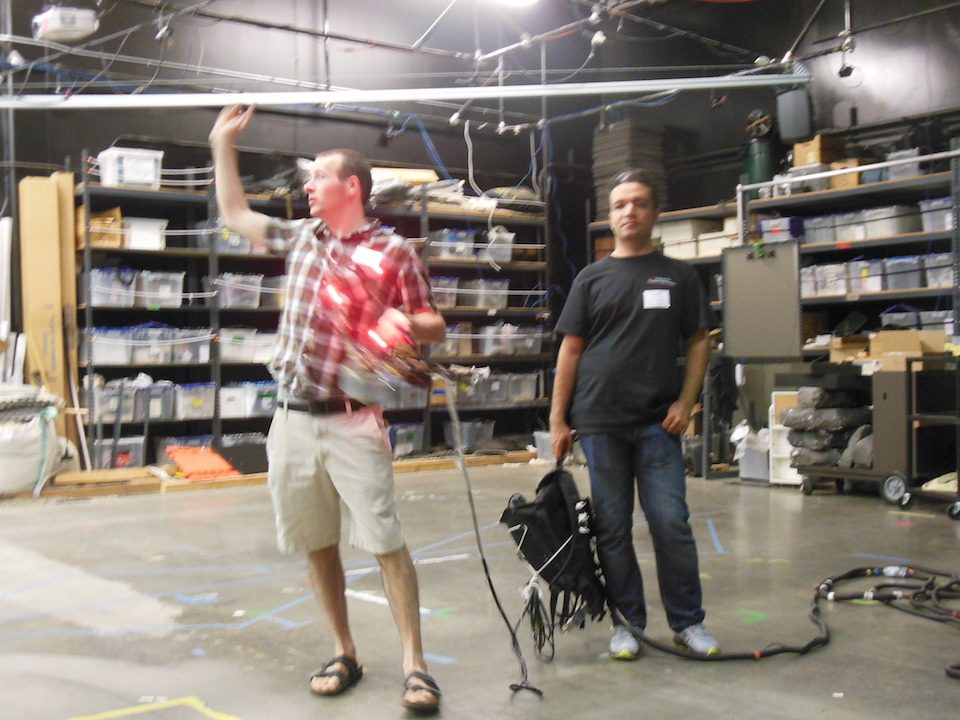
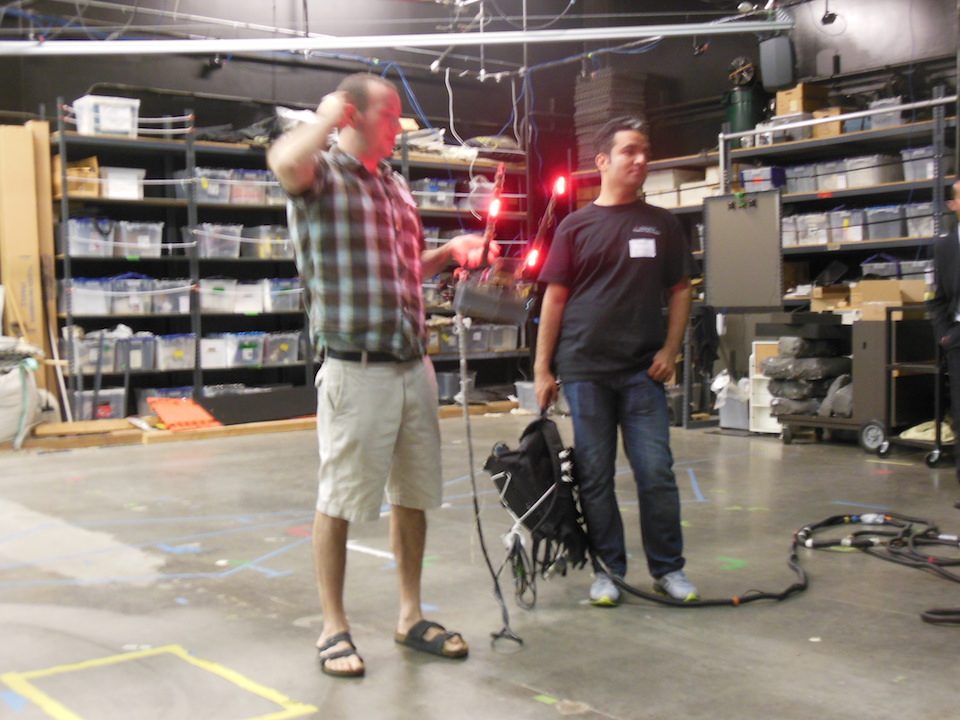
One of the Exhibitors was Unello Design‘s Aaron Lemke, responsible for the likes of Eden River and Lunadroid 237. Aaron shared with us pictures and his impressions. Hover over the pictures for descriptions or click for larger annotated gallery.
Setting up before the event started
The party in full swing
Inside the MxR lab, the Syria journalism environment from Nonny de la Pena
Inside the MxR lab, the Syria journalism environment from Nonny de la Pena
Inside the MxR lab, the Syria journalism environment from Nonny de la Pena
Inside the MxR lab, the Syria journalism environment from Nonny de la Pena
Inside the MxR lab, the Syria journalism environment from Nonny de la Pena
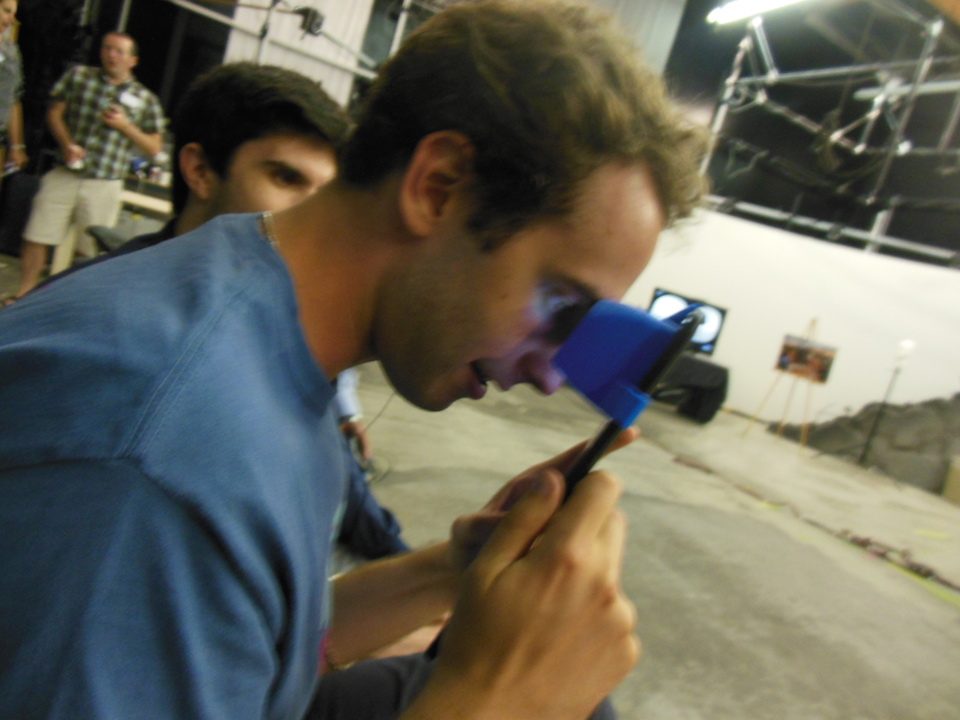
One of the Classroom Aquatic guys trying a nifty 3d printed iPad attachment for VR. The image was rendered in the top part of the screen and the bottom part was used for touch controls.
Me trying the Syria experience
Me trying the Syria experience
Me trying the Syria experience
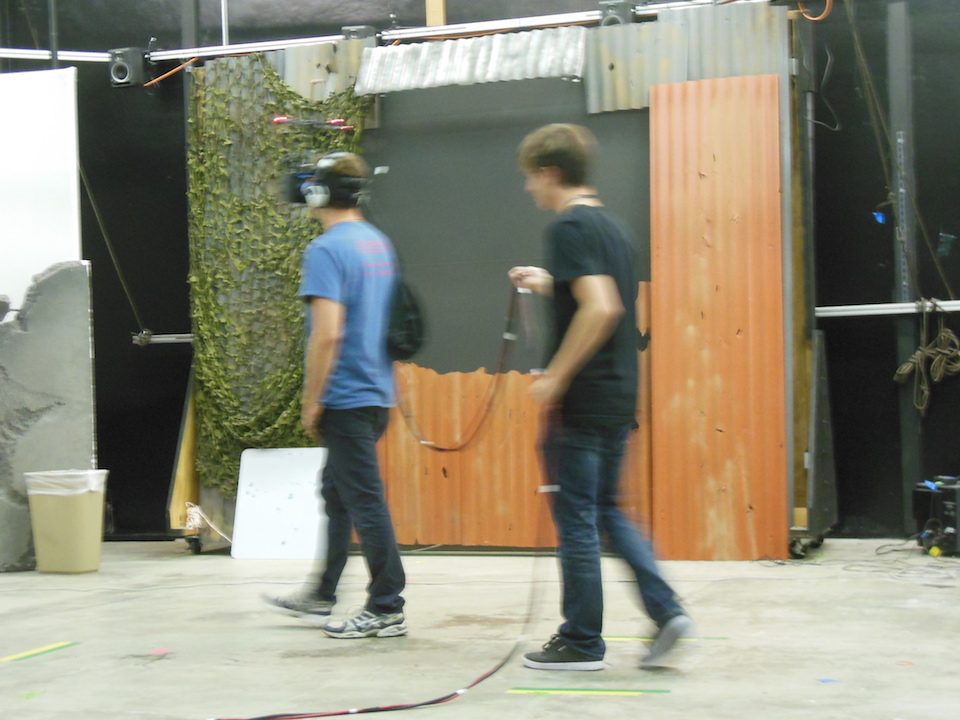
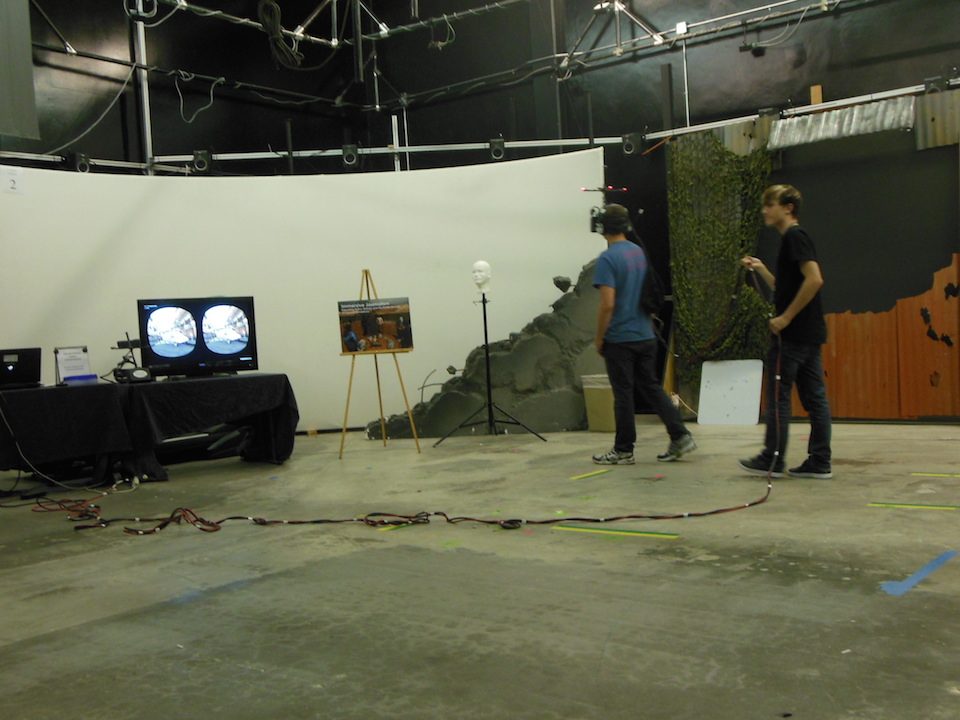
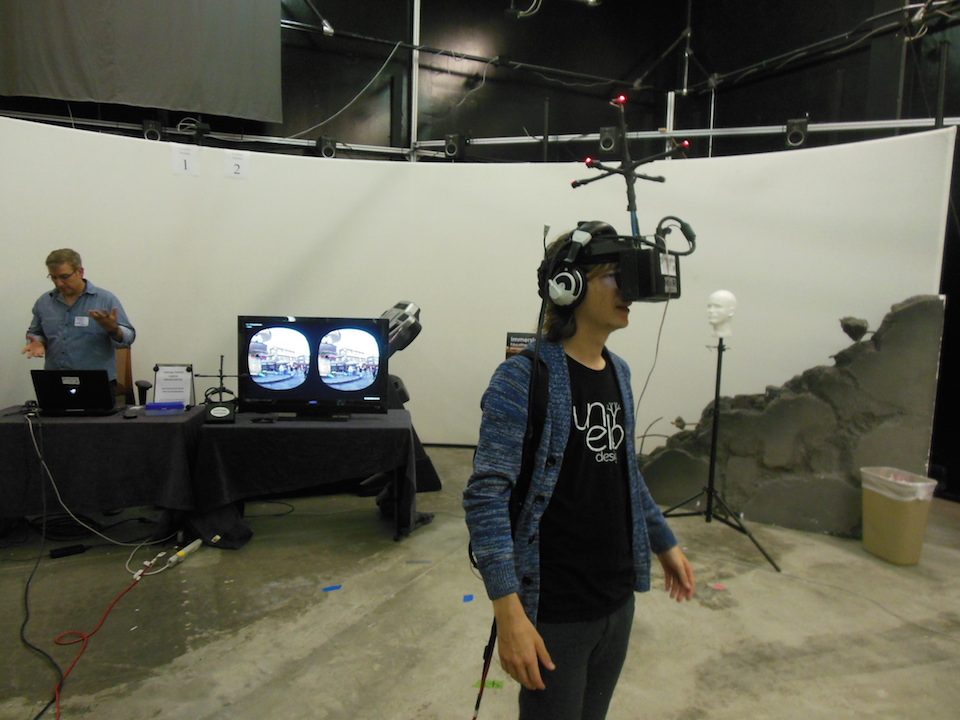
Getting an explanation of the Redirected Walking demo
Getting an explanation of the Redirected Walking demo
Control VR demoing their gloves
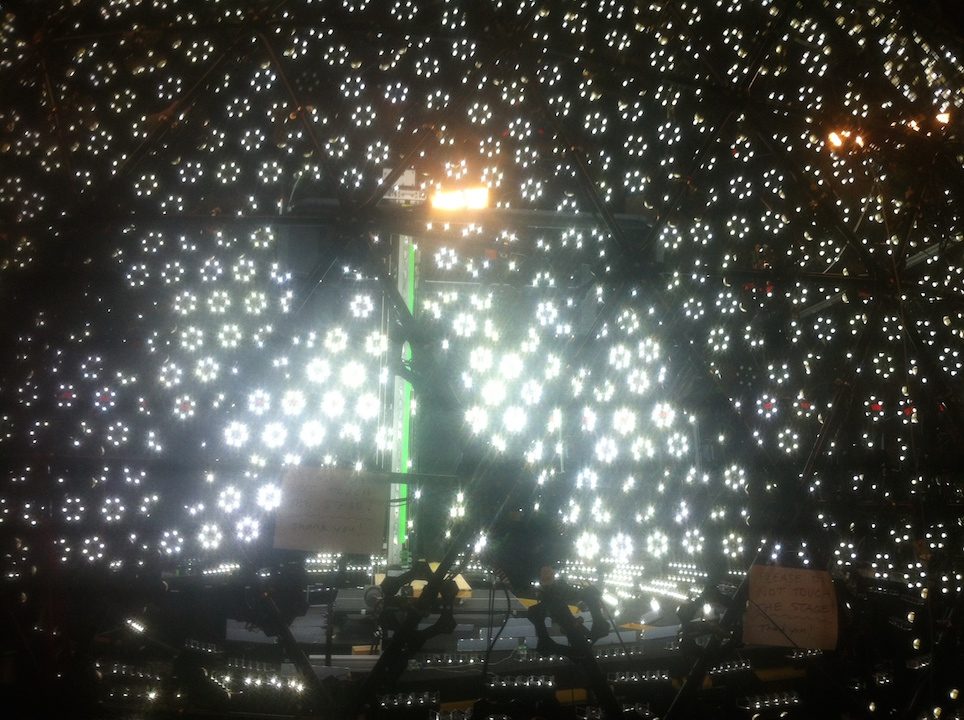
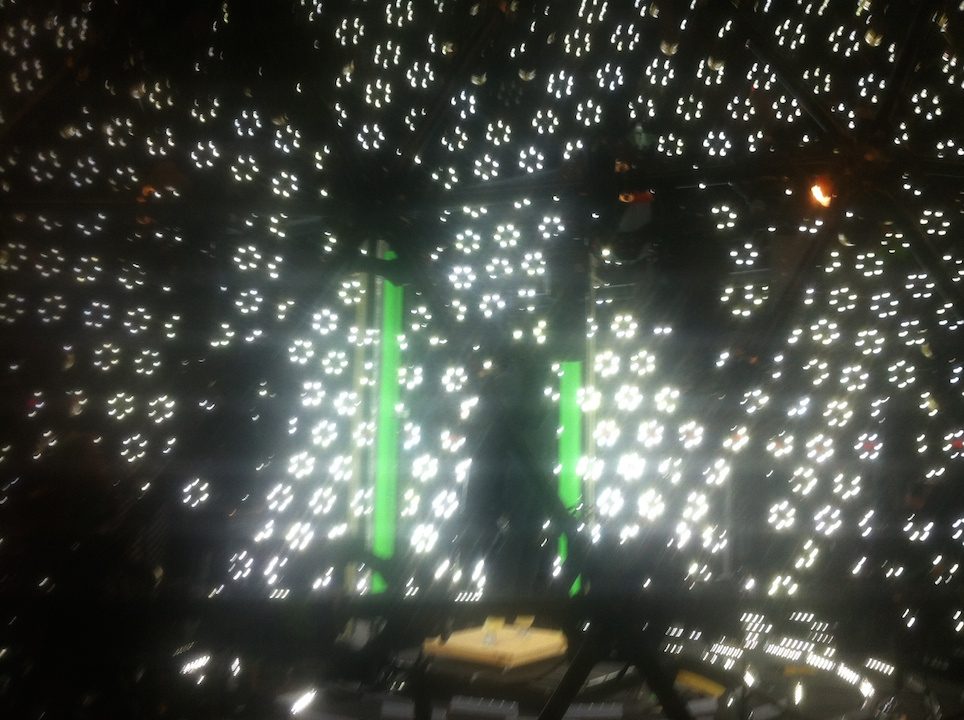
Light stage for high resolution full body scanning
Light stage for high resolution full body scanning
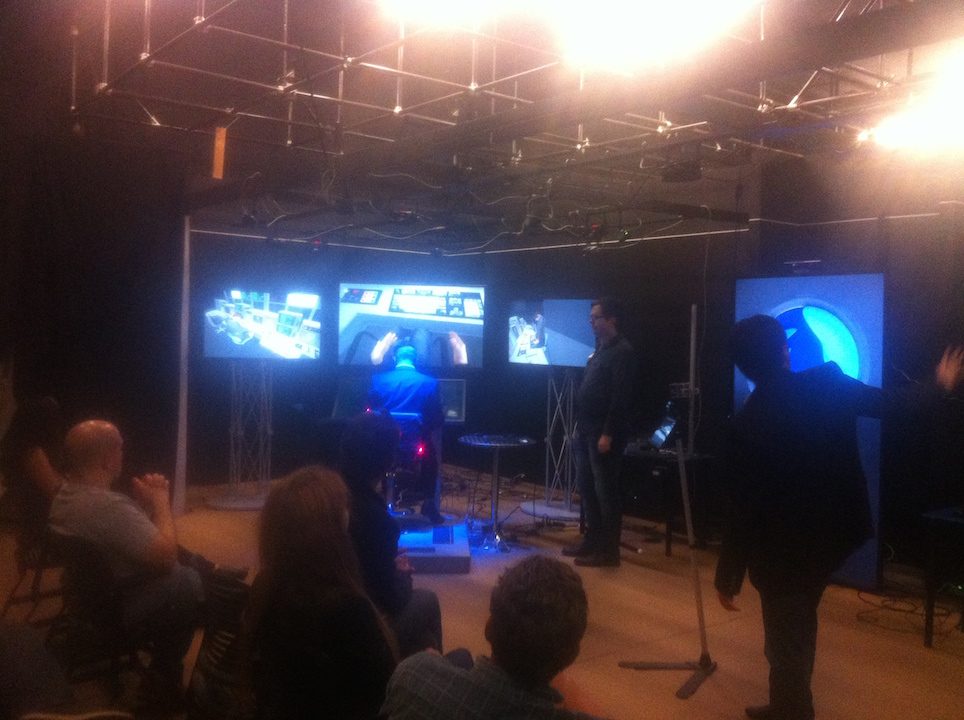
Blue Shark’s experimental battleship interface
Aaron’s Impressions of VRLA #2
VRLA was a great experience. I had a booth so much of the time I was there demoing Eden River for people, but I did manage to sneak away and get a tour of the MxR Lab.
There were several different VR related systems set up in the lab: a large stage for high res 3d body scanning, Blue Shark had a virtual mockup of a battleship interface, a Kinect system for scanning avatars (they were scanning people on the tour and rigging and animating them on the spot. So you would see the avatar of someone who just got scanned, on a tv screen jumping around and doing backflips), a virtual journalism environment depicting a military incident in Syria, and a demo of Redirected Walking. The only demos I tried were the last two.
The journalism experience was interesting. These types [of] experiences could do a lot for making the various military conflicts the US is involved in more tangible to the general public. The Redirected Walking demo was fantastic. Redirected Walking takes advantage of a perceptual phenomenon called change blindness RW can be used in VR to convince people they are walking in a much bigger space than they actually are. You walk into room and when you aren’t looking the game switches the placement of the door that you walked in through. For more on change blindness check out the video below:
I also got the chance to try the Control VR system. I was very impressed. The latency on the finger tracking was very low. Calibration seemed to a be a bit of an issue as my virtual fingers didn’t quite match up with my real ones, but they assured me that the final version would work better.
Overall it was a great experience, I saw lots of familiar faces but also met many interesting new folks as well.
—
Huge thanks to both Cosmo Scharf and Aaron Lemke for taking the time to document their experiences. For more information on future VRLA events, head over to their homepage here. You can find more about Aaron at Unello Design’s homepage here and you can follow him on twitter here.
Control VR is one of the first systems we’ve seen to offer a viable and technically promising finger tracking solution, or VR Glove, to VR enthusiasts. In fact, the Control VR team were so confident in their fully upper body tracking system, they sent an open invite to the VR community to come on over and try it out for themselves. The resulting feedback was almost universally positive.
That positivity and confident openness seems to have transferred into genuine interest as their Kickstarter campaign, started on June 5th has now concluded at 176% their original $250k target – cool $442,227 in all. It’s encouraging to see such fervent support from enthusiasts, especially considering one of the major complaints about Control VR was the price, $600 for tracking both arms and upper body.
Backers have been told to expect an estimated shipping date of December 2014, but as we’ve seen repeatedly now, Kickstarter campaigns involving hardware rarely ship to time – for numerous reasons.
In the mean time, you can catch the video above for Ben Lang’s interview with Control VR’s CEO Alex Sarnoff and CTO Ali Kord above.
Congratulations to the Control VR team, best of luck delivering the goods.
Nintendo has always danced to a tune all its own. Refusing to accept the status quo in the often relentless inevitability of the gaming world has lead to both incredible successes (introducing natural motion with the Wii) to abject disasters (the Virtual Boy), in either case though the Japanese gaming giant usually intrigues with its innovation.
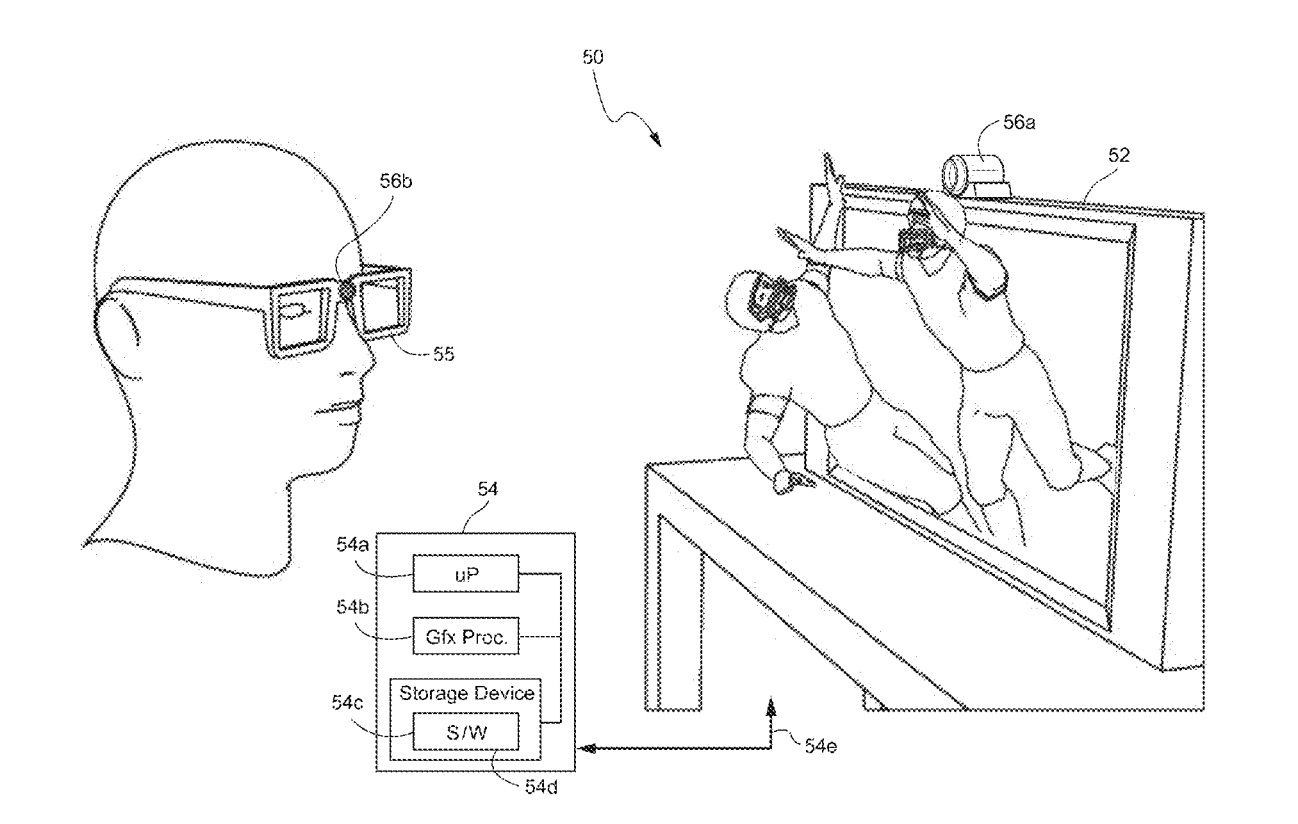
Now, a patent just published (albeit filed in March) in the US indicates Nintendo’s possible targets for pushing immersive boundaries in gaming. The patent details a system which utilises glasses and a tracking camera, mounted above the gaming display which aims uses gaze tracking to alter the image presented to the user.The system seems to suggest tracking based both on a users head position and their gaze direction, with the rendered view altering in relation to those positions to give the illusion for the user of 3D depth. More than that though, the patent details interactive benefits and enhancements such as dodging virtual projectile travelling towards the user in 3D space by merely moving one’s head.
The technology and its desired effect seems to share strong commonalities with the now famous experimental videos posted by Johnny Lee which, ironically, used a reverse Wii-mote and sensor bar system to render a 2D view relative to the user’s head position, adjusting the viewing pane to give an illusion of 3D depth. The videos probably give a good idea of the effect Nintendo desires, albeit enhanced further by tracking gaze as well.
The patent’s extensive background detail also gives examples of immersive enhancements that could join this eye-tracking technology to enhance a player’s connection to the game world. Clearly Nintendo recognise that relying on merely static 2D displays, as featured in the Nintendo Wii-U or even the autostereocopy found in the company’s handheld 3DS will cut it for gamers in the near future.
Nintendo has commented recently on its interest (or lack thereof) in virtual reality, citing the technology as interesting but too solitary at present. Although Nintendo’s famous Shigeru Miyamoto did make his way over to Oculus VR’s stand to try out the DK2 at the E3 Expo recently.
Patents sometimes give insight into a company’s technical direction, but more often than not it’s merely the sign of them exploring all avenues they can to find something they feel works for them and their audience. But Nintendo would be foolish to dismiss virtual reality entirely as a viable avenue for them. And personally, a VR Zelda with camera mechanics similar to Lucky’s Take, the 3D platformer published by Oculus VR, sounds pretty damned awesome!

 Australian company Aerometrex are working on just that. They are digital aerial mapping specialists who have focussed on providing realistic captures of towns and cities across the real world in order for them to to be realised in the virtual world.