One of the defining and ingratiating aspects of Oculus VR as a company is their openness in sharing their progress and gathering knowledge from places other than their own offices. Their engagement with the community and their willingness to demonstrate new hardware and software at every possible opportunity is, I think, an enormous differentiator for them and one of the reasons they’ve been so successful at accelerating the push for great virtual reality into the consumer space.
So the Road to VR tradition of Oculus Rift reactions continue. Although this wasn’t the first outing for Oculus Rift’s DK2 hardware at a public show, there’s no arguing that E3 is much more consumer focussed than the DK2’s previous venue, GDC.
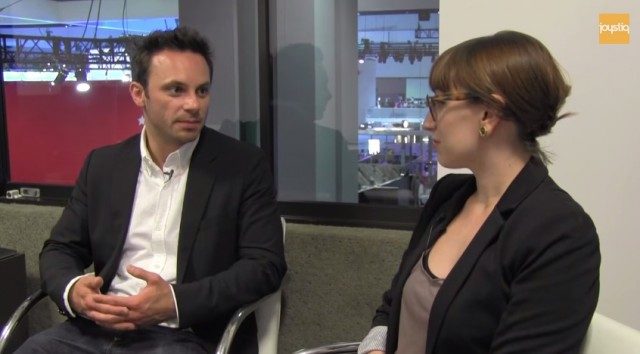
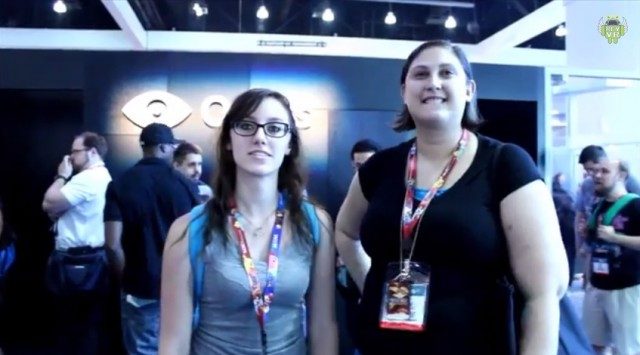
So, in the interests of gauging public perception of VR at E3 and the new hardware, Reverend Kyle stalked those who tried it out at Oculus’ opulent booth on the show floor gathering some interesting impressions.
Did you have an opportunity to try the DK” at E3 this year? What were your thought? Feel free to share them in the comments below.
3D Cinema’s return was billed as the saviour of the Multiplex. People would flock back to their local picture-house and revel in the wonders of modern entertainment technology whilst shelling out more money on admission for the privilege.
Of course, that didn’t quite happen and, although it certainly hasn’t turned out to be quite the white elephant it’s biggest detractors were predicting, no one could argue it gave way to any sort of revolution in movie making or watching.
3D Cinema and its equally beleaguered home equivalent, 3D TV, failed to capture the public’s imagination because the experience wasn’t anything that different. The technology that underpins 3D Cinema is not new, Stereoscopic movies, have been around for decades and its revival was driven primarily by movie studios and TV Manufacturers not the consumer.
…Long Live VR Cinema
Jaunt VR Camera Array, On the set of Black Mass
VR Cinema is different, and here’s why; When it’s done right, it’s like nothing you’ve ever experienced in movies before. It’s the most visceral and immediate way to bring a film makers vision to life in front of the viewer. It opens up new doors for directors and writers that could even give way to completely new genres. This is genuinely new and people are going to love it!
Black Mass is a 10 minute short movie that aims to scare you… a lot. Greg Plotkin, the director behind Paranormal Activity 5, takes the reins with Producers Matt Winston (son of pioneering effects wiz, Stan Winston), Erich Grey Litoff, David Sanger and John Ales. Partnered with Jaunt VR, a new company dedicated to 3D VR Movie making technology who recently secured $6.8M in VC funding, this is the first made-for-VR horror movie we’re aware of and its production values are impressive. Special Makeup Effects were created by Gary J, Tunnicliffe.
The film begins with your kidnapping. Then, waking to find yourself in a strange room, you’re confronted with blood soaked floors and walls. At the moment, that’s about all we know – a good thing too, as knowing too much about this project beforehand would likely diminish the surprises that undoubtedly await you.
Whilst he was in LA for E3, Road to VR Executive Editor Ben Lang took time out to get his head into an early version of Black Mass on an Oculus Rift HD Prototype. These are his thoughts on the experience.
The short snippet of Jaunt’s horror experience that I saw opened with me in the middle of some sort of storage room. Haphazardly organized materials and tools were strewn around the area. In front of me was a young girl in a white dress, maybe 10 years old. She was staring right at me; I wasn’t just an observer, I was to be a participant in this experience. “I think you’re bleeding,” she said.
As I went to look down at my body to see what she was talking about, I was interrupted by a sudden crash from somewhere outside of the scene, it gave me, and others I watched experiencing the scene, a nice little jump. She seemed startled and ran past me to the right. I followed her with my gaze as she exited the room behind me. As I turned back to where she had been standing, I was almost certain that before me would be something terrifying—a monster, a murderer—but there was nothing; it caught me off guard. Then, another loud crash with flickering lights, and another jump in my seat.
I was fully ready to be terrified, but that’s all Jaunt was willing to let me see for now.
Scott Broock, Jaunt’s VP of content, described the full experience as “10 minutes of escalating terror.” I can’t wait to see the whole thing.
The Pitfalls…
Checking the 360 camera’s view remotely.
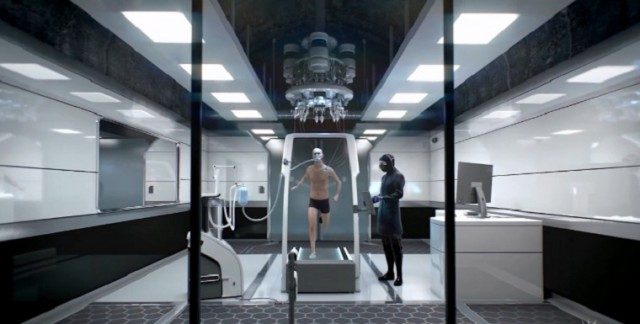
…for any new technology are of course many and varied and shooting a full, 360 degree live action 3D movie poses some unique technical challenges. Building a set that completely surrounds the action and then finding places to hide microphones in that set are but two. The technical oomph to stitch the images captured by the cluster of cameras found in Jaunt’s latest capture device is, as you can imagine, not insignificant either.
As Scott explains: “We have a very large plate after the stitch from the source, with an extremely high resolution. We down sample to 1080p for the Rift, with a ton of pixels to spare. Meaning that we will later re-render and have a very high resolution version of the movie for the DK2.”
Creatively too, VR Cinema needs to take care not to become pigeon-holed as a one-trick wonder, the kind you might pay to see at a theme park. It needs to escape the fate of the 50s B-Movie drive-in experience too, relegated to low-budget sci-fi and horror until it’s demise. But, if companies like Jaunt VR and their pioneering technology can make the job of capturing VR movies possible and Oculus really can achieve its vision of a Billion users with Oculus Rifts, I can’t wait to see what the next generation of directors have us immersed in.
To say we’re anxious to get our hands on the final movie is, frankly, an understatement. We’ll keep you up to date on project Black Mass and let you know when a release date is announced. Meanwhile, you can find more information on Jaunt VR at their website here.
E3 is over for another year and it’s been fun! We’ve had a very marked focus on software not hardware for VR related products and that’s been reflected in our coverage.
Again, Rev. Kyle is joined by Ben Lang to talk about the day’s events. In this final special they discuss Sixense and their newest STEM prototype and were impressed with it’s low latency, Kyle gets his turn with the Virtuix Omni, reactions from the Oculus Booth, new DK2 shipping estimates and some thoughts and info on Elite: Dangerous. Kyle also had his time with Sony’s Project Morpheus and the Street Luge demo. And of course the VRLA mixer.
We’ve already brought you Ben Lang trying out Street Luge, one of the new demo’s Sony is using to demonstrate it’s Project Morpheus VR Headset for the Playstation 4. This time a close up off screen capture of the game in action.
We think this is the clearest footage there is of the game thus far and it gives you a great idea of the feeling of speed the demo conveys inside the headset.
We hope to have more detailed impressions on Sony’s demo set soon.
It’s now fairly unusual for us to attend big shows like E3 without seeing another mobile smartphone VR viewer pop up. As the processing power and 3D rendering capabilities of average smart phones has exploded these days, and that many include IMUs capable of detecting (or approximating well at least) orientation. Leveraging that cutting-edge technology to ride the current frenzy in the VR space means we have many more mobile viewer solutions than fully-fledged, dedicated VR Headsets.
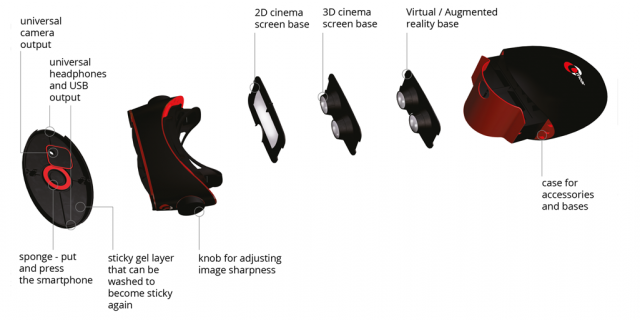
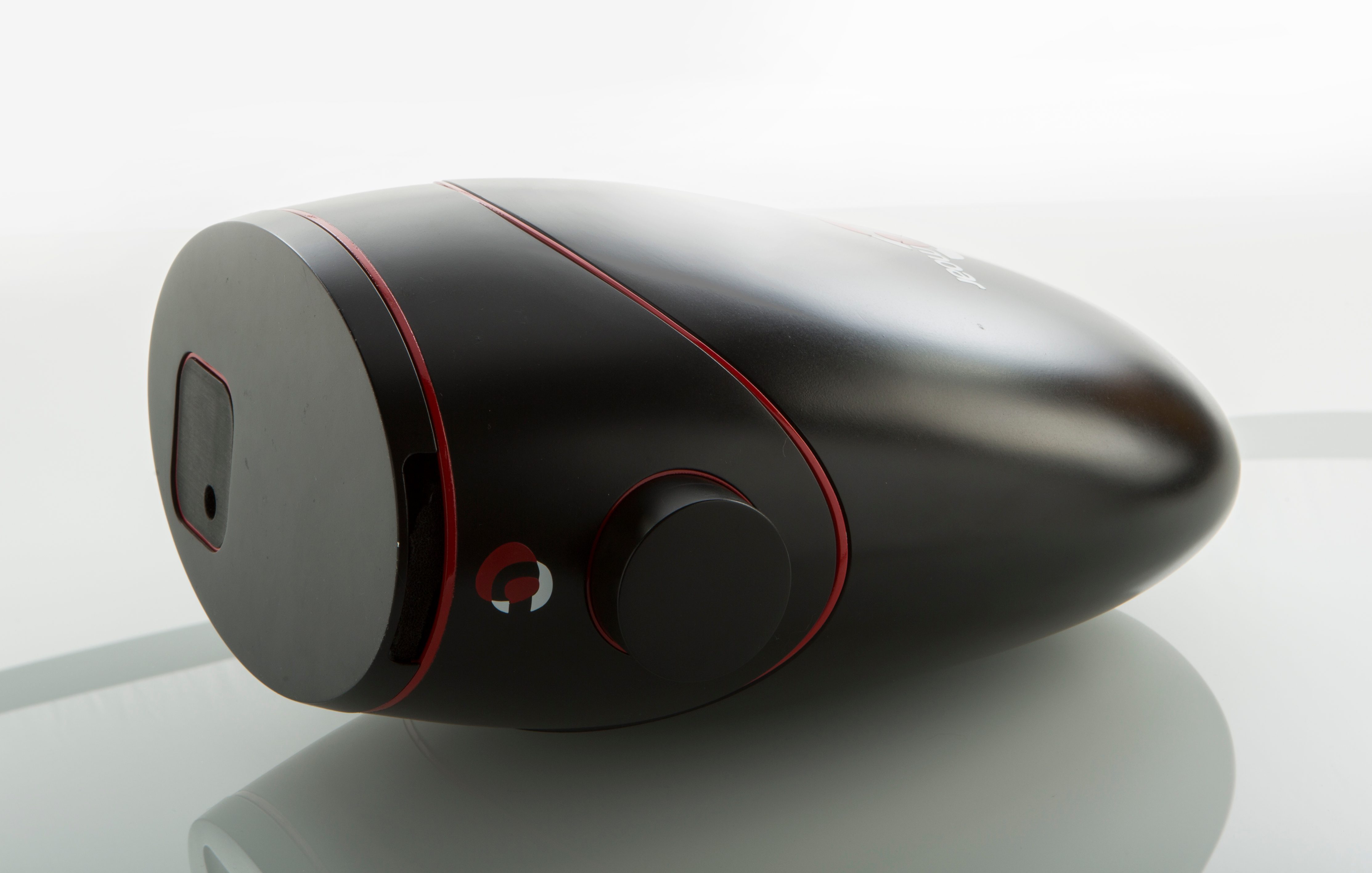
CMoar is very similar to products like Durovis Dive and Vrase in that you get a case with lenses, you start up a compatible application, slot in your smart phone and away you go. CMoar does deviate in one area though, and it’s a potentially interesting one. The Cmoar comes with 3 distinct lens assemblies (or ‘bases’ as CMoar call them) for 3 different types of applications: 2D Cinema, 3D Stereoscopic Cinema and an VR / AR ‘base’.
If you want to watch a movie or game on a virtual big screen but your movie is not in 3D, use the 2D Cinema base (single, fresnel lense for both eyes). For 3D enabled applications and movies (side by side stereoscopic) pick the 3D cinema base with dual fresnels. Finally, VR / AR lenses which, they claim, yield a 95 degree FOV.
The unit is a fairly neat bit of industrial design, if somewhat bulky. Rather than having a separate carrying case, the device forms a complete shell when all pieces are assembled, meaning you can throw them in a bag when you go travelling. But (as you’ll see in the pitch video we filmed at Cmoar’s stand), the design has lead to a fairly bulky headset. Furthermore, the process for both inserting your smartphone into the device (Cmoar claim compatibility with 30 devices) and swapping out the lens bases looks a little clunky and cumbersome to me, but this is still a prototype product at this point.
Cmoar is heading to Kickstarter soon and we’ll have some impressions of the unit up on the site soon.
Well here’s something you don’t see every day. George Takei, of course famous for his role in the original Star Trek series where he played Lieutenant Hikaru Sulu, punching (or rather failing to punch) a virtual shark in the face.
In episode 202 of Takei’s Take, George visits software developers Chaotic Moon Studios (2m 46s in) to take a look at their virtual reality project where the design goal was simple, to “..create an underwater experience where you can punch a shark in the face”. With that introduction, George dons a HD development kit / prototype and proceeds to completely fail to punch a shark. Looks like the company are using either a Kinect or similar a leap motion unit stuck to the front of the HMD to detect punching motions, although it didn’t look to work so well in this case.
We want to play it. If Chaotic Moon are reading, release that demo please!
Updated: Thanks to David in the comments for pointing out the glaringly obvious (Leap motion not Kinect). I blame sleep deprivation thanks to E3.
As we reported yesterday, developer nDreamsannounced via Sony’s blog that their new game The Assembly would be coming to Playstation 4 and that it was developed from the ground up for VR and that it would support Sony’s Project Morpheus.
Patrick O’Lunanaigh has has appeared on an interview with Gamespot divulging more details about both the artistic direction of the game and confirmed the title will be available for the PC and the Oculus Rift too.
We know that the titular ‘Assembly’ as some sort of mysterious organisation engaged in potentially dodgy scientific research. It seems you play two protagonists in the game. First, Madeline, a scientist dragged to The Assembly’s labs against her will as part of an initiation ceremony with a view to ‘allow’ her to join the organisation. Secondly you play as Joel, a member of the Assembly for some time who is having serious doubts about the organisation. It’s an interesting setup which gives good opportunity for a wide variety of gameplay.
Patrick goes on to say that the style of game is phsychological thriller rather than balls out horror, with moments of peril and mind games playing a part in the experience. Something that did surprise was that the game runs primarily on joypad for PS4 (as opposed to playstation move) and mouse + kayboard for PC, neither of which have been found to be ideal controller combinations for virtual reality. We shall have to wait and see how things shape up.
Release date on both platforms is set to hit once both VR Headsets have had their commercial release, which at this point is anyone’s guess. We’ll keep you up to date on progress of the game once we find out more.
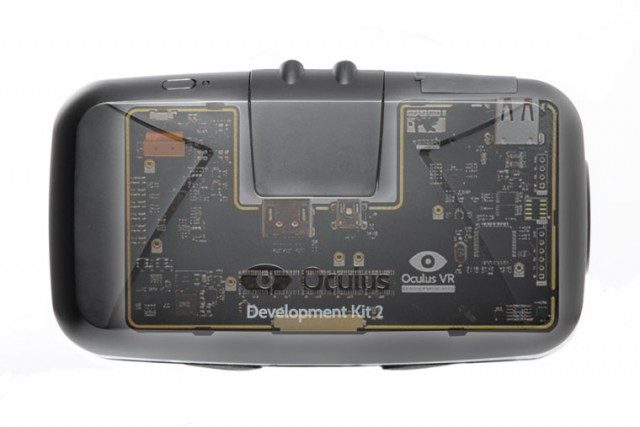
In an interview with Tested.com’s Norm Chan, Nate Mitchell, VP of Product at Oculus VR, has stated that production is ramping up well for the company’s 2nd developer kit (DK2) and in fact they expect to ship 20-30,000 units in July.
The 2nd developer kit from Oculus was announced back at GDC with pre-orders shortly opening up after the announcement. At the time, demand was so high it brought Oculus’ order pages to their knees. As of now, the company estimates they’ve received circa 40,000 orders for the DK2 since it went on sale. To put that into perspective, throughout the entire run of production for Oculus’ DK1, they shipped around 60,000. That’s a great validation of Oculus’ vision and a real marker to their successful reboot of virtual reality.
Elsewhere, Nate also stated that their original pilot run which included some 100 developers has gone well, bearing fruits that are being shown at E3 this year. Nate said that their experience with their original Kickstarter funded DK1 production run has meant they’ve been able to speedily complete tooling and production for the DK2. And, as we’ve heard from Palmer Luckey, Founder of Oculus VR, elsewhere – when they’re consumer edition finally ships it will be as close to ‘cost’ as possible.
DK2 begins shipping in July and we’re on the pre-order list and will excitedly report on what it’s like as soon as we receive ours.
Although the presence of Project Morpheus, Sony’s VR Headset for the PS4, at Sony’s press conference (it’s first since announcing at GDC in March) was notably muted, Sony clearly isn’t losing momentum or enthusiasm for the device.
Along with 2 new demos at their E3 public stand, they’ve released details of 2 full games coming to the Playstation 4 that will be supporting Morpheus. The first we wrote about yesterday, The Assembly. The second is Project Cars.
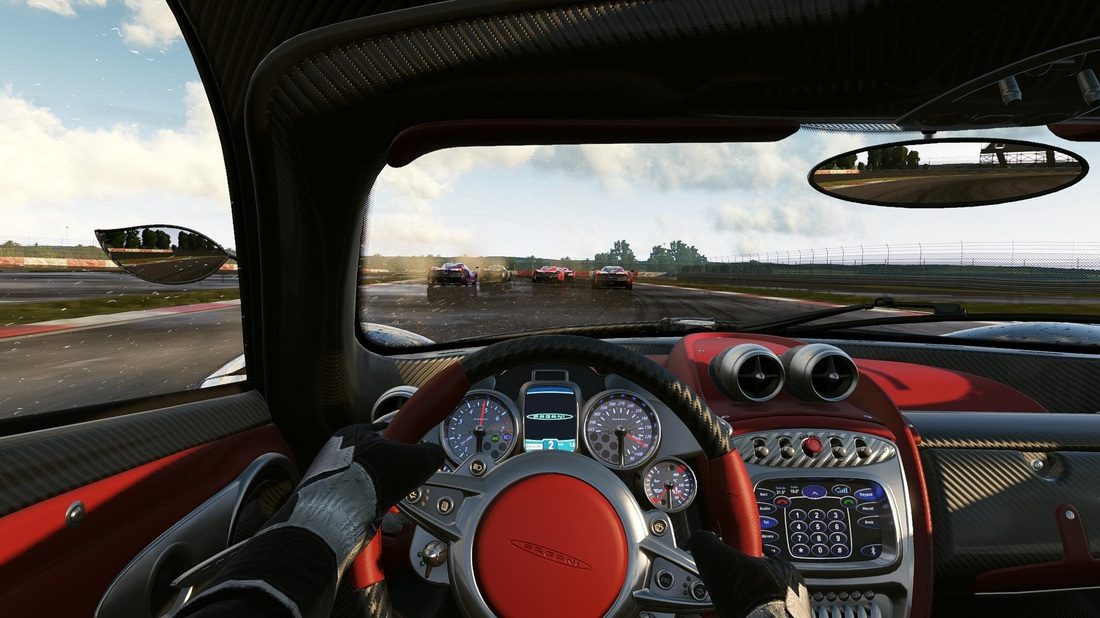
For those who don’t know, Project Cars is a driving simulation game with heavy emphasis on multiplayer online racing and a breathless fascination with everything on 4 wheels. The team behind the game, Slightly Mad Studios, just released an impressive trailer of the game in action and the level of detail at times approaches photo-realism. Not just that, but the game’s physics model is clearly more complex and robust than your average console racer. It really is a sight to behold.
Image courtesy Slightly Mad Studios
But given the sheer level of detail being pushed here, can the Playstation 4 manage to power a compelleing and comfortable VR experience at high resolutions and framerates with stereoscopy? Up to now, all we’ve seen demonstrated on the VR Headset are fun but relatively simple demos that allow an easy push for high, consistent frame rates. Then there’s the appearance of EVE Valkyrie at this year’s show, clearly no slouch in the graphics department, but I’d estimate requiring nowhere near the levels of GPU oomph that Project Cars would require.
As Project Cars isn’t being demo’ed on Morpheus we can’t answer these questions, however reports from the show floor about the ‘standard’ PS4 version are positive thus far. Either way, Project Cars isn’t PS4 exclusive and is in fact coming to PC as well. What’s more, ee know that the team have been working on Oculus Rift support for some time now too, although we’ve yet to see it in action.
Whatever the case, Project Cars looks amazing and we’re looking forward to getting our heads into it on any platform.
Sony at their press conference earlier in the week may have slightly downplayed their answer to the Oculus Rift, the VR Headset they call Project Morpheus, but they’ve turned out in full force on E3’s show floor to demonstrate the device.
One of the new demos available to try was called Street Luge, a sort of urban racing game that put you the player prone riding a street luge (think big skateboard you lie on) whilst tearing downhill trying to avoid being wiped out by oncoming traffic.
Ben Lang got a chance to try it out and found that he was asked to sit almost fully reclined in a beanbag to try and match the prone position of your avatar as closely as possible. Direction of travel is controlled by adjusting your gaze left or right. Ben commented on yesterday’s Rev. VR Podcast E3 2014 Special that you only had to make tiny head movements to shift direction, making it a challenging demo.
We’ll have more on Sony’s Morpheus presence at E3 2014 later on.
Reverend Kyle summarises Day 2 at the world’s largest gaming event with Ben Lang.
They discuss thoughts on their experiences with Control VR and IMU based tracking in general. Plus, Ben talks about his time with Survios’ Prime 3 untethered virtual reality experience. Also Kyle shares his thoughts on Cmoar, a new VR viewer headset using your mobile phone.
We’ll be releasing content throughout the day and of course Rev. Kyle and Ben will be back on the show floor for the final day of E3 when doors open this morning.
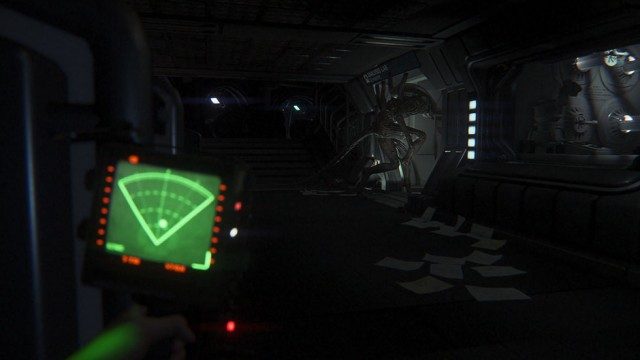
They say that man is the most dangerous game to hunt, but I don’t think they considered an Alien xenomorph being the hunter. Alien: Isolation, a new title (with Oculus Rift support) based on the famous franchise, traps you helplessly in a claustrophobic space with one of sci-fi’s most frightening monsters. The experience is terribly frightening.
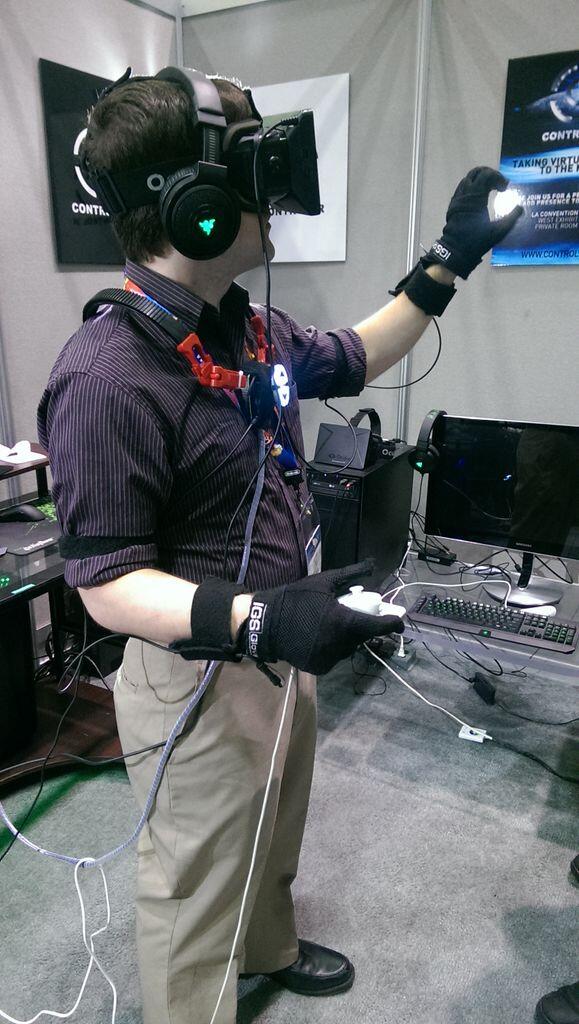
Control VR, the company that offers a solution for tracking the detailed movements of your upper body and fingers, have managed to whip up quite the storm over an amazingly short period of time.
Ben Lang trying Control VR
Since their Kickstarter campaign launched a week ago they’ve not only hit their goal of $250k but as of writing have blown past it by $30k – still with another 23 days left on the timer. Additionally, they’ve shown extraordinary confidence in the strength of their product by inviting VR enthusiasts from subreddit /r/oculus to pop over to the office and try it for themselves – this resulted in a series of positive impressions being posted back to reddit and it’s fair to say the company has been welcomed into the VR community.
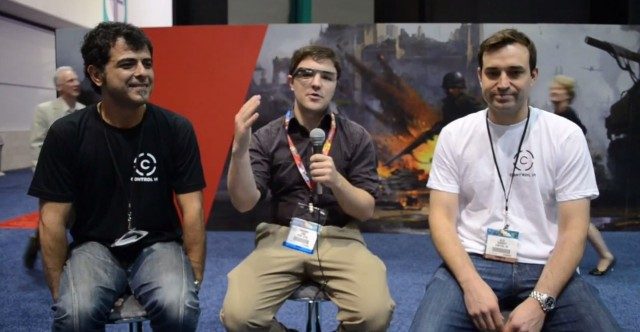
Ben Lang and Rev. Kyle swung by Control VR’s booth and grabbed some hands-on time with the system (more on this later) and Ben sat down with the company’s CEO Alex Sarnoff and their CTO Ali Kord to dig a little deeper into what the system is all about.
There’s a marked shift in VR’s perception at this year’s E3. As each successive trade and gaming show has come and gone, Oculus VR, their employees and evangelists have tirelessly put out the message that not only was virtual reality back, but it was the future of .. well everything. People, even ‘normal’ non-geeks know about VR or at least know someone who does. That’s a huge indication of just how much progress a once tiny company founded by one persistent individual has made.
Just three years ago, if you’d have asked me if in 2014 I’d see a Playstation blog entry listing a game that was built from the ground up for virtual reality and the Playstation 4 I’d have laughed in your face. But today, it was an expected albeit very notable event. How far we’ve come.
The game in question is The Assembly by UK developers nDreams. It’s a ‘Mysterious VR adventure game” apparently designed from the ground up for virtual reality. The team have had access to VR Headsets since mid 2013 (presumably Oculus developer kits), have been experimenting with techniques to leverage VR’s potential for storytelling.
It has to be said however, that the announcement is short on details about the game itself. The trailer is equally mysterious and a little dull truth be told. However, the blog entry does detail some of the base ideas the team are thinking of incorporating:
The Assembly includes lots of the gameplay mechanics that we found worked well in VR. For example, you get to control two different characters at various points, and in VR, you really notice details like their different heights, sounds and voices. Rather than playing as a silent character, we found that playing the role of characters in the story works really well, and helps make The Assembly feel quite different to most other VR projects.
nDreams claim to be equally as interested in ensuring the story is as engaging and rich as possible:
The game has a rich story written by Tom Jubert, a talented young writer behind indie hits like FTL, Penumbra and The Swapper. Players are flung into the underground world of The Assembly, a secretive collection of scientists, academics and engineers who believe morality in society is preventing scientific advancement and are committed to discovering a universal theory of everything, at any cost.
nDreams have a playable demo on the show floor at E3 this and we’ll do our best to seek it out and get some hands-on time with it to see if we can answer some questions.