Owlchemy Labs, the Google-owned VR studio behind Job Simulator (2016), announced the game’s sequel Vacation Simulator (2019) just went platinum, having now topped over one million units sold.
Easily the most recognized IP to launch in a VR game this year, Assassin’s Creed Nexus VR is quite anticipated and has a lot riding on it. But as we know, translating existing flatscreen games into VR is never an easy process. Did Ubisoft nail it? Read on to find out.
Assassin’s Creed Nexus VR Details:
Available On: Quest 2, Quest 3, Quest Pro Reviewed On: Quest 3 Release Date: November 16th, 2023 Price: $40 Developer: Ubisoft
Gameplay
Assassin’s Creed Nexus VR manages to stay true to the core tenets of an Assassin’s Creed game. If you’ve played the franchise before you’ll feel at home with the game’s mix of parkour, stealth, and combat.
The systems feel largely similar too; enemies will keep an eye out for you and their alertness levels will change if hear something or previously saw you; and the flow of parkour feels just like you’d expect in terms of what the game considers a valid jump or handhold. Combat is the outlier though (more on that later).
The game’s underlying story structure is also similar—you’re a dude in the future who is using a VR system called the Animus to jump into a simulated version of the past. The game leans into the concept of VR in a neat way by showing that the main characters are meeting in VR itself, alongside a very cool touch of using the headset’s passthrough cameras to sometimes use a backdrop of your own home before you’re fully connected to the system (though I wish they would have reinforced this more narratively).
However, the game has you jumping between three different characters, story lines, and locations (four if you count the Animus meta-story), which predicably leads to a scattered story and no attachment to any of the characters. This only reinforces the game’s habit of basically just saying ‘go here and do this’, leaving you with little internal motivation or sometimes even an idea of what you’re doing and why.
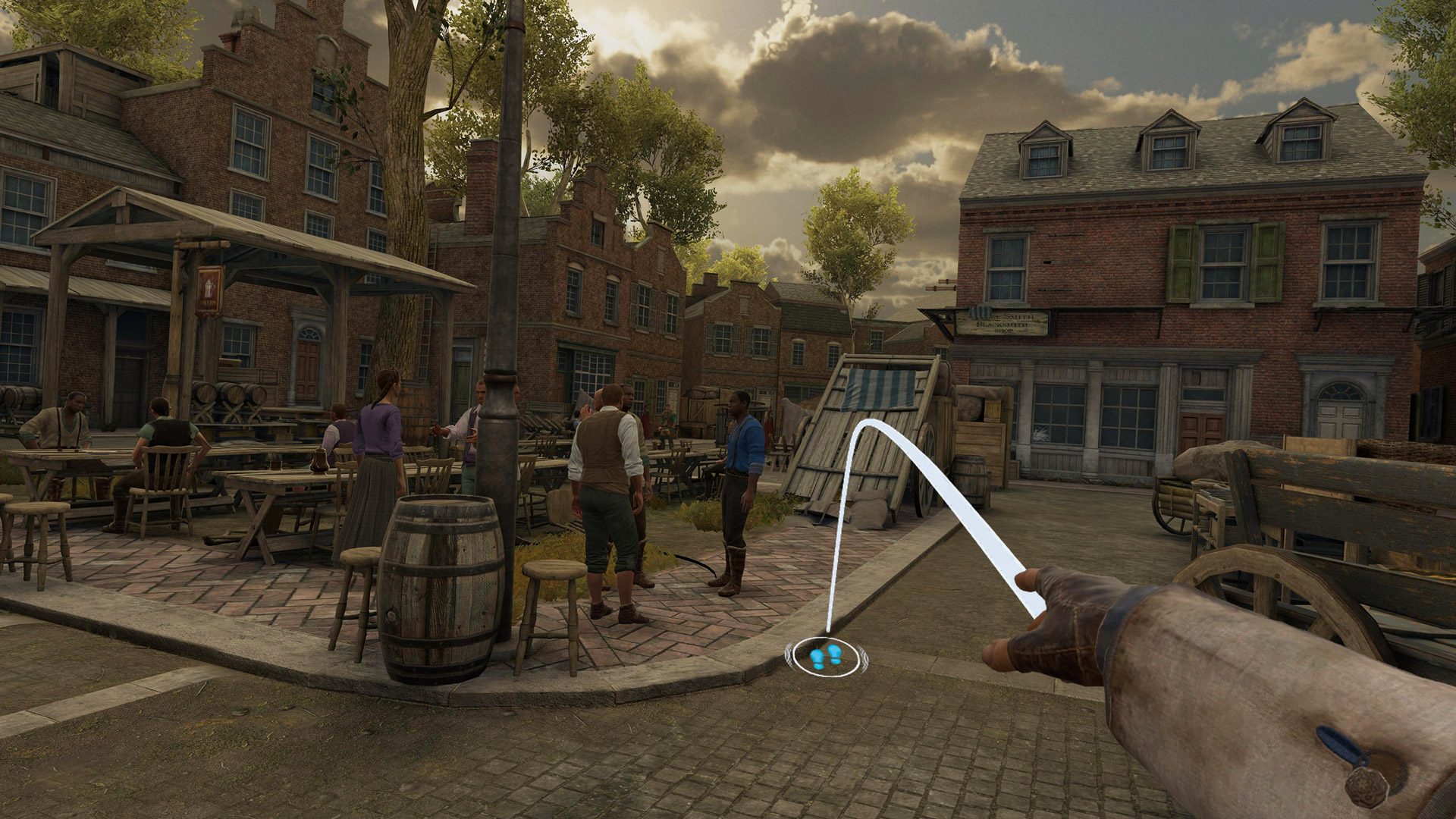
As is par for the course with Assassin’s Creed games over the years, you will be constantly—and I mean constantly—guided around by objective markers. “Go here, do that” is what the game is constantly telling you, often with 2D pop-ups floating in front of your face telling you about your next objective or which one was just completed (sometimes even overlapping each other).
It’s makes for a very ‘flatscreen’ feel that can start to be distracting and annoying, especially early on when the game is also constantly popping up tutorial tips attached to your controllers, accompanied by a heavy haptic buzz to get your attention.
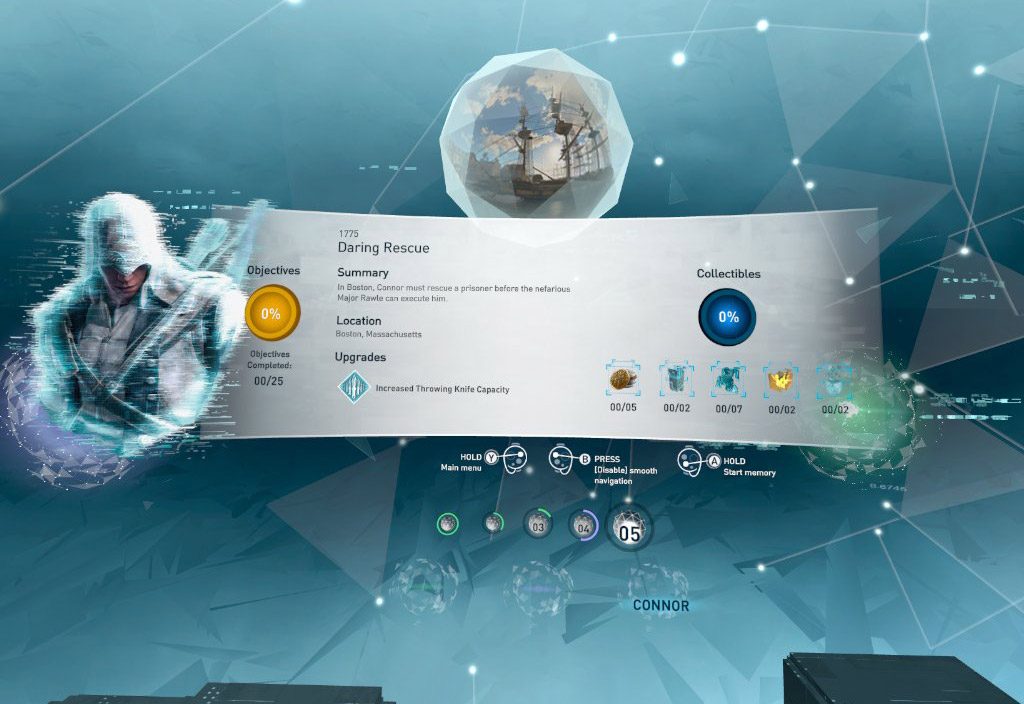
And also well known about the franchise, the only thing to do other than the main objectives is to find randomly scattered collectibles. Most are collectibles just to be found, but there’s also some points which are parkour challenges, shooting challenges, or historical markers. None of which I found fun enough to bother with after a handful of times.
Even an hour and a half into the game I still felt like I was in heavy tutorial mode. The game has a lot of systems to teach you (even after the explicit tutorial stages); I guess it’s gotta do that somehow, but it wasn’t until about two hours in that I felt like was really starting to have some fun. Things also got better as the game started to open up to larger spaces that acted as a better playground for your capabilities.
Parkour
Parkour generally works. And given that it seems largely adapted from the franchise’s existing third-person parkour system, I’m surprised it works as well as it does. While running, holding the A button initiates parkour, causing you to relatively fluidly jump from one obstacle to the next.
The variety of places where the game will you to jump to feels really good and it’s pretty great at inferring where you want to jump (it considers where you’re looking to do so). You get a reliable sense for what constitutes valid terrain which gives you that feeling that the rooftops are your playground.
The only place where this system stumbles is mantling. If your next jump is high enough that you can’t land on your feet, then you’ll need to grab the next hold with your hands and pull yourself up. When this works it’s a great way to get the player physically involved in the parkour without making them do too much.
But the game’s hand-holds (while plentifully and mostly predictable) feel finnicky and only work maybe 80% of the time that you expect them to when mantling.
That means that when you’re running from guards in a high speed chase, 20% of the time your next hand-mantle will fail leaving you to slide down with your face through a wall. As you can imagine, that really kills the momentum and immersion.
Stealth
It took a little while to click, but once I got a feel for the enemy behavior, stealth did start to feel pretty fun. Sneaking and trying to avert their gaze makes for a fun cat and mouse game, especially when you identify opportunities to sneak up behind a guard that no one else can see and use your hidden blade to quickly dispatch them—that’s one less pair of eyes you need to worry about.
You can drag dispatched bodies to hide them, which is fun in theory, but doing so makes you move so frustratingly slow that it often feels like a greater risk than the potential reward. You can also only grab bodies at specified points which felt cumbersome.
The game does a good job of giving you multiple ways to approach your target, whether that’s sneaking around on the ground, or sticking to the rooftops.
At any time you can use the Animus Scout view to look at the whole area from a birds-eye view, allowing you to tag guards, watch their patrol paths, and spot good routes for infiltration. I really liked the little detail that when you exit the Animus Scout view you remain looking in the same direction. That makes it seamless to decide on a route you want pursue from above, then translate that to what you’re doing on the ground.
Difficulty
The game not only includes different levels of difficulty, but thoughtfully lets you tune stealth and combat difficulty individually. The default stealth difficulty felt like a good combination of fair and fun. Unfortunately even at the highest combat difficulty, combat is a weak point of the game.
Combat
Of the three core gameplay systems—parkour, stealth, and combat—the latter feels the worst to me. It’s missing the kind of game-feel that you’d want from a AAA production (let alone much smaller studios that have delivered better VR combat). It’s not challenging and extremely easy to exploit (even on the hardest difficulty). You can basically just keep swinging and enemies will steadily die in front of you.
Functionally the game tries to approximate something like Until You Fall, which is a great choice as a model; Assassin’s Creed Nexus VR allows for blocking and parrying (largely gestural) which is fun, but it just doesn’t deliver the polish that makes Until You Fall work so well, nor does it achieve the visceral physics-based action that we see from something like Blade and Sorcery.
Ultimately combat has very little flow, especially when fighting multiple enemies.
And because combat isn’t particularly fun, being spotted and swarmed with guards often amounts to a feeling of annoyance (that you’ll now have to dispatch them all by brute force) instead of looking forward to the fight.
Assassin’s Creed Nexus VR uses a recharging health system which really undercuts what otherwise could have been great tension between stealth and combat. Because your health regenerates, you can simply limp away from a fight, wait until you’ve become hidden again, then just continue on your way and fight again when the time arises.
Had the game instead employed discrete hit points (ie: you can only get hit three times without healing before you die), then getting spotted and forced into combat could mean losing a crucial hit point or two. Then, if you get away and become hidden. The desire to truly remain stealthy is very high because with only one hit point there is a genuine desire not to fight—not because the combat isn’t that fun—but because there’s a real risk of death.
As far as I can see, this small tweak to the game’s health system would make it significantly more tense and fun as a stealth game. I know it’s unlikely, but I’d love to see it introduced in an update, perhaps as an alternate difficulty setting.
In the same way that Ubisoft wasn’t able to escape the flatscreen feeling of objective markers and pop-ups, the game’s menus are sluggish and use a weird combination of laser pointer and button presses, making them rather strange to navigate. Many common actions require you to hold down the A button for what feels like a good three seconds, even in cases where the outcome isn’t something that needs a ‘super confirmation’, like simply swapping from one objective tracker to another.
And then there’s the game’s boot sequence. It takes a good one minute and thirty seconds to go from game launch to loading into your last level on Quest 3, and probably 75% of that time is because of painfully slow disclaimer pop-ups, logo pop-up, and of course the dreaded ‘Connect your Ubisoft account’ pop-up that comes up every single time the game freshly opens. This isn’t an issue if you set the headset down and put it to sleep without leaving the game, but if you do anything with your headset between sessions of the game, you’ll be greeted with that same sequence every time.
Yes, one minute and thirty seconds doesn’t sound like a long time, but when you’re stuck in your headset just watching slow logo animations, re-reading the same disclaimer, and re-dismissing the Ubisoft account thing you already told the game you don’t want, it’s really quite annoying—especially because this is all artificial waiting time that doesn’t need to be there.
From a content standpoint, the game takes roughly 15 hours to finish the main story, or longer for those that want to find all the collectibles in each level. At any time you can jump back to previous levels to play them again and find more collectibles.
Immersion
Assassin’s Creed Nexus VR certainly feels like it’s based on systems that were built for the the third-person Assassin’s Creed games, which don’t feel like they were made for first-person scrutiny. Specifically NPCs are consistently janky with a look that’s deep in the uncanny valley, consistently terrible lip-sync, and often creepy or glitchy expressions.
You’ll also see two of the exact same NPC talking to each other, as a third copy of the same NPC walks down the street nearby.
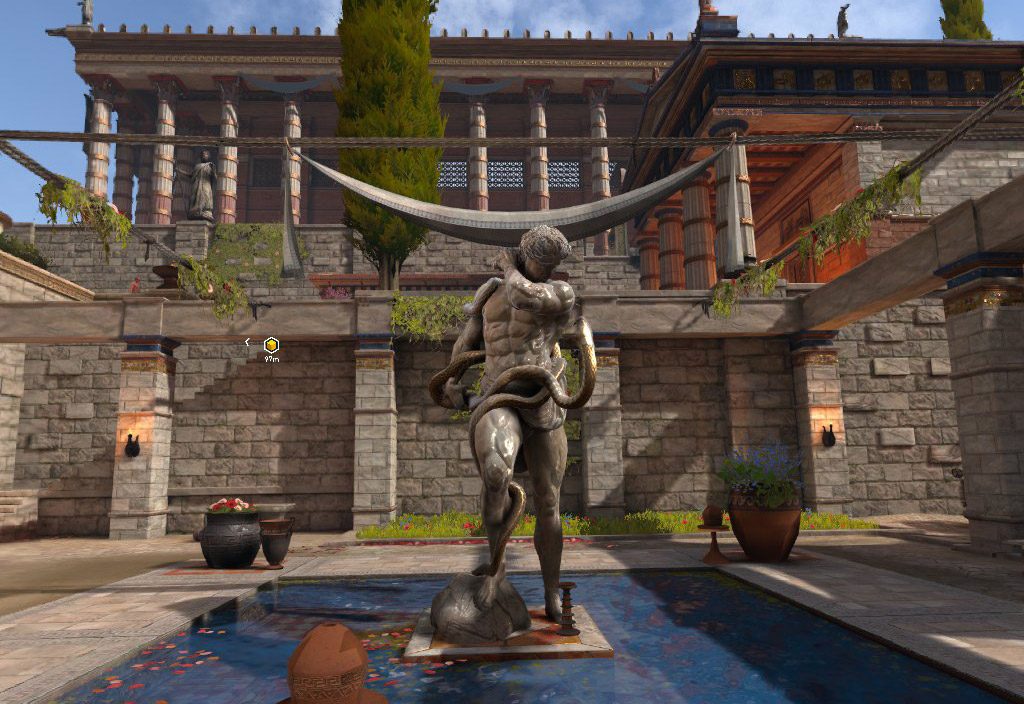
For the size of the game and the number of NPCs and objects that are present at any given time, I’d say the game looks pretty impressive visually, even if it’s not the ‘best graphics’ we’ve seen from a standalone VR game.
Captured by Road to VR
In VR it’s rare to see such a large space that you can actually traverse in front of you, and that gives the game a unique feeling. This scale is emphasized by the Animus Scout view which lets you see the entire space at once from a birds-eye view, including NPCs strolling around even several streets away from you.
The game generally has the interaction systems that you want, but it’s just lacking VR-specific polish.
Assassin’s Creed Nexus VR does the old ‘magically invisible inventory’ thing where to ‘pick something up’ (like arrows or a smoke bomb) you grab the item then release, which just magically teleports into your inventory.
The same thing happens with objective items, keys, etc. And when you need those objective items, they just appear on demand when you grip your hand. For instance, if you need to hand an objective item to another character who is holding out their hand, you reach your hand near their hand, then grab the air—and the object appears in your hand for you to give it to them.
I just don’t love this ‘point and click’-like interaction in VR; even asking the player to just stash items over their shoulder feels way more immersive and hands-on.
Speaking of immersive interactions: the hidden blade feels generally good. You pull it out by holding your trigger and flicking your wrist, which is very reliable and definitely gives you a sense of being a badass with this unique weapon. But the gratification of air assassinations (jumping down to stab from above) is really undercut by the fact that your arm janks out almost every time and looks like a broken twisted mess. This is indicative of the missing polish in many of the game’s interactions that are essential to fulfil the fantasy of being a master assassin.
The game also applies extreme auto-aim on projectiles (arrows and throwing knives). You almost don’t need to aim. It really undermines the satisfaction of sneaking around and getting stealthy kills. Meanwhile, throwing things with your hand is really difficult to aim correctly (like when you want to throw an object out a window to distract the guards, but you end up hitting the wall so they come inside to find you instead). At a minimum, I liked that the game allows you to retrieve arrows and throwing knives from fallen bodies.
There’s also some weird interaction polish issues, like reaching over my shoulder to pull out the bow in my main hand… but instead pulling out an arrow first… which means now I need to pass the arrow to my other hand, then reach back over my shoulder to get the bow. Moments like this ruin that master assassin fantasy when you’re about to make a quick and deft shot at an enemy before they can ring the alarm… but you’re caught fiddling with this jank that kills the moment.
The key things that define a AAA game is typically scope and polish. Assassin’s Creed Nexus VR has the scope and it has the kind of features and systems you want in a VR game—but it’s missing the polish. It just doesn’t have that game-feel that’s even more crucial to get right in VR than flatscreen games. It’s difficult to explain why, but there’s just a diminished sense of satisfaction from many of the game’s mechanics. And it’s not that it does things poorly, but in almost every instance you can think of, there’s a VR game that’s done it better.
One immersive detail that’s a great touch however is the ability to whistle with a gesture. Pulling the trigger and holding the A button forms your fingers into a whistling pose, then holding your hand up to your mouth makes the whistle. As a tool, it’s useful to always have a way to attract guards toward you. As an immersive interaction, it feels natural.
And another place where the game deserves some props is lock-picking. It’s a simple but well executed and immersive mechanic. Pushing one hand forward and back selects the segment of the lock, while twisting the other hand finds the correct location. It’s clearly an adaptation of similar mechanics in flatscreen games—but hey, it works!
I would have liked to see this become a little more challenging at times, perhaps introducing ‘kill zones’ which would lead to a broken pick if you turned your cursor the wrong way. I liked that the game also sometimes gave you the option to pick-pocket a key from a guard (pretty challenging), allowing you to unlock most things in that area without lock-picking.
Comfort
I was surprised how comfortable the game’s parkour felt to me. I was able to play for an hour or more without discomfort and with minimal comfort settings.
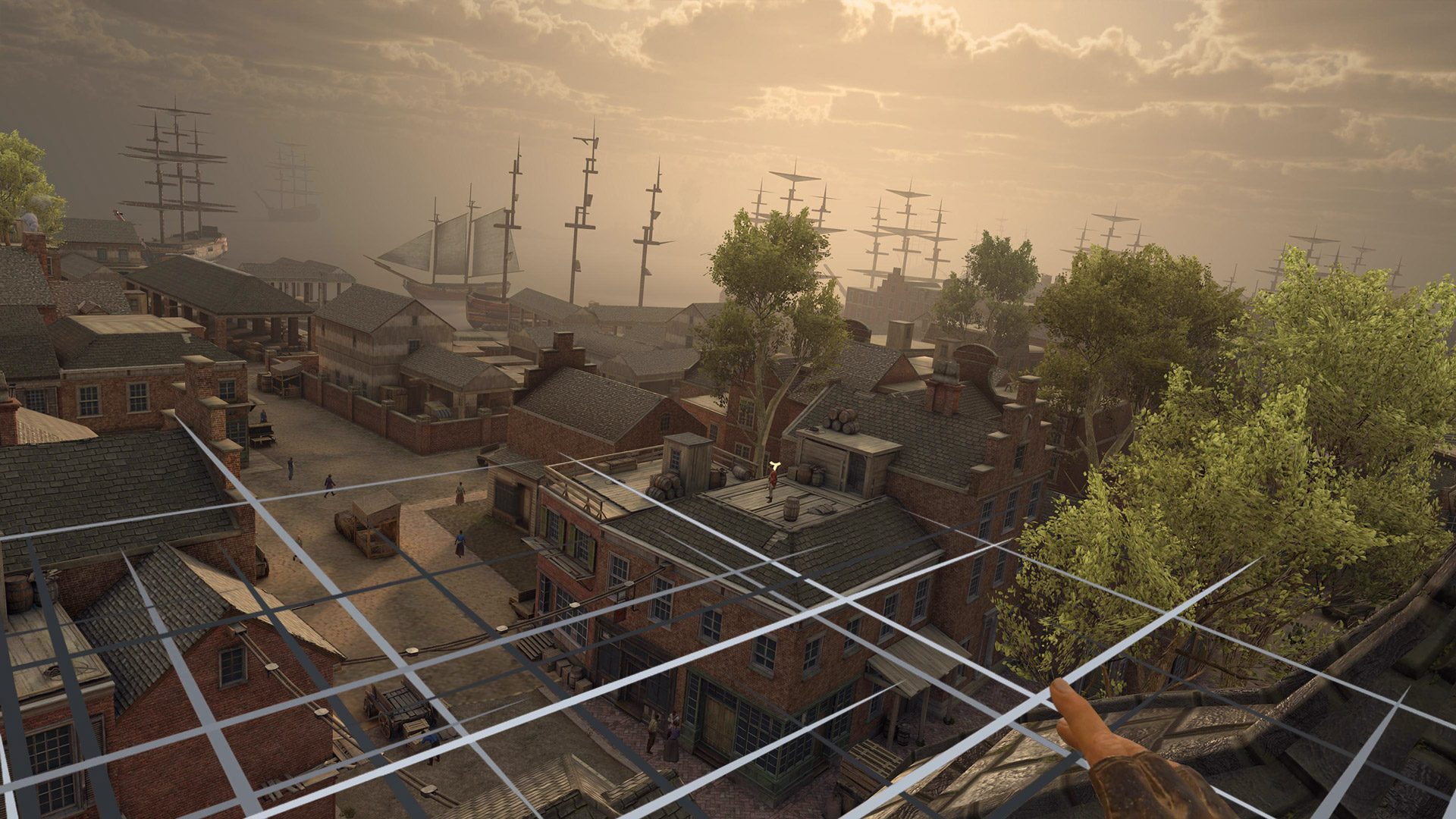
For those who are more sensitive to this kind of movement, thankfully the game offers lots of options, including some that are unique or specific to the game. For instance, you can enable a ‘virtual nose’ option (which is thought to help with motion discomfort by giving your eyes a frame of reference they’re used to seeing), or a ‘fear of heights’ option which puts a grid around you when you’re up high to help with that kind of motion sensitivity.
Image courtesy Ubisoft
There’s also some parkour-specific accessibility options to try to make things a easier or more predictable. I wish these were a little more immersive though (like the option that shows an indicator for an upcoming hand-hold, which is a very glaring UI icon, whereas perhaps a glowing edge would have been a better option).
Image courtesy Ubisoft
Assassin’s Creed Nexus VR also supports teleport, but it’s rather iffy and very slow. I mean… I’m glad they at least tried to add it for people who couldn’t play a game with this much artificial locomotion, but I found that it slowed the game down to an unacceptable pace. I can’t imagine playing the whole game with teleport; if you do, it seems like it would take one and a half to two times as long to complete than without it.
Quest 3 Elite Strap with Battery | Photo by Road to VR
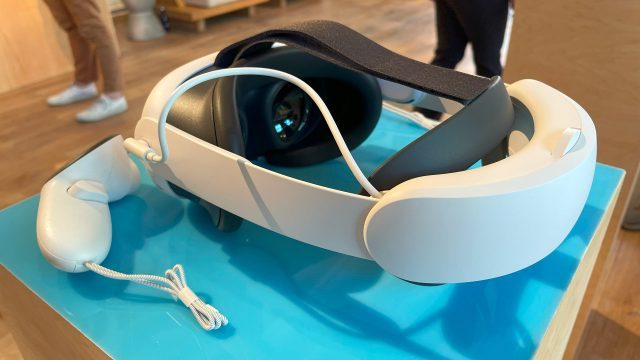
From flagship smartphones to VR headsets, first-party accessories tend to be pretty expensive. Along with the higher price tag though, consumers typically expect exceptional quality. After all, the product’s designers had a head start, so those day-one accessories should be, if not the best out there, at very least high quality. Meta sells an array of useful accessories to fit that description, although some of its most expensive first-party stuff—namely its Elite Strap—continues to face reliability issues even today, as many users of the Elite Strap with Battery for Quest 3 are reporting faulty units.
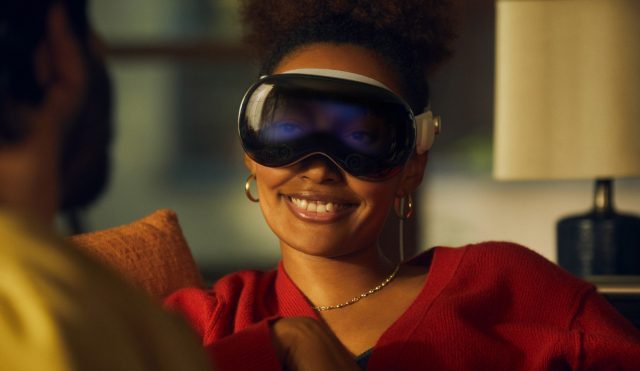
The recently released VisionOS Beta 6 contains a video showing how users will scan their face to create their avatar using the Vision Pro cameras. Perhaps more interestingly, the video shows that Apple plans to use the external display for more than just showing the user’s eyes through the headset.
Industry Direct is our program for sponsors who want to speak directly to the Road to VR newsletter audience. Industry Direct posts are written by sponsors with no involvement from the Road to VR editorial team. Links to these posts appear only in our newsletter and do not intermix with our on-site editorial feed. Industry Direct sponsors help make Road to VR possible.
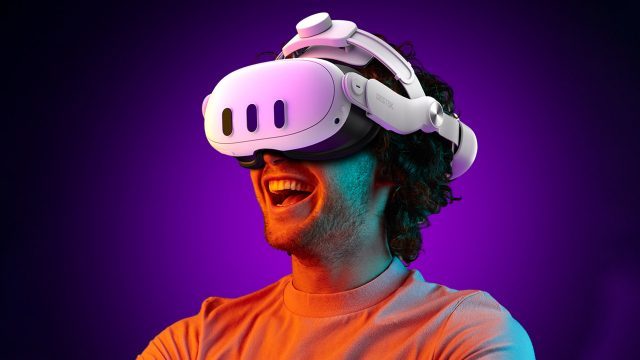
Hey VR Enthusiasts! The world of VR is evolving faster than ever, and we totally get the importance of comfort during those epic gaming marathons or deep-dives into virtual exploration. That’s why we’re stoked to introduce you to something we’re incredibly proud of: the DESTEK QH3 Pressure-Free Head Strap. It’s been crafted especially with Oculus/Meta Quest 3 users in mind. Read on for an exclusive Amazon discount code!
Your Comfort, Our Blueprint
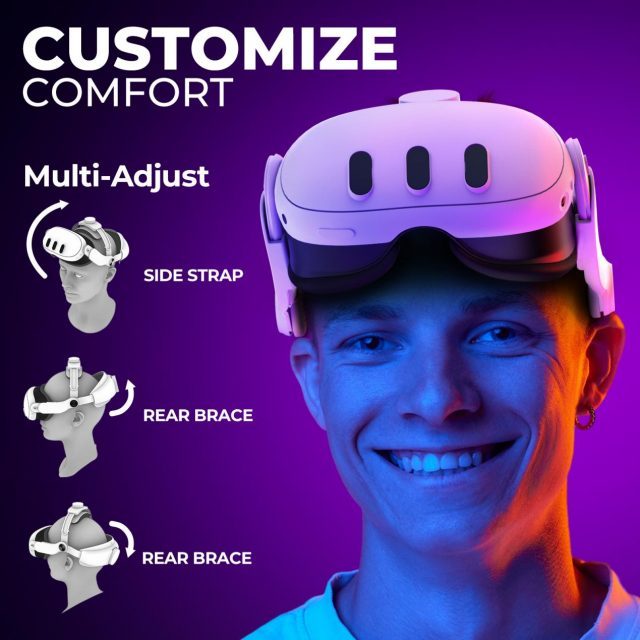
Ever felt that nagging weight during long sessions? Our new strap design is here to change the game. With side, top, and rear brace adjustments, you’ve got the reins to find your perfect fit. Say goodbye to distractions and hello to endless hours of pure VR joy.
Setting It Up? Easy Peasy!
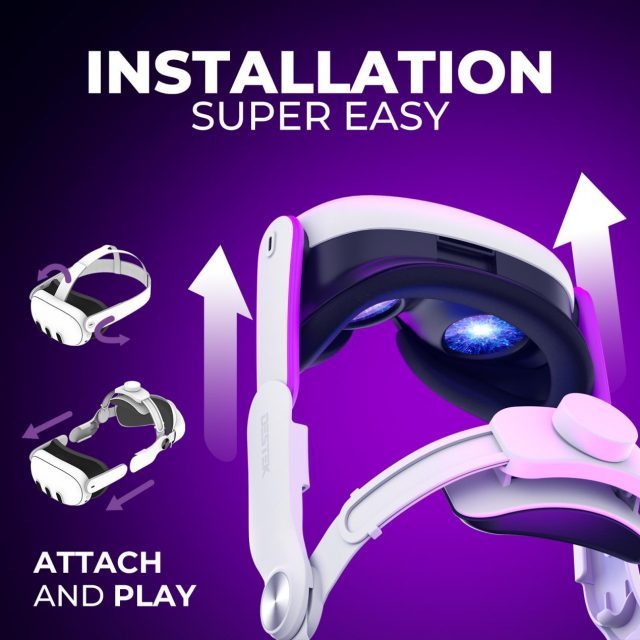
Ditch those complex instruction manuals. Our intuitive design ensures you’ll have the strap ready on your Quest 3 in no time. Heck, even your little sibling or kid can do it. Seriously, give it a try!
Built to Last, But Super Flexible: We’re talking side straps that fold a whopping 180° and are crafted from super-strong POM polymer. And for those who like to tweak and twist things often, rest assured, these straps can take it.
No More “Face Squeeze” Moments
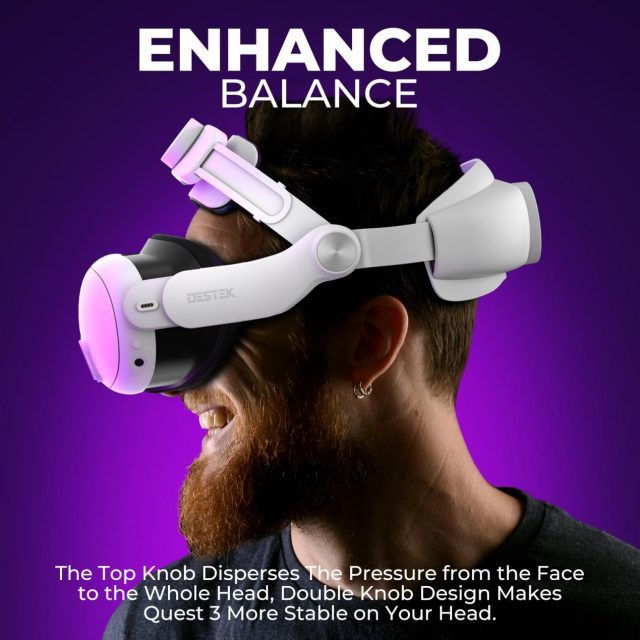
Feel the magic of our top knob which spreads out that facial pressure. Plus, with the dual-knob setup, your VR headset will feel rock-solid. Many of you asked for a worthy upgrade from the Quest 3 elite strap. We think we’ve nailed it.
Cushioned Bliss: Get ready to treat your head with our plush cushions. Merging a springy memory foam pad with a sleek PU leather exterior, we’ve created something both comfortable and easy to keep clean.
Final Thoughts and an Exclusive Amazon Promo Code!
The DESTEK QH3 Pressure-Free Head Strap isn’t just another accessory. It’s our answer to the passionate feedback and needs of the VR community. Dive in, stay longer, and savor a pressure-free experience.
Act Fast! For 7 days only, grab your DESTEK QH3 Pressure-Free Head Strap for $34.99 plus an exclusive 10% discount. Stock is limited to 300 pieces, so don’t miss out on this special offer!
Amazon Promotion Code (enter at check-out): CH5WKBL7
High-end enterprise headset maker Varjo is teasing an online “special event” where it says viewers will “discover the future of VR/XR.” The tease heavily points in the direction of the company’s next headset, likely the XR-4.
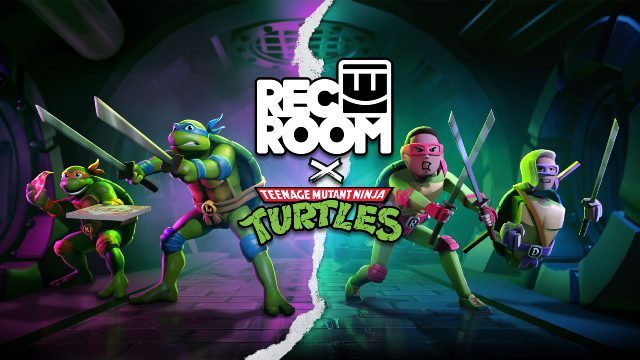
Social VR platform Rec Room is getting ready to launch another co-op game this week, this time taking you to the sewers with a Teenage Mutant Ninja Turtled-themed adventure.
It’s pretty unlikely we’ll see any deals this year on Meta’s latest and greatest VR standalone, Quest 3. Before the holiday season kicks into gear though, the company is dropping the price of Quest 2 to just $250.
There are relatively few 2D Android apps available on the Quest Store, which seems odd since the Quest hardware runs a modified version of Android. According to Meta CTO Andrew ‘Boz’ Bosworth, Google simply isn’t interested in bringing the full Play Store of apps to Quest.
Developer Flat Head Studio and publisher Fast Travel Games today launched the new Level Creator Update for We Are One (2023), the time-looping puzzle shooter that landed on VR headsets this summer.
Valve unveiled its Steam Deck OLED late last week, offering up a hardware refresh for the first time since the company launched the handheld gaming device last year. While the company has been full steam ahead on handhelds and developing Steam OS, Valve says it’s “still pushing forward” on VR.
MyDearest, the Japan-based VR studio behind the Chronos adventure game franchise, announced it’s secured $7.8 million (1.2 billion yen), something the studio says it will use to expand its existing IP for VR headsets, such as Meta Quest and PSVR 2.
Industry Direct by By Masaru “Nogi” Ohnogi, Executive Producer of X8 at Thirdverse
Industry Direct is our program for sponsors who want to speak directly to the Road to VR newsletter audience. Industry Direct posts are written by sponsors with no involvement from the Road to VR editorial team. Links to these posts appear only in our newsletter and do not intermix with our on-site editorial feed. Industry Direct sponsors help make Road to VR possible.
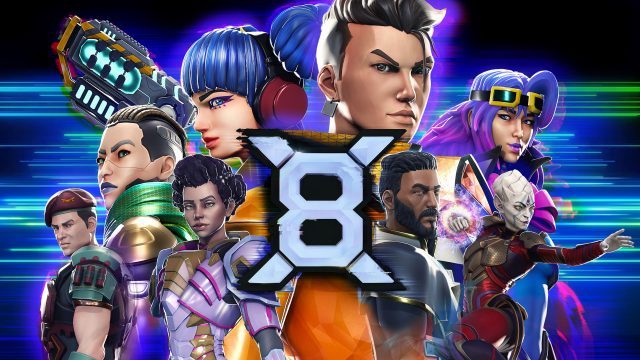
We’re excited to launch X8, our 5v5 VR Multiplayer Hero Shooter, today on Meta Quest and SteamVR. We wanted to take a moment to look back at the game’s development journey and our efforts to foster an engaged community.
Focusing on Quality and Community Building
At Thirdverse, we’ve always believed that the heart of any game lies in its community. From day one, we set out to create a game that not only provides a quality VR and multiplayer experience, but also fosters a thriving community of players.
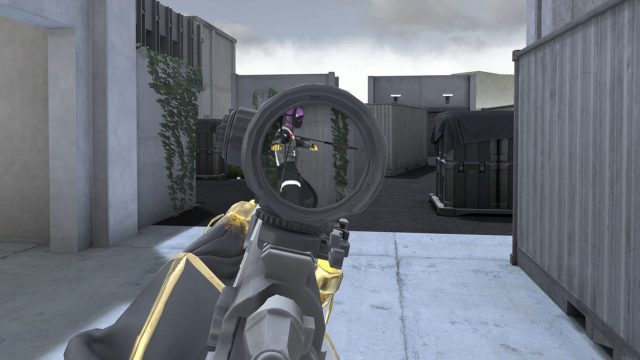
One of our main points of focus for quality was on the VR experience. We employ complex weapon manipulation, introduce a unique ‘throwing knives’ system where players can directly damage opponents, and have players perform gestures to prime their abilities. We want players to feel immersed to really differentiate our playstyle from 2D games of a similar genre.
Our journey began with two Closed Betas, which allowed us to gather invaluable feedback from our early players and helped us identify and address critical issues, such as improvements to the onboarding system. We continued to update the game based on this feedback, ensuring that the community’s voice was heard.
We decided to launch on Meta App Lab and Steam for Early Access in late May to build and strengthen our existing community and refine the game. In less than four months in Early Access, over 100,000 players have installed X8.
After the Early Access release, we rolled up our sleeves and got to work. We fixed several hundred bugs, fine-tuned game balance, and implemented many requested features such as the knife-throwing mechanics, cross-platform party code invites, improved custom games quality of life, added links to our community-made ranked game discord, changed inputs for a more streamlined game based on first user experience, and a reporting and blocking system.
This ongoing exchange with our players has been instrumental in shaping the game. We couldn’t have reached launch without our dedicated community of players and their invaluable feedback.
Driving the VR Esports Industry
One of our most ambitious goals with X8 is to establish VR esports as a mainstream phenomenon. We believe that VR has enormous growth potential and are determined to be at the forefront of this movement.
We’ve hosted three VR esports events with X8, including an Early Access Invitational Tournament in May, and a tournament at the Tokyo Game Show in September. This event marked the first-ever VR esports event in Japan, setting a precedent for the future.
Starting the First Official X8 League
In August, we launched the initial trial of our first official Early Access X8 League in partnership with VR esports organization, Virtual Athletics League (VAL). To test the market for an X8 League, we kicked off the eight-week season in late September where players competed in 5v5 demolition matches each week to climb the rankings and aim for a piece of the substantial $10,000 cash prize pool. This high prize pool is a testament to our commitment to promoting VR esports and providing competitive opportunities for our players.
Launching Soon: The Exclusive Founder’s Pack
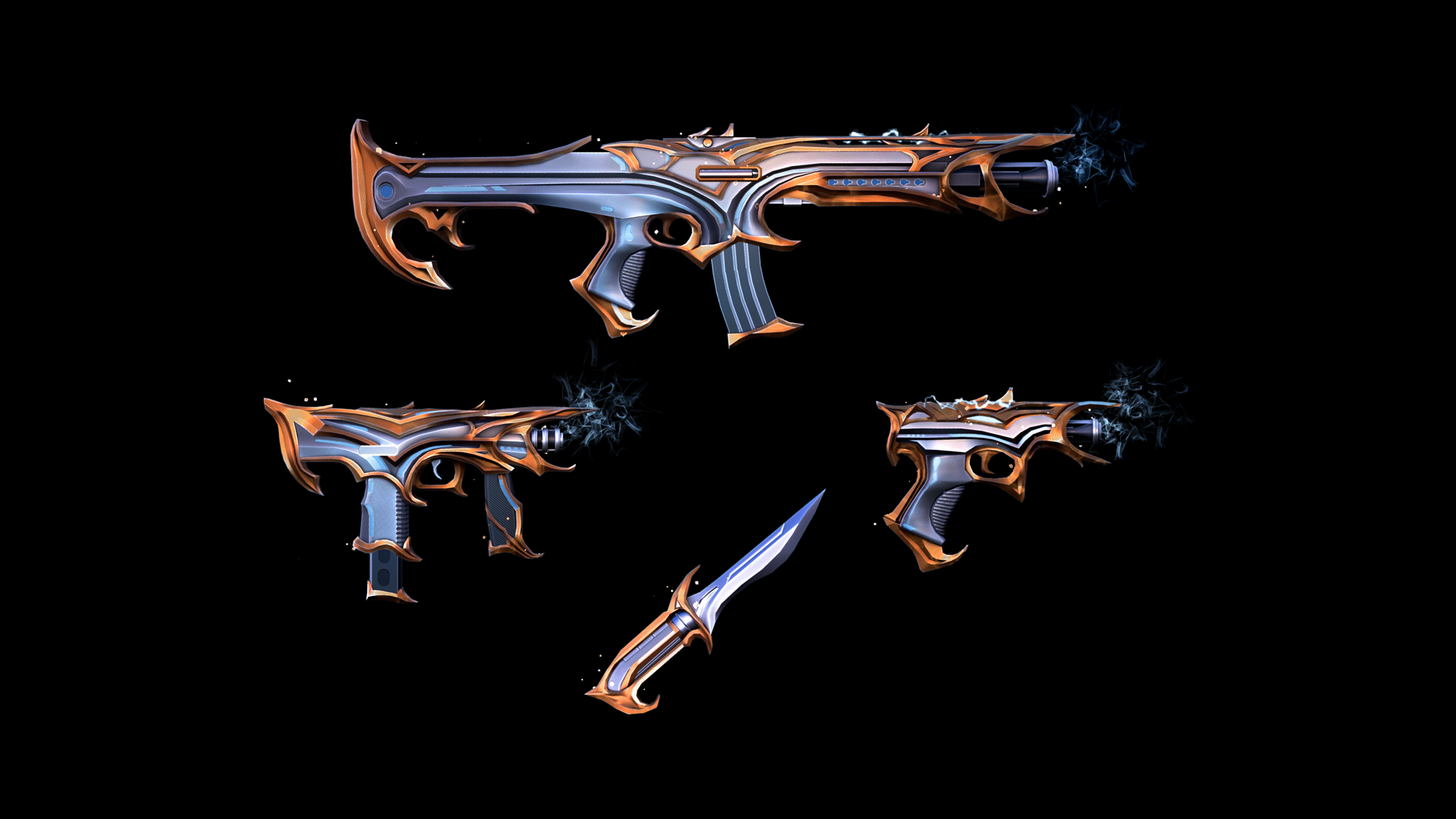
As we gear up for the official launch, we’re excited to introduce the Founder’s pack designated, ‘Mythos,’ which includes The Knife ‘Evenstar’, The Pistol ‘Prelude’, The Auto Pistol ‘Chronos’ and The Tactical Rifle ‘Genesis’. Forged of Atlantean Ores and assembled by skilled eremite hands, these weapons were designed to bring down Demi-gods.
Additionally, as an appreciation to the early access community and Discord family, we will be making the Watermelon blade, pistol and SMG available for free in the upcoming weeks. Don’t miss it!
Why We Made X8 ‘Free to Play’
We made the deliberate decision to make X8 a ‘Free to Play’ game. We took inspiration from the success of non-VR shooter games like Overwatch, Apex Legends, and VALORANT, which have thrived under the free-to-play model. Moreover, we are dedicated to building a thriving VR esports ecosystem. In traditional sports like basketball, soccer, or baseball, anyone can play for free with minimal equipment. Similarly, we want X8 to be accessible to as many players as possible, ensuring that everyone has a chance to compete and succeed.
Follow the X8 Journey
X8 is not just a game; it’s a movement. It’s a VR native multiplayer hero shooter designed to push the boundaries of what’s possible in virtual reality. With a strong focus on community engagement, esports, and a commitment to quality—we are confident that X8 will continue to thrive. We’re just getting started, and we can’t wait for you to join us on this incredible journey.
Welcome to the world of X8. Together, we’ll shape the future of VR gaming and VR esports. X8 is available now for download for free on Meta Quest Store and on Steam for $9.99.